MercoPress. South Atlantic News Agency
Tag: Caracas
-
Monday, August 17th 2026 - 07:45 UTC
Rains in Caracas leave three dead and destroy tents housing earthquake survivors
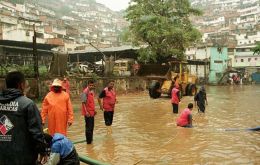
At least three people died in Caracas as a result of torrential rains that fell between Saturday night and the early hours of Sunday, which also caused flooding, brought down trees, cut power supplies and destroyed camps sheltering families left homeless by the double earthquake of June 24.
-
Sunday, June 28th 2026 - 20:31 UTC
Collapsed hospitals and morgues raise health fears in Venezuela's earthquake zone
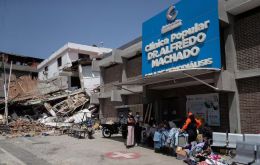
The emergency caused by the twin earthquake that struck north-central Venezuela on Wednesday is beginning to turn into a health risk, given the bodies that remain under the rubble and the collapse of hospitals and morgues in the worst-hit areas, particularly the coastal state of La Guaira. Authorities this weekend raised the toll to at least 1,450 dead and some 3,150 injured, a figure they warned would keep rising.
-
Thursday, June 25th 2026 - 09:30 UTC
Two powerful earthquakes strike northern Venezuela and collapse buildings in Caracas
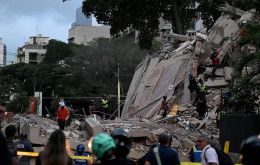
Two powerful earthquakes of magnitude 7.2 and 7.5, about 39 seconds apart, struck north-central Venezuela on Wednesday afternoon, collapsing buildings in the capital, Caracas, and leaving rescue teams working through the rubble, according to the US Geological Survey (USGS). Acting President Delcy Rodríguez declared a state of emergency, though she did not provide figures for the injured or dead.
-
Tuesday, January 13th 2026 - 10:00 UTC
IMF coming to Venezuela's rescue?
US Secretary of the Treasury Scott Bessent announced on Monday a plan to stabilize Venezuela’s collapsing currency by re-engaging with global financial institutions. The strategy consists of unfreezing approximately US$4.9 billion in International Monetary Fund (IMF) Special Drawing Rights (SDRs) to provide much-needed liquidity to Caracas' Central Bank.
-
Tuesday, January 13th 2026 - 03:17 UTC
Venezuelan serviceman recounts U.S. strike that disabled air defenses before Maduro capture
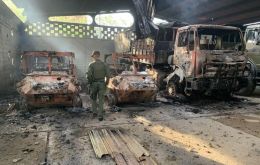
A Venezuelan serviceman stationed at the Meseta de Mamo military academy in La Guaira described the Jan. 3 U.S. bombardment as a rapid, overwhelming assault that “blinded” radar and electronic systems, preventing any organized defense. “There was no time to counterattack. They were very fast,” he said anonymously in an account published by La Hora de Venezuela and echoed by other Venezuelan outlets.
-
Thursday, January 8th 2026 - 23:31 UTC
Venezuela releases political prisoners in first major gesture since Maduro’s capture
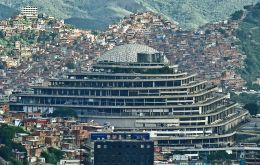
Venezuela has begun releasing a “significant number” of political prisoners, including Venezuelan citizens and foreign nationals, in what authorities described as a unilateral gesture to help consolidate peace and peaceful coexistence in the country. The announcement comes less than a week after former president Nicolás Maduro was captured by U.S. forces and transported to New York to face federal charges.
-
Saturday, January 3rd 2026 - 10:55 UTC
Explosions and reported bombings in Caracas and Venezuelan military bases
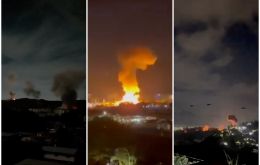
A wave of powerful explosions shook Caracas during the early hours of Saturday, marking the most serious escalation to date in the confrontation between the United States and Venezuela. Residents reported repeated blasts, aircraft flying at low altitude, and widespread power outages, while images and videos circulating on social media showed fires and thick columns of smoke rising from several strategic areas of the capital.
-
Tuesday, October 7th 2025 - 10:19 UTC
Nicolás Maduro's Government allegedly foils bombing of US Embassy in Caracas
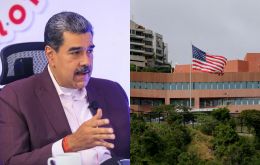
Venezuelan ruler Nicolás Maduro announced on Monday that a “local terrorist group” had planned a “false flag” attack to plant explosives at the US Embassy in Caracas.
-
Thursday, October 31st 2024 - 10:45 UTC
Venezuela pulls ambassador from Brasilia for consultations
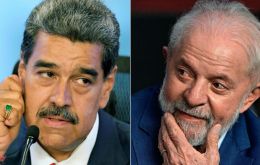
Venezuela's Bolivarian regime Wednesday summoned its Ambassador in Brasilia to Caracas for consultations in repudiation of statements by President Luiz Inácio Lula da Silva's foreign affairs advisor Celso Amorim, Agencia Brasil reported.
-
Wednesday, March 27th 2024 - 10:52 UTC
Power outages hit Argentine Embassy in Caracas after granting asylum to opposition leaders
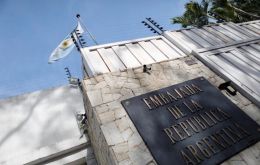
The Government of President Javier Milei denounced the power outage at the Argentine Embassy in Caracas after the Libertarian administration granted asylum to a group of Venezuelan nationals chased by the Nicolás Maduro regime.