MercoPress. South Atlantic News Agency


Venezuelan serviceman recounts U.S. strike that disabled air defenses before Maduro capture
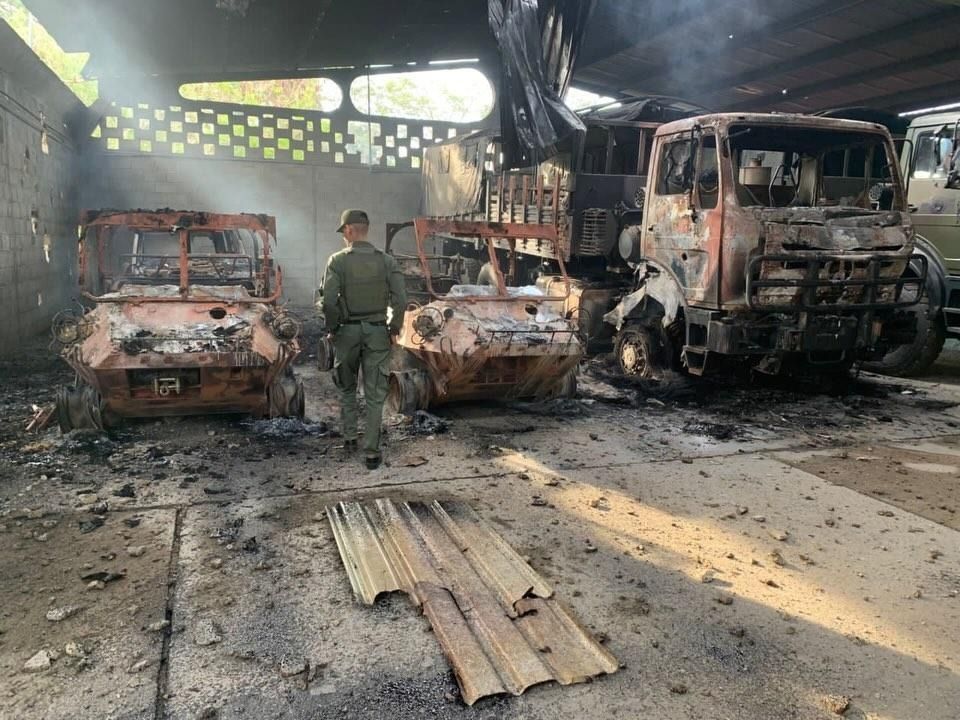 Venezuela had long boasted of possessing one of Latin America’s strongest air-defense networks. Yet, those assets were quickly neutralized during the first minutes of the U.S. offensive
 A Venezuelan serviceman stationed at the Meseta de Mamo military academy in La Guaira described the Jan. 3 U.S. bombardment as a rapid, overwhelming assault that “blinded” radar and electronic systems, preventing any organized defense. “There was no time to counterattack. They were very fast,” he said anonymously in an account published by La Hora de Venezuela and echoed by other Venezuelan outlets.
The first missile struck around 1:50 a.m., followed by a sequence of explosions that shook the entire compound. “The buildings trembled, windows shattered — you tell it and people might not believe it,” he recalled. After the bombing, secondary detonations erupted from munitions stored nearby. “Fire against fire only makes more fire,” he added.
He and his team fled the base minutes later. “It was terrifying, but training saved us,” he said. Local authorities later confirmed at least one death, though government statements put national casualties at over 80.
Ataque dos EUA à Venezuela contou com helicópteros de combate e transporte
— Sputnik Brasil (@sputnik_brasil) January 3, 2026
Imagens nas redes sociais mostram helicópteros militares dos EUA sobrevoando Caracas durante a ofensiva contra a Venezuela, com algumas aeronaves realizando disparos de canhão e lançando… pic.twitter.com/akibsjwiuP
“If they had caught us off guard, there would have been hundreds dead,” the serviceman said, noting that simultaneous strikes in Carmen de Uria and La Guaira’s port targeted facilities where Russian-made missile systems had been displayed. “They hit the military sites the hardest. Each explosion was pure terror,” he added.
Technology and Venezuela’s defense systems
Washington named the mission “Operation Absolute Resolve.” President Donald Trump said on January 5 that the U.S. had deployed technology “no one else has” to “turn off their radars like a light switch”, calling it “a textbook operation.” He highlighted the role of EA-18G Growlers, carrier-based U.S. Navy aircraft designed for electronic warfare and radar suppression.
The Growler, a variant of the F/A-18 Super Hornet, is equipped to jam radar, disrupt communications and support precision strikes by degrading enemy situational awareness.
By contrast, Venezuela had long boasted of possessing one of Latin America’s strongest air-defense networks, featuring Russian-made Buk-M2E missile systems and Chinese JY-27 radars marketed as capable of detecting stealth aircraft such as the F-35. Yet, according to analysts cited by Reuters and AFP, those assets were quickly neutralized during the first minutes of the U.S. offensive.
After Maduro’s capture: mourning, releases, and uncertainty
Jan. 3 operation ended with the capture and removal of Nicolás Maduro and his wife, Cilia Flores, from Venezuela. Interim leader Delcy Rodríguez later declared a period of mourning for slain officers, while Caracas denounced the U.S. assault as a violation of sovereignty.
In the following days, authorities announced the release of 116 detainees in what was described as a goodwill gesture, though human rights group Foro Penal said confirmed numbers were lower and relatives continued to gather outside prisons awaiting news.
The international impact also expanded: AP reported that María Corina Machado requested support from the Vatican for a transition and the release of political prisoners, amid external pressure and negotiations that remain opaque.


Top Comments
Disclaimer & comment rulesCommenting for this story is now closed.
If you have a Facebook account, become a fan and comment on our Facebook Page!