MercoPress. South Atlantic News Agency



Venezuela opens mining sector to foreign capital as US authorizes Minerven gold dealings
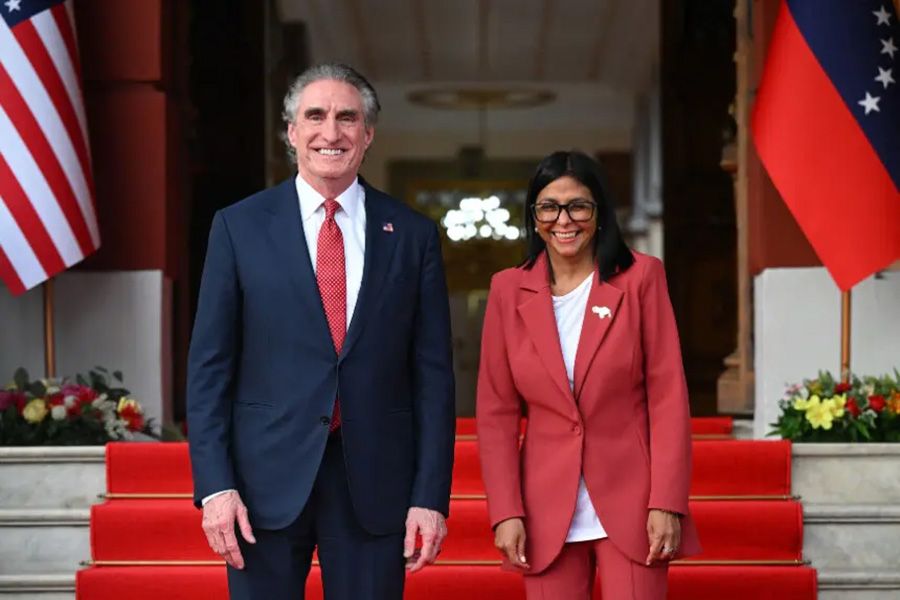 The move gained momentum after a visit to Caracas by U.S. Interior Secretary Doug Burgum, who arrived with more than two dozen mining and minerals companies
 Venezuela this week took another step toward opening its extractive sector to foreign capital, while the United States authorized limited transactions involving Venezuelan gold. The National Assembly approved on first reading a mining reform pushed by Delcy Rodríguez’s interim government, as Washington issued a license allowing dealings with Minerven, Venezuela’s state gold company, just days after the two countries restored diplomatic and consular relations.
According to a draft, the reform repeals the 1999 mining law, allows domestic and foreign companies to exploit gold, diamonds and rare earths, extends concessions from 20 to 30 years and provides for international arbitration in disputes. The bill still requires a second debate. OFAC’s General License 51, meanwhile, authorizes the import, purchase, transport and U.S.-based refining of Venezuelan-origin gold by already established U.S. entities, but it does not authorize mining, exploration, production or gold refining inside Venezuela, nor the creation of mining joint ventures there.
The move gained momentum after a visit to Caracas by U.S. Interior Secretary Doug Burgum, who arrived with more than two dozen mining and minerals companies. At the end of the trip, Burgum said he had received security assurances for potential investors. “We heard assurances … that this government would ensure their security,” he said, referring to possible operations in remote, high-risk areas.
From Caracas, the ruling camp presented the reform as an attempt to rebuild investor confidence after years of expropriations and operational decline. AP reported that the bill regulates mineral rights, creates small-, medium- and large-scale mining categories, allows independent arbitration and bars the president, vice president, ministers and governors from holding mining titles. Delcy Rodríguez described the initiative as “a win for the social well-being” of Venezuelans.
But the opening is being proposed on ground shaped by violence, informality and abuse. AP said many of Venezuela’s mineral-rich areas have long been controlled by guerrilla groups, gangs and other illegal actors, with the consent of — and benefits flowing to — officials and the military. In a report cited by the UN human rights office, those groups “determine who enters and leaves” mining zones and profit through extortion and a corruption system that includes bribing military commanders.
The mining turn follows the same pattern already seen in hydrocarbons. Reuters reported that the oil reform approved in January lowered taxes, expanded private operating autonomy and opened the way for new contract models; last week, Shell signed oil and gas agreements with Venezuela. In that context, Caracas is trying to frame mining as the next front in its economic recovery. The difficulty is that even if new investment and export channels arrive, the sector still carries a heavy burden of insecurity, poor labour conditions, environmental damage and criminal control that no single law is likely to erase.


Top Comments
Disclaimer & comment rulesCommenting for this story is now closed.
If you have a Facebook account, become a fan and comment on our Facebook Page!