MercoPress. South Atlantic News Agency
Trump labels PCC and Comando Vermelho as terrorist organizations and Brazil fears intervention
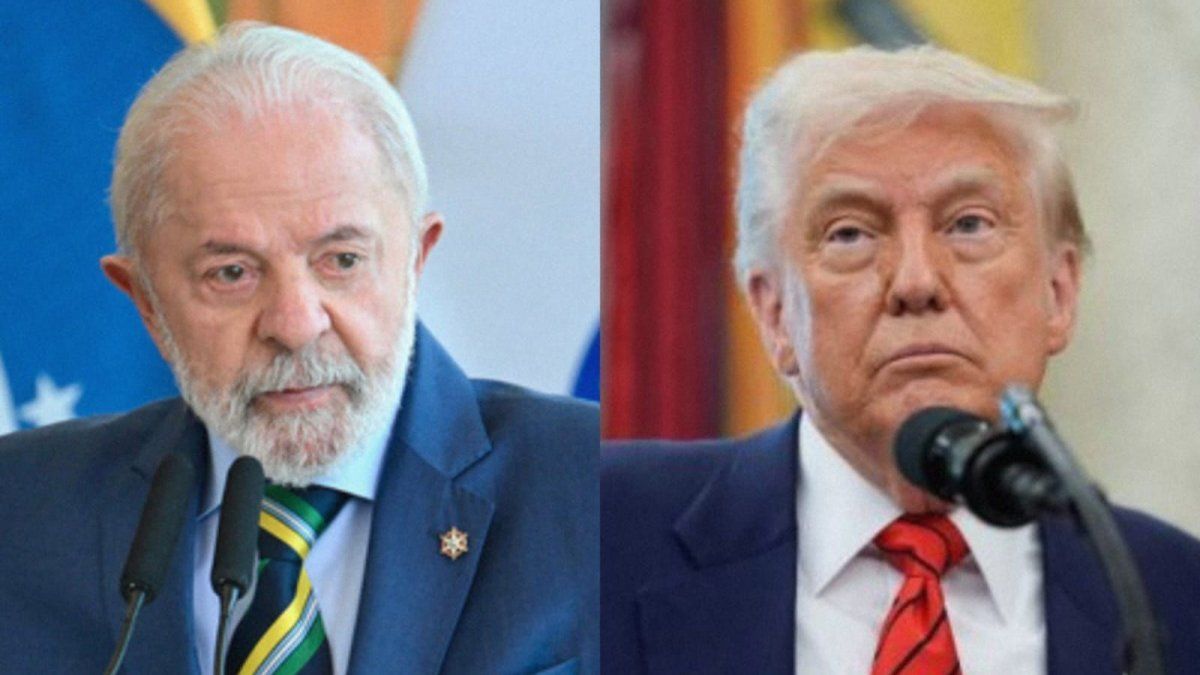 Lula da Silva accused Flávio Bolsonaro, his most likely rival in October's presidential elections, of having “betrayed the homeland by going to the United States to ask for an intervention in Brazil”
 Brazil's government on Friday issued an official note rejecting the decision adopted by the administration of US President Donald Trump to designate Brazil's two main organized crime groups, the Primeiro Comando da Capital (PCC) and the Comando Vermelho, as terrorist organizations. “We will not accept the use of arbitrary measures from abroad as a pretext to attack our sovereignty and our economy,” the statement warned, while avoiding explicit reference to the US administration. The measure, announced on Thursday, adds both organizations to a list that includes Al Qaeda, the Islamic State, the main Mexican cartels, and the Venezuelan Tren de Aragua.
President Luiz Inácio Lula da Silva accused Senator Flávio Bolsonaro, his most likely rival in October's presidential elections, of having “betrayed the homeland by going to the United States to ask for an intervention in Brazil.” Bolsonaro, son of former president Jair Bolsonaro and aspirant to succeed him politically, met this week with Trump in the Oval Office of the White House and presented the gang designation as his main request. Lula on Friday stressed that ”the so-called Comando Vermelho, the so-called PCC, are terrorists for Brazilians, for the people who live in the urban periphery (...) and we are going to fight them here inside.“ The Brazilian administration had spent months attempting to persuade Trump's team not to advance with this categorization.
The Brazilian executive fears that the decision could open the door to a possible US military intervention on national territory and to secondary sanctions against Brazilian financial entities that may unintentionally process funds linked to organized crime. The government note argued that, unlike international terrorism defined by ideological, political, or religious motivations, the PCC and the Comando Vermelho operate driven by ”profit motives, especially through drug and arms trafficking.“ Lula's diplomatic advisor, Celso Amorim, had warned on Thursday night that ”any pretext for intervention is unacceptable,” reaffirming Brazilian openness to international cooperation on money laundering and arms trafficking.
Investigators specialized in Brazilian organized crime, including prosecutor Lincoln Gakiya, have warned that the designation could prove counterproductive by militarizing the fight against these structures and shifting operational coordination from the FBI and anti-drug agency DEA toward the CIA, an agency with a foreign intelligence mandate. The PCC, with its epicenter in São Paulo, has infiltrated legitimate businesses in recent years and developed international ramifications in South American and African countries. The Comando Vermelho, historically based in Rio de Janeiro, dominates extensive urban territories and maintains a presence on the Amazonian border with Bolivia, Peru, Paraguay, and Venezuela. The designation arrives four months before the general elections in which Lula and Flávio Bolsonaro will contest the presidency in a technical tie scenario, with public security ranked as one of the electorate's principal concerns.


Top Comments
Disclaimer & comment rules-

-

Read all commentsNo, they don’t.
Jun 03rd, 2026 - 12:31 am +1They only produce, and are committed to, LEU i.e. less than 20%.
Highest they have gone is 7% for their submarine reactor program.
You should know this!
Mercopress is either misinformed or not following Brazilian election polls. Lula is winning by a wide margin in all recently released polls. And the trend is that this lead will increase even further after the audio of candidate Flávio Bolsonaro asking for money from the banker currently imprisoned for corruption, Daniel Vorcaro, came to light.
May 30th, 2026 - 09:26 am 0Furthermore, the label of TRAITOR has stuck to Flávio Bolsonarinho. It has become very difficult for him to continue as a candidate.
Yesterday, the General Staff of the Armed Forces met in Brasília, and according to what's circulating on Brazilian social media, it was decided that Brazil will build 10 nuclear weapons within a year as a way to deter any attack by the North-Americans on Brazil. Although Brazil enriches uranium to over 90% and is in the final stages of developing hypersonic missiles (14-X), I don't believe Brazil will actually build these bombs, since our Constitution doesn't allow it.
It would be better to amend the Constitution first, even if it means losing the “secrecy” factor.
https://www.youtube.com/watch?v=Se6SXv_jpxE
Commenting for this story is now closed.
If you have a Facebook account, become a fan and comment on our Facebook Page!