MercoPress. South Atlantic News Agency


A multinational rescue frees Hernán, trapped eight days under Venezuela's quake rubble
 Gil, who worked as a guard in the underground parking garage of a shopping mall, survived by sheltering under the desk of his booth when the building collapsed
 A 43-year-old Venezuelan security guard, Hernán Gil, was rescued alive on Thursday after eight days trapped under the rubble of a building that collapsed in Catia La Mar, in La Guaira state, during the twin earthquake that struck the country on June 24. The Costa Rican Red Cross, which took part in the operation, confirmed the rescue, considered one of the most complex and prolonged of the disaster, which has left at least 2,295 dead and more than 11,000 injured, according to the official toll.
Gil, who worked as a guard in the underground parking garage of a shopping mall, survived by sheltering under the desk of his booth when the building collapsed. He remained for nearly 200 hours in a cubicle on the second underground level, blocked by rubble and an unstable ceiling. His voice was first heard on Sunday, some 100 hours after the quakes, by a Costa Rican Red Cross rescuer during an inspection of the structure, which set off a race against the clock.
#EnVideo Imágenes del rescate de Hernán Gil luego de una semana bajo los escombros en La Guaira. #2Jul pic.twitter.com/fIW2fWuWlg
— Efecto Cocuyo (@EfectoCocuyo) July 2, 2026
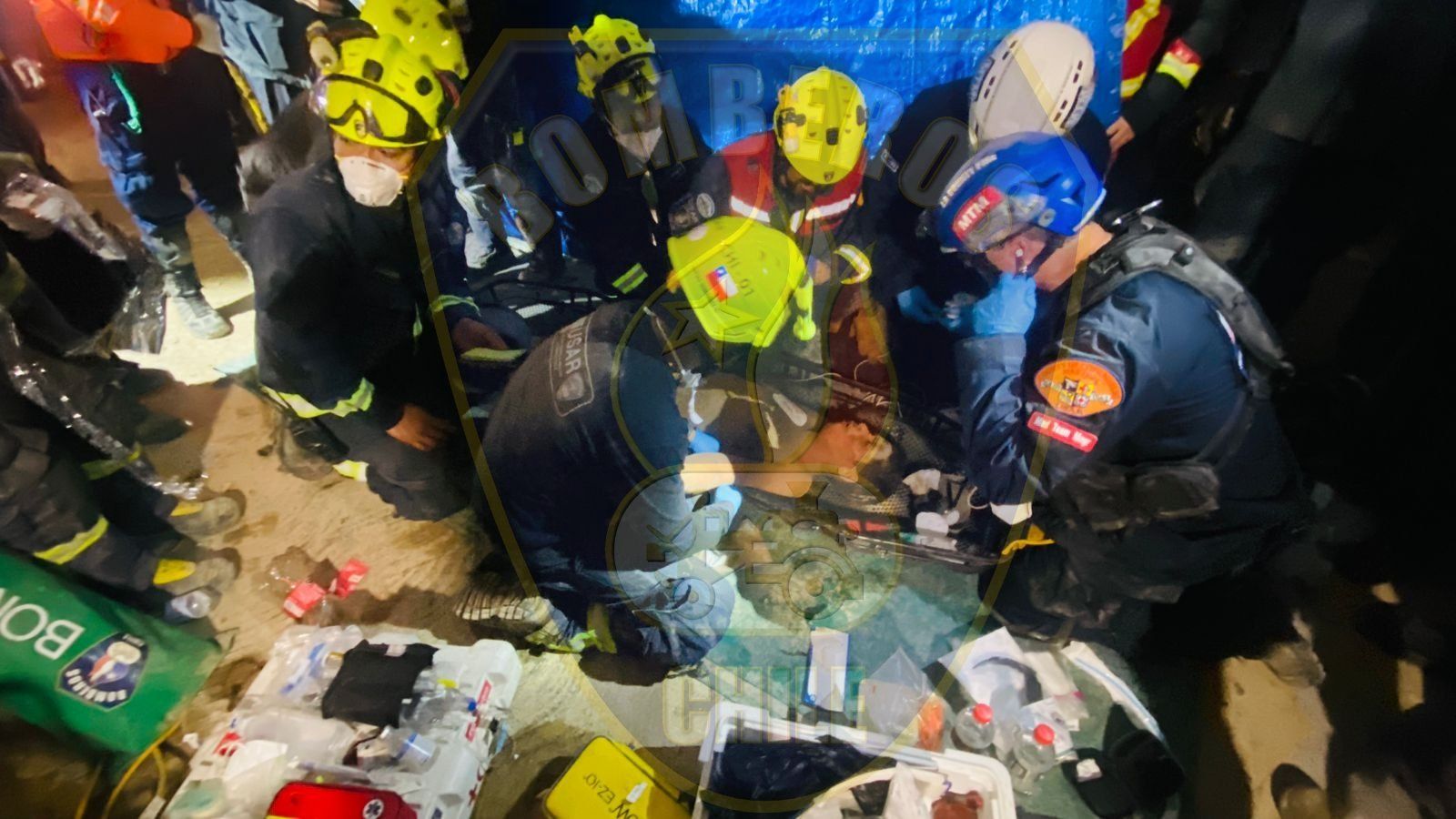
Teams from seven countries took part in the rescue —Venezuela, Chile, the United States, Portugal, Costa Rica, El Salvador and Mexico— along with brigades that had helped on previous days. At the most tense moments, up to 300 people worked in shifts to shore up the structure with wooden and iron beams, while an adjacent building threatened to collapse. “It is teamwork, multitasking, and it is slow and dangerous,” described Cristian Vera, mission leader of the Chilean firefighters. The operation was on the verge of being suspended several times because of the risk of another collapse.
Bomberos de Chile celebra sus 175 aniversario con un rescate heroico en Venezuela luego de 5 días del terremoto. “¡Muy bien Hernán!”
— Gustavo Alonso González Sulbaran. (@gustavoalonsoj) July 1, 2026
Video: cortesía pic.twitter.com/2MfXhJ5kfB
Gil's wife, Gusbimar González, with whom he has two children, kept watch at the site during the days the operation lasted. “It is truly a miracle,” she said. “I am completely amazed, because it is the first time I have seen so many countries come together to save a single person.” According to the rescuers, Gil had initially asked that his wife not be told he was alive, aware that he might not make it out. The teams maintained contact with him for days and supplied him with water, food and medicine as they worked to extract him.
The rescue became a symbol of hope a week after the tragedy, when the chances of finding survivors had drastically diminished. Even so, teams kept recording rescues beyond the 72-hour window considered critical, among them a baby and several elderly people. The operation came, however, amid growing public criticism of the official response: in some areas, residents reported a lack of heavy machinery and fuel, and had to dig with their bare hands in search of relatives. According to the official toll, more than 7,400 people have been rescued alive since the emergency began.


Top Comments
Disclaimer & comment rulesCommenting for this story is now closed.
If you have a Facebook account, become a fan and comment on our Facebook Page!