MercoPress. South Atlantic News Agency

IMF chief says Argentina is in “a strong position” despite missing its fiscal target
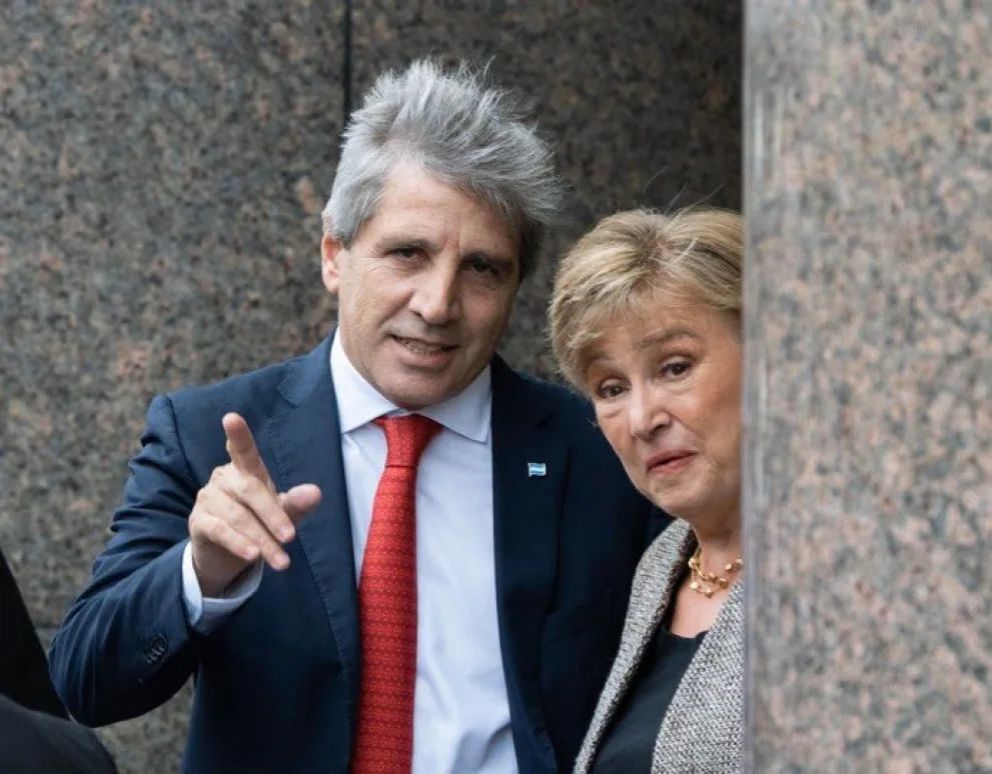 It is Georgieva's first visit to the country since taking over the institution in 2019 and the first by a top IMF official to Buenos Aires in eight years
 International Monetary Fund Managing Director Kristalina Georgieva on Monday endorsed the economic program of Javier Milei's government during a visit to Buenos Aires and ruled out that the country will need additional financing from the institution next year, when presidential elections are due. “Argentina today is in a strong position,” she said at a press conference alongside Economy Minister Luis Caputo.
It is Georgieva's first visit to the country since taking over the institution in 2019 and the first by a top IMF official to Buenos Aires in eight years. Her agenda included meetings with Caputo, central bank president Santiago Bausili, and a meeting with Milei at the presidential palace.
Among the indicators she said reflect an improvement, Georgieva cited the shift from a fiscal deficit to a primary surplus, inflation falling from 210% annually to around 30%, and the accumulation of some $13 billion in reserves since the start of the year. “I am not worried about Argentina having the money to pay its debt. Keep buying,” she said, referring to the central bank's currency purchases. Asked about the possibility of additional funds to navigate the election year, she replied: “There will be no need for extra financing.”
The endorsement comes, however, at a difficult moment on the fiscal front, the program's central pillar. Falling tax revenue during the first half of the year led in June to the first primary deficit of the current administration and to a breach of the fiscal target agreed with the institution for that period. While reserve accumulation targets have ceased to be a source of tension, the Fund's concerns have shifted toward the public accounts.
Georgieva placed at the center of the discussion the need for growth, currently concentrated in oil, gas, mining, and agriculture, to be “shared more widely.” Sectors tied to domestic consumption, such as construction, industry, and commerce, are in a weaker position. A recent central bank report shows household loan arrears tripled in a year, to 12.8%, their highest level in two decades. She spoke of the need to improve credit conditions for small businesses and families, manage those arrears, and accelerate infrastructure investment.
Argentina is the IMF's largest debtor: it accounts for about 35% of the institution's outstanding loan portfolio, with some $58 billion pending, far ahead of Ukraine, second with $15.4 billion. The current relationship dates back to the agreement signed in 2018 under Mauricio Macri's government, refinanced in 2022, to which a new $20 billion understanding was added in April 2025, the 23rd program between the country and the Fund. According to the financial program presented this month, Argentina faces maturities of nearly $45 billion between this year and next.
Small left-wing parties called a protest against the visit. On Tuesday, the delegation is scheduled to travel to Neuquén to tour the Loma Campana field in the Vaca Muerta formation, before continuing on to Uruguay.


Top Comments
Disclaimer & comment rulesCommenting for this story is now closed.
If you have a Facebook account, become a fan and comment on our Facebook Page!