MercoPress. South Atlantic News Agency
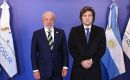


Milei on Lula: released over a procedural flaw, not for being innocent
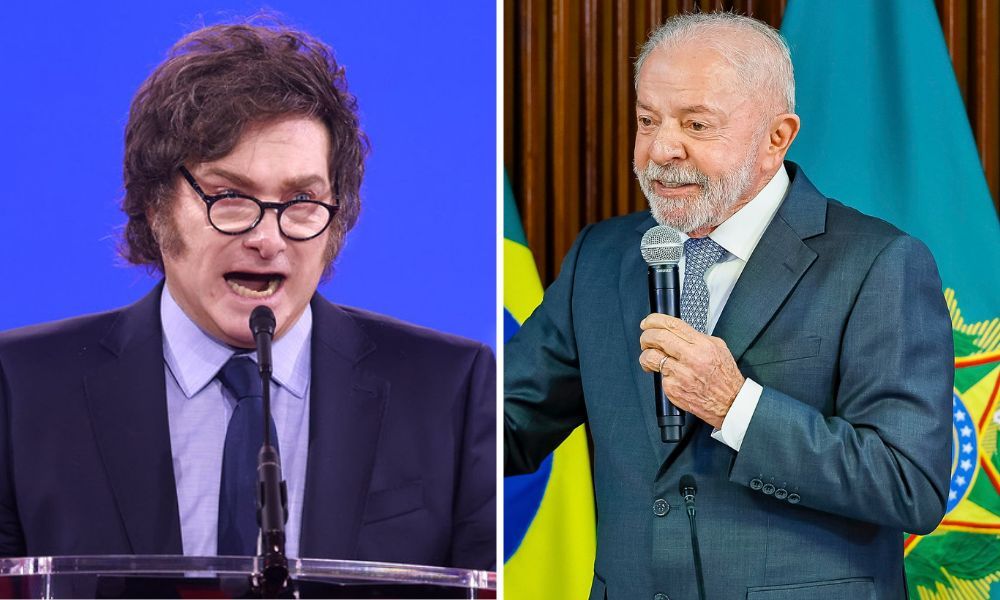 Lula is a “thief and corrupt,” Milei said; he was “convicted and imprisoned, and was released over an administrative flaw rather than for being innocent.”
 Argentine President Javier Milei repeated his accusations against Brazilian President Luiz Inácio Lula da Silva on Sunday, arguing that the corruption convictions once against him were annulled on formal grounds, in remarks that came just as Brazil's ambassador to Buenos Aires was preparing to return after being recalled for consultations.
Lula is a “thief and corrupt,” Milei said; he was “convicted and imprisoned, and was released over an administrative flaw rather than for being innocent.” He spoke in an interview recorded at the presidential palace and broadcast by LN+. Asked whether his tone was aggressive, he replied that calling a thief a thief is milder than the act of theft itself. These are the Argentine president's accusations, not judicial findings.
The legal sequence is more complex than described. Lula was convicted in 2017 and 2019 in the Lava Jato investigation and spent 580 days in detention. He left prison in November 2019 after a Supreme Federal Court ruling holding that no one may be jailed before appeals are exhausted, a decision grounded in the presumption of innocence. In March 2021, Justice Edson Fachin annulled the convictions on the grounds that the Curitiba court lacked jurisdiction, a finding the full court upheld eight votes to three. That June, the court's Second Panel further ruled that Judge Sergio Moro, who had issued the first conviction and later served as Jair Bolsonaro's justice minister, had been biased — a ruling on due process rather than a technicality. In 2023, the court also annulled the evidence gathered by the Lava Jato team.
Lula holds no valid convictions, regained his political rights and was elected president in 2022. No court ruled on the merits of the accusations.
Milei described his remarks as spontaneous and framed them within a regional ideological dispute. He said he is criticized for what he says while the insults he claims to have received from figures such as Gustavo Petro, Evo Morales, Rafael Correa and Pedro Sánchez go unmentioned.
The crisis began on Saturday, July 25, when Milei addressed the Liberal Party convention in São Paulo, backing Flávio Bolsonaro's candidacy. There he called Lula a thief, corrupt and a convict, and directed an insult about the physical appearance of Supreme Court Justice Alexandre de Moraes. Itamaraty summoned Argentine Ambassador Daniel Raimondi, called the episode unprecedented and recalled Julio Bitelli. Foreign Minister Mauro Vieira ruled out tougher measures for now, such as withdrawing diplomatic representation; the embassy is being run by Minister-Counsellor Eduardo Uziel.
On Thursday, Brasília authorized Bitelli's return without setting a date. According to Infobae, Lula sharpened his tone over the weekend at an event in Ceará, saying that as long as he lives the far right will not govern Brazil again.


Top Comments
Disclaimer & comment rules-

-

-

Read all commentsMilei is correct.
Posted 4 days ago 0So, they ‘annulled the convictions on the grounds that the Curitiba court lacked jurisdiction’, then annulled the Judge and then annulled the evidence.
Posted 3 days ago 0At what point was the evidence actually considered in this?
He certainly got off on a technicality rather than being exonerated of the crimes/accusations against him.
Bolsonaro seems no better though.
Corruption is the curse of S. America, amongst other places.
“CHARTER OF THE ORGANIZATION OF AMERICAN STATES
Posted 1 day ago 0The American States reaffirm the following principles:
Article 12
The fundamental rights of States may not be impaired in any manner whatsoever.
Article 13
The political existence of the State is independent of recognition by other States. Even before being
recognized, the State has the right to defend its integrity and independence, to provide for its preservation and prosperity, and consequently to organize itself as it sees fit, to legislate concerning its interests, to administer its services, and to determine the jurisdiction and competence of its courts. The exercise of these rights is limited only by the exercise of the rights of other States in accordance with international law.
Article 19
No State or group of States has the right to intervene, directly or indirectly, for any reason whatever, in the internal or external affairs of any other State. The foregoing principle prohibits not only armed force but also any other form of interference or attempted threat against the personality of the State or against its political, economic, and cultural elements.”
Please log in or register (it’s free!) to comment. Login with Facebook