MercoPress. South Atlantic News Agency



Around 140 vessels stranded at Argentine ports after government deregulation decree
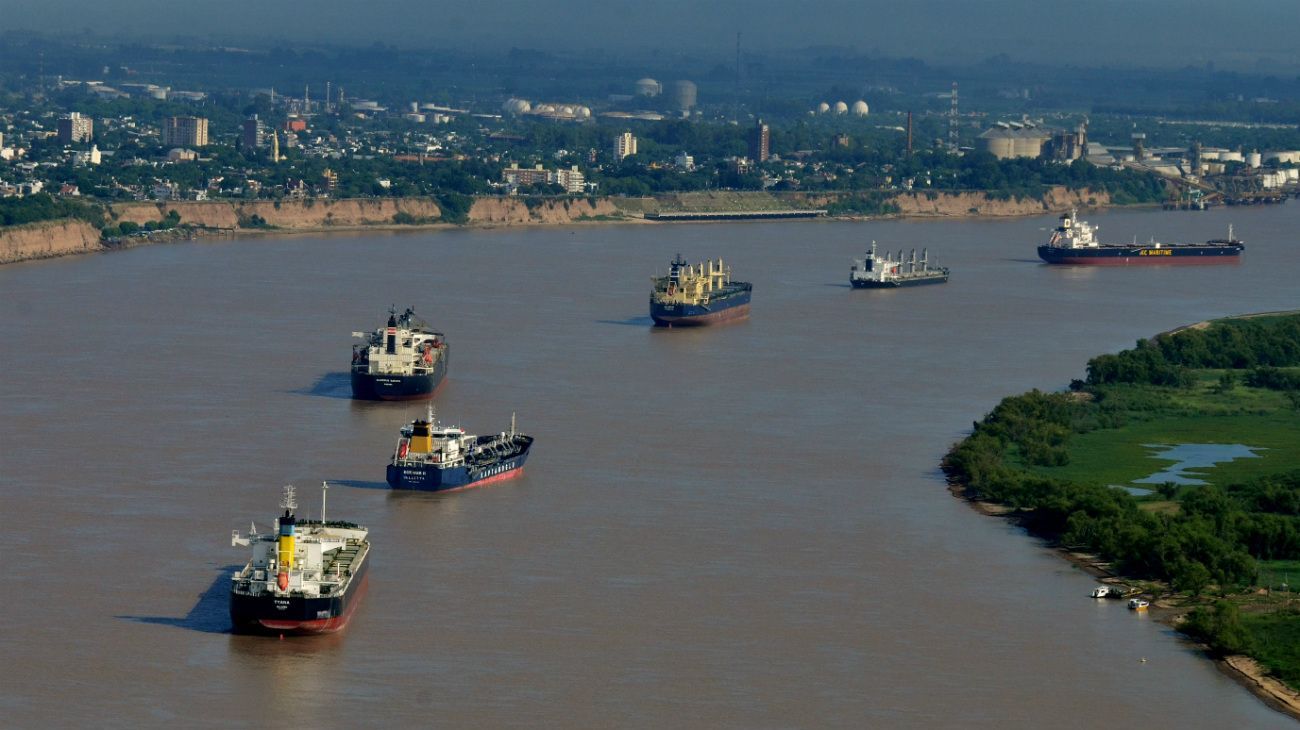 The disruption particularly affects Greater Rosario, the country's main agricultural export corridor
 Around 140 vessels were waiting on Monday to enter or leave Argentine ports after maritime pilots stopped accepting new assignments in protest at a decree deregulating their profession. The figures come from industry sources; some reports put the number above 150.
Pilots advise ship captains during entry and departure maneuvers on rivers, canals and at ports. Their involvement is mandatory for much of Argentina's commercial navigation because of the characteristics of port approaches and of the Paraná waterway.
The disruption particularly affects Greater Rosario, the country's main agricultural export corridor, and the terminals at Campana, Dock Sud, Arroyo Seco, Bahía Blanca, San Lorenzo and Santa Cruz, from which much of the country's fuel is distributed. It also reaches Caleta Córdova, in Chubut, a transfer point for crude oil headed to refineries. A vessel assigned to the Vaca Muerta Oil Sur project was left outside its berth, unable to dock. The Argentine Chamber of Energy warned that the unavailability of pilots could create supply difficulties.
Decree 690/2026, published on July 31 and signed by President Javier Milei and Deregulation Minister Federico Sturzenegger, approves new rules and repeals those in force since 1991. It creates an open register of pilots administered by the coast guard, with no quotas; allows users to contract freely and agree on fees, with maximum rates set by the National Ports and Navigation Agency; removes the geographic segmentation that required changing pilots during a single voyage; broadens exemptions for captains with certified local experience; and empowers the coast guard to provide the service directly in exceptional circumstances, with support from the Navy. Within 180 days, the Navy must transfer certification processes to the coast guard.
The government frames the measure as part of its drive to cut logistics costs and widen competition. Industry associations argue it compromises navigational safety, criticize the absence of prior consultation and have announced legal action, including a criminal complaint.
The nature of the protest is disputed. Official sources say there is no labor dispute, only individual decisions by self-employed professionals with no employment relationship or union able to order a stoppage, which prevents the Labor Ministry from imposing mandatory conciliation. Other reports describe an open-ended work stoppage coordinated nationwide. Previously scheduled services are still being performed.
The coast guard has begun issuing individual notices ordering pilots back to work, warning that pilotage is a public service regulated by the Navigation Law and that its interruption could lead to criminal complaints and administrative proceedings.


Top Comments
Disclaimer & comment rulesCommenting for this story is now closed.
If you have a Facebook account, become a fan and comment on our Facebook Page!