MercoPress. South Atlantic News Agency



The Falklands Legislative Assembly marks 434 years since the first recorded sighting
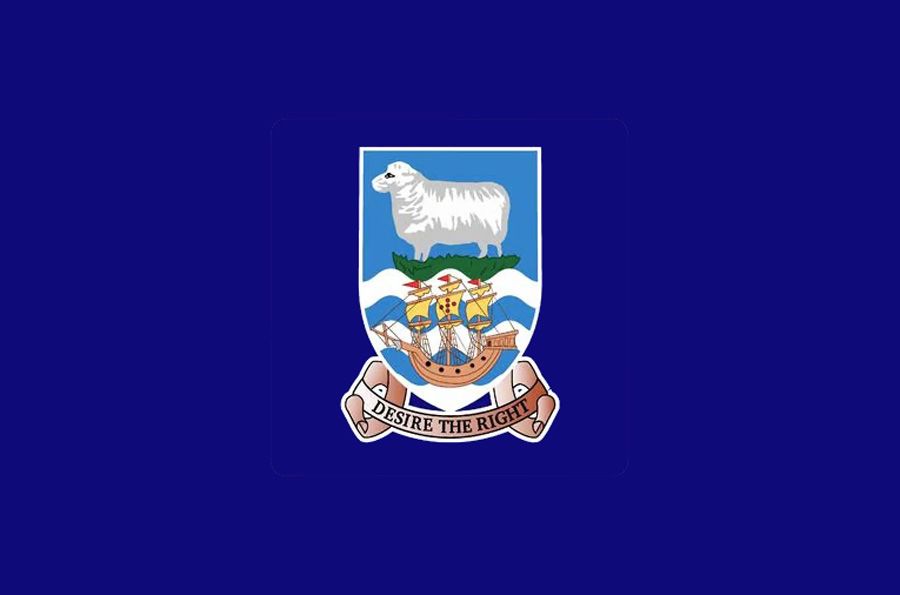 The ship appears on the territory's coat of arms and gives rise to its motto, “Desire the Right.”
 The Falkland Islands Legislative Assembly marked Falklands Day on Friday, the anniversary of the first recorded sighting of the archipelago, on August 14, 1592. The day was marked by raising the Falkland Islands flag and the Union flag side by side on Victory Green, in Stanley.
The sighting is credited to English navigator John Davis, who commanded the Desire, a 120-ton vessel, and came upon the then-uninhabited islands after being blown off course while attempting to round Cape Horn through the Straits of Magellan. His account was published in London in 1600 by Richard Hakluyt. The ship appears on the territory's coat of arms and gives rise to its motto, “Desire the Right.”
Davis's voyage was followed by sightings by the Englishman Richard Hawkins in 1594 and the Dutch explorer Sebald de Weert in January 1600. The first recorded landing did not take place until 1690, when English sea captain John Strong came ashore at Bold Cove, near present-day Port Howard.
In its statement, the Assembly described the date as an occasion to reflect on the territory's history and future and on Falkland Islanders “as a people.” The text places immigration at the center of that identity: it holds that today's residents are families and individuals from across the world who put down roots in the Islands, and describes that process as “a thread that runs unbroken through our history,” from the earliest settlers to those who arrive and settle today. The community, it adds, is “diverse, resilient, and proud of its home.”
The statement closes by defining the day as a moment to reflect on “our heritage and our identity as a people with our own culture, way of life, and the right to determine our own future.”
Argentina maintains a sovereignty claim over the archipelago, which has been administered by the United Kingdom since 1833. In the referendum held in March 2013, residents voted overwhelmingly to retain their status as a British overseas territory. The population stands at around 3,660, according to the 2021 census.
Falklands Day was once the territory's national day, but ceased to be a public holiday in 2002, when the Executive Council moved the day off to reinstate Peat Cutting Monday, on the first Monday of October. As the date of greatest symbolic weight it has largely been displaced by Liberation Day on June 14, which commemorates the end of the 1982 conflict.


Top Comments
Disclaimer & comment rules-

-

-

Read all commentsArgie Zit - Spain does not claim to have discovered the Falklands.
Aug 15th, 2026 - 11:16 am +4Bit of a crippler, that.
In 1758, Governor Amat wrote to Madrid saying that no Spanish ship had ever visited the Falklands.
Another crippler.
Perhaps you should study more?
2 account Zit, none of it has anything to do with Argentina does it ? its strange how Argentine posters claim things for Spain that they themselves never claimed, grow up and get a life, the Falklands where, are and will stay British until the islanders say other wise, the only fantasy is the crap you come out with,
Aug 15th, 2026 - 12:25 pm +4Falklands – Discovery and Early Expeditions: https://www.academia.edu/125397444/Falklands_Discovery_and_Early_Expeditions
Aug 15th, 2026 - 02:15 pm +3Commenting for this story is now closed.
If you have a Facebook account, become a fan and comment on our Facebook Page!