MercoPress. South Atlantic News Agency



Ceuta’s anti migrant ‘invasion’ rhetoric threatens Europe’s food supply and economy
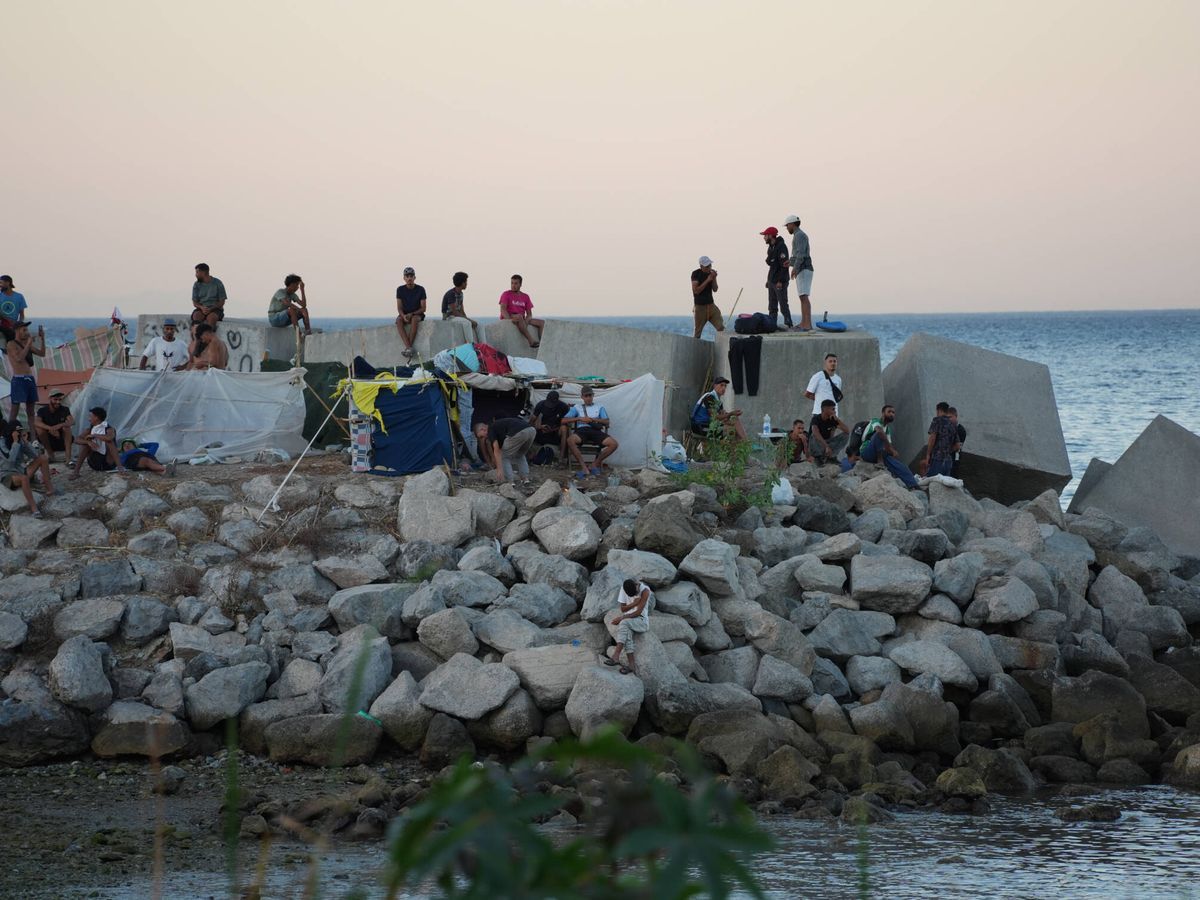 The vast majority of migrants soon returned to Morocco, but at present, as many as 5,000 remain in Ceuta, many of them unaccompanied minors
 By Diana Tung and Seth M. Holmes (*)
In August 2026, a deep humanitarian crisis unfolded in Ceuta, a small Spanish enclave situated on Morocco’s northern coast. Around 72,000 people entered from Morocco over the course of two days. More than 100 drowned drowned trying to cross into Spanish territory.
The vast majority of migrants soon returned to Morocco, but at present, as many as 5,000 remain in Ceuta, many of them unaccompanied minors caught in an uncertain legal and political limbo. (The official Spanish population indicates that some 85.000 people live in the Ceuta enclave)
Throughout Europe, right-wing politicians have seized the humanitarian crisis in Ceuta as an opportunity to inflame racism and xenophobia.
Spain’s far-right Vox party is stoking fears of “illegal, uncontrolled, and rampant migration”,. Italian President Giorgia Meloni proclaimed defiantly on X that Italy would not “retreat a millimeter on illegal immigration”, and suspended Schengen travel agreements with Spain.
This attitude is more widely reflected in the European Parliament. The EU’s Return Regulation – a system for “returning” third party nationals, , which includes detaining people in offshore centers for up to two years before deporting them – was passed in June. It was greeted with applause and chants of “send them homes” from far-right Members of the European Parliament.
But while anti-migrant scaremongering may play well at the polls, it will ultimately harm Europe too. Harsh migratory policies do not just harm migrants and their families – they have also been widely proven to actively harm national economies and productivity, as well as nutrition and health.
Migrants feed Europe
The Ceuta tragedy was remarkable in its scope and volume, but the conditions surrounding it were not. Both in Europe and around the world, migrants are increasingly being weaponized as a political tool, even as they uphold the infrastructures and economies that form the backbone of daily life and health.
Our research project, entitled FOODCIRCUITS, traces the food sold across Europe and the US, in order to more deeply understand the role and experiences of migrant workers. One branch of the project focuses on Spain’s globally important citrus supply chains, and highlights how migrants are hidden from view in transnational systems of citrus production, transportation, and consumption.
Our research traces the (often contradictory) movement of people and produce throughout the globe, as well as the policies that govern movement, legality, and human and labor rights. By conducting original long-term in situ fieldwork, we are able to add much-needed perspective and context to current debates on migration and surrounding controversies.
Extensive research has shown that farmworkers across the globe are disproportionately exposed to dangerous working conditions. Farmworkers who work under informal or irregular status face compounding health risks that lead to even greater exposure to injury and death.
As the EU’s fourth largest agriculture producer and one of the world’s largest citrus producers, Spain is keenly aware of its reliance upon migrants. Officially, they make up about 30% of all agricultural workers. Undercounting of undocumented workers means the figure is likely far higher.
From Lleida’s stone fruit orchards to Valencia’s orange groves and Huelva’s vast strawberry fields, migrant workers play a pivotal role in the European food supply. They are also essential to the Spanish agricultural industry, which is worth an annual 43.9 billion Euros.
In Europe, one out of every four fresh fruits consumed is produced in Spain. This remarkable statistic is only possible because of the unrecognized labor of migrant farmworkers.
Spain’s special regularization scheme earlier this year saw almost 1.2 million undocumented individuals apply for legalization and the right to work. The move will help to curb exploitative labor conditions and improve access to healthcare and other life-sustaining services.
The final number of applicants was more than double initial estimates. This immensely high demand for legalized pathways shows just how much migrants have become hidden from wider society, and how much their labor is taken for granted.
Even though the scheme requires applicants to meet stringent criteria, the scheme has come under attack by populist right-wing political groups calling the number of applications a “migratory invasion”. Other EU nations have even blamed the regularization scheme for the Ceuta crisis, calling it a “pull factor” for migrants.
But from Ceuta to the Spanish mainland and the rest of Europe, migrants are routinely scapegoated, wrongly targeted as the source of societal problems, and used to inflame xenophobic sentiments for political gain. Given that migrants’ valuable and essential contributions to society are so often invisible, we need to look closely and critically at when and how they are pushed to the forefront of the news cycle. (The Conversation)
(*) Diana Tung, Postdoctoral Researcher, FOODCIRCUITS, Universitat de Barcelona and Seth M. Holmes, ICREA Researcher, Department of Social Anthropology, Hub for Global Social Medicine, University of Barcelona, Universitat de Barcelona; ICREA; University of California, Berkeley


Top Comments
Disclaimer & comment rulesCommenting for this story is now closed.
If you have a Facebook account, become a fan and comment on our Facebook Page!