MercoPress. South Atlantic News Agency
Tag: Migration
-
Monday, September 21st 2026 - 09:44 UTC
US investigates ICE shooting of Venezuelan delivery driver in Austin

An Immigration and Customs Enforcement (ICE) agent shot and wounded a Venezuelan man on Sunday in Austin, Texas, while he was making a delivery for DoorDash, in an incident the Department of Homeland Security (DHS) confirmed it is investigating alongside the FBI and which prompted calls for an independent investigation from local officials.
-
Monday, August 31st 2026 - 08:21 UTC
Ceuta’s anti migrant ‘invasion’ rhetoric threatens Europe’s food supply and economy

By Diana Tung and Seth M. Holmes (*)
In August 2026, a deep humanitarian crisis unfolded in Ceuta, a small Spanish enclave situated on Morocco’s northern coast. Around 72,000 people entered from Morocco over the course of two days. More than 100 drowned drowned trying to cross into Spanish territory. -
Monday, August 24th 2026 - 21:37 UTC
Colombia orders deportation of irregular migrants after a decade as the main host country
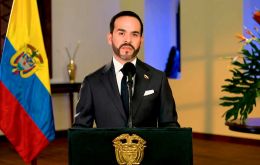
Colombian President Abelardo de la Espriella has ordered coordinated operations between the migration authority and the police to begin this week to identify and deport foreigners without regular migration status, marking a shift from the policy the country has maintained for more than a decade as the main destination for Venezuelan migration.
-
Monday, August 17th 2026 - 22:57 UTC
Falklands debates immigration inflow ahead of oil industry development

After the announcement that the Falkland Islands Government has decided to suspend Permanent Residence Permits (PRP) for a year in order to carry out a review of the entire scheme, the local press approached two elected members who back the initiative to explain the reasons behind the measure.
-
Tuesday, August 4th 2026 - 23:23 UTC
Ceuta alerts security forces over social media calls for August 15

The government of Ceuta has referred to the competent authorities messages circulating on Moroccan social media that call for a fresh attempt at irregular entry into the Spanish enclave on August 15, five days after a migration crisis that left dozens dead.
-
Monday, August 3rd 2026 - 07:20 UTC
Conflicting accounts over whether Spanish intelligence warned of mass entry into Ceuta
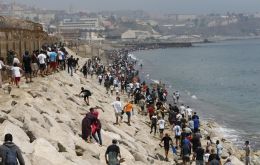
Spanish intelligence services concluded that Morocco did not plan last Thursday's mass entry of people into Ceuta, although it allowed the crossings and drew political benefit from the international attention, according to sources cited by El País. Other reporting contradicts that account on a key point: whether the government was warned in advance.
-
Friday, July 31st 2026 - 18:29 UTC
Italy and France tighten borders with Spain after 50,000 enter Ceuta

Italy ordered the reintroduction of border checks at its ports and airports with Spain on Friday, and France announced it would increase fivefold the officers deployed at its land border from Saturday, after tens of thousands of people entered the Spanish enclave of Ceuta irregularly from Morocco.
-
Thursday, July 30th 2026 - 15:11 UTC
Falklands suspend new permanent residence applications for up to 12 months

The Falkland Islands Executive Council has approved a temporary suspension of new applications for Permanent Residence Permits (PRP) for a period of up to 12 months, while a full review of the system is carried out, the Legislative Assembly said in a public statement on Thursday.
-
Wednesday, July 29th 2026 - 22:54 UTC
US seeks Uruguay as destination for deported migrants; Montevideo stops short of confirming deal

The United States government has been negotiating with Uruguay for months over the possibility that the South American country receive deported migrants, The New York Times reported on Wednesday. Uruguay's foreign ministry confirmed that talks are underway but said nothing has been settled and that the discussions are not limited to Cuban nationals.
-
Sunday, July 19th 2026 - 23:00 UTC
ICE kills a Colombian and a Mexican in operations where they weren't the target, officials say

Two Latin American migrants were shot dead by agents of the US Immigration and Customs Enforcement (ICE) within a week, in operations in which, as federal authorities and lawmakers acknowledged, neither was the intended target. The deaths revived protests and calls for accountability over President Donald Trump's immigration policy.