MercoPress. South Atlantic News Agency



Eight Months After Maduro's Capture, Venezuela's Oil Boom Has Outrun Latin America's Sovereignty Debate
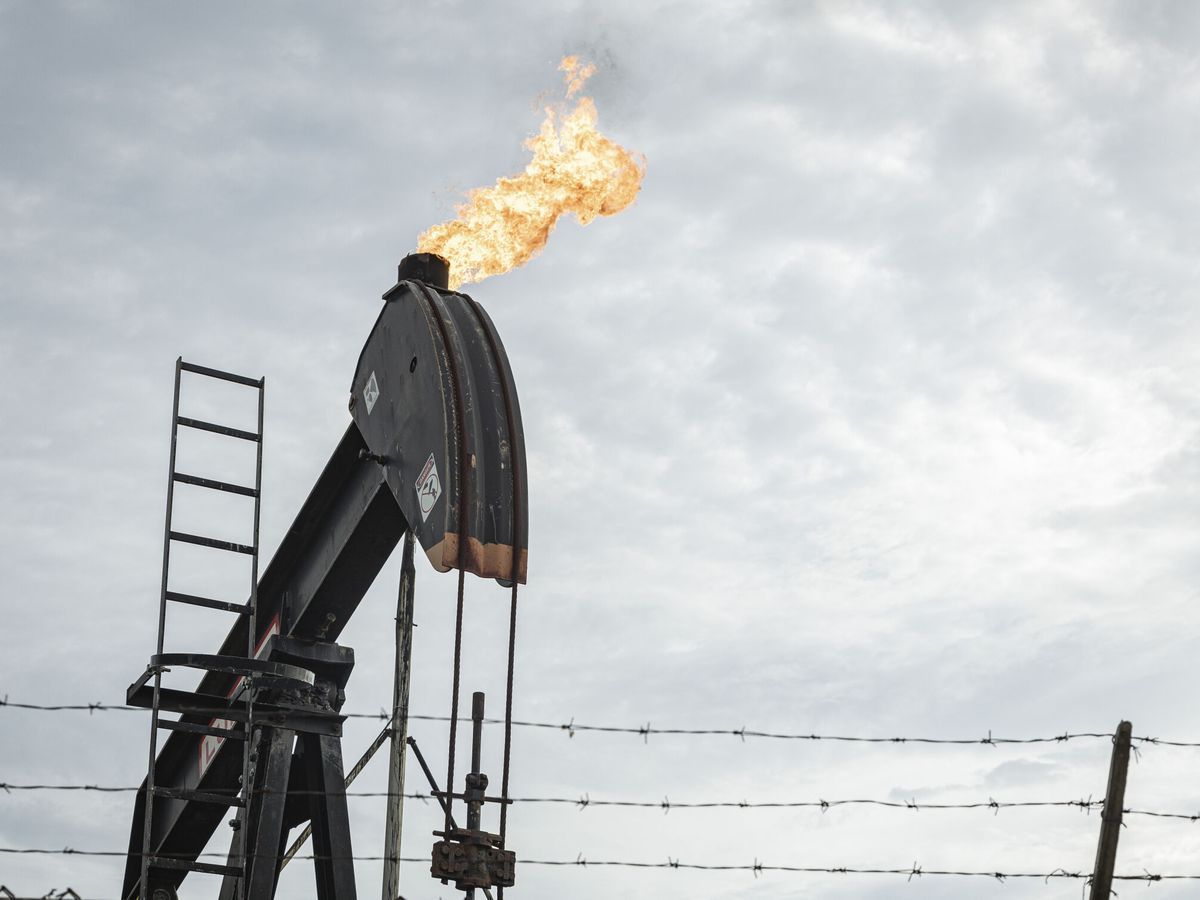 Photo: EFE/Henry Chirinos
 When Colombian former President Gustavo Petro convened an emergency CELAC session in the first week of January, the assumption in most South American foreign ministries was that the region would answer the United States with one voice. Eight months later, the answer is still fragmented — and Venezuela's oil is flowing north at a rate not seen in two decades.
From Southern Spear to a fait accompli
The operation that removed Nicolás Maduro on 3 January 2026 began as a counter-narcotics campaign. US helicopters struck Fuerte Tiuna and the La Carlota air base in Caracas, and the Venezuelan leader was flown to the United States under the banner of Operation Southern Spear, a 2025 anti-drug deployment that had quietly acquired a regime-change function. Washington justified the raid under an “unable or unwilling” reading of self-defence, arguing that Caracas had ceased to control narco-terrorist networks operating from its territory.
The legal architecture of that argument matters more to the region than the raid itself. As geopolitical analyst Alexander Dubowy argued in an assessment of the operation, the prohibition on the use of force in Article 2(4) of the UN Charter “remains formally intact, but it is increasingly treated as a language game.” For a continent that built its diplomatic identity on non-intervention — from the Estrada Doctrine to the Contadora process — that is not an abstraction. It is a precedent with a filing number.
Venezuela's own institutions moved quickly to normalise the outcome. On 4 January, the Supreme Tribunal of Justice ordered Vice-President Delcy Rodríguez to assume, in an acting capacity, “all the attributes, duties and powers inherent to the office of President… to guarantee administrative continuity.” The court pointedly stopped short of declaring the presidency permanently vacant, which under the constitution would have forced elections within 30 days. Continuity, not legitimacy, was the objective.
The region split, and stayed split
Petro's emergency meeting produced no joint declaration. Colombia, Brazil, Chile, Mexico, Uruguay, Cuba, Nicaragua and Venezuela itself pushed for a rebuke of Washington. Argentina led the bloc that blocked it, joined by Paraguay, Peru, Bolivia, Costa Rica, Ecuador, El Salvador, Panama, the Dominican Republic and Trinidad and Tobago.
The rhetorical distance was striking. President Luiz Inácio Lula da Silva called the strikes “a very serious affront to the sovereignty of Venezuela,” and Brazil joined Chile, Colombia, Mexico, Uruguay and Spain in a 4 January statement expressing “profound concern and firm rejection” of unilateral military action. Uruguay's foreign ministry invoked the UN Charter directly. President Javier Milei, by contrast, posted that “liberty advances” and called the capture “excellent news for the free world,” backing US control of Venezuelan oil sales within days. Paraguay's Santiago Peña said the operation could “only bring good news.” Peru's José Jerí framed it as the start of “a new era of democracy and freedom.” In Chile, outgoing President Gabriel Boric condemned the strikes while president-elect José Antonio Kast called Maduro's detention “great news for the region” — a split screen inside a single country.
That division was not a temporary reflex. It has hardened into the region's operating condition, and it has left Mercosur, CELAC and UNASUR's successor structures without a usable common position on the most consequential hemispheric event since the Panama invasion of 1989.
The commercial facts moved faster than the diplomacy
While ministries debated language, the barrels moved. White House press secretary Karoline Leavitt said on 8 January that Washington had “maximum leverage over the interim authorities in Venezuela right now” and that “their decisions are going to continue to be dictated by the United States of America.” The arrangement has since been formalised through ordinary diplomatic channels: US chief of mission Laura Dogu met Foreign Minister Yvan Gil on 31 January to define a bilateral roadmap.
The numbers explain the durability. Venezuelan output is running at roughly 1.25 million barrels per day, with US refineries absorbing more than 500,000 bpd — up from about 135,000 bpd at the end of 2025. Washington is shipping more than 100,000 bpd of naphtha south for blending with Venezuela's heavy crude. Export volumes are up 19.7% on the year and fuel output 12.9%. The Financial Times has reported more than US$13 billion in Venezuelan oil revenue collected under US administration in 2026, against a US$3 billion disbursement authorised in April. Under Secretary of Energy Kyle Haustveit described it as “a beautiful energy partnership.”
For South America, the strategic implication is uncomfortable. A country holding 303 billion barrels of proven reserves — some 17% of the global total — has had its export policy relocated to Washington without a treaty, a vote, or a regional mechanism to review it. Colombian and Brazilian heavy-crude producers now compete against volumes priced by a foreign administrator. Caribbean refiners face a supply chain whose terms are set outside the hemisphere's own institutions.
What the next eight months test
The open question is not whether the intervention was lawful — that argument is now largely retrospective. It is whether Latin America can build any collective instrument that survives disagreement between its two largest economies. Mercosur's EU negotiations, the region's energy corridors and the South Atlantic's security architecture all depend on the answer.
Regional analysts tracking the hemispheric fallout have argued that multipolarity without shared rules produces not balance but disorder. Venezuela in 2026 is the case study, and this analysis of US intervention and multipolar disorder offers a fuller reading of how that disorder is reshaping the balance of power across the Americas.
This article was contributed by Eagle Intelligence Reports, a geopolitical analysis publication covering foreign policy, security and strategic risk.


Top Comments
Disclaimer & comment rulesCommenting for this story is now closed.
If you have a Facebook account, become a fan and comment on our Facebook Page!