MercoPress. South Atlantic News Agency

Bachelet concedes difficulty of her UN bid: “I know I'm not going to be secretary-general”
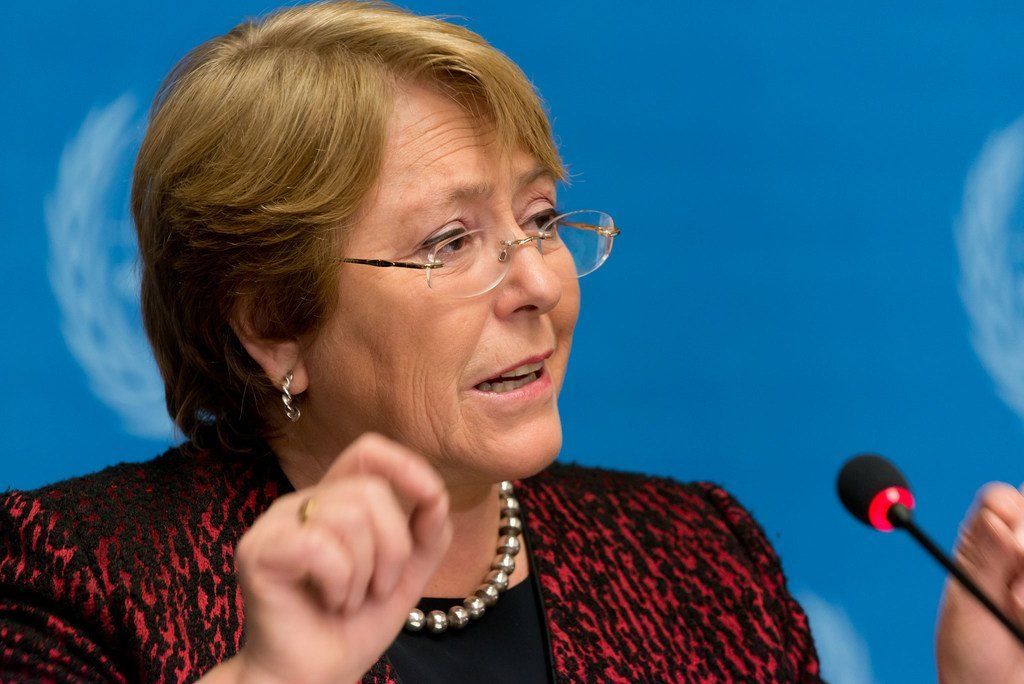 The remark came at a panel discussion on migration organized by Diego Portales University, two weeks after the Security Council's second informal poll, held on August 21
 Former Chilean President Michelle Bachelet acknowledged on Thursday the difficulties facing her candidacy for United Nations secretary-general. Asked at a public event in Santiago why she wants to lead the organization, she replied in a light tone: “That's what I ask myself. Perhaps because I know I'm not going to be secretary-general.”
The remark came at a panel discussion on migration organized by Diego Portales University, two weeks after the Security Council's second informal poll, held on August 21. The polls are secret and the Council's rotating presidency confirmed the vote without releasing results. According to the digital outlet PassBlue, which specializes in United Nations coverage, Bachelet recorded the sharpest decline among the eight contenders: she went from six “encourage” votes in July to two, with six “discourage” and seven abstentions, placing her seventh, ahead only of Ecuador's Ivonne A-Baki, nominated by Tonga on August 17.
In that same poll, Guyana's Carolyn Rodrigues Birkett topped the field with eight “encourage” votes, followed by Costa Rica's Rebeca Grynspan and Argentina's Rafael Grossi, director general of the International Atomic Energy Agency, with seven each. The field is completed by Senegal's Macky Sall, Uganda's Olara Otunnu and Ecuador's María Fernanda Espinosa. No candidate reached the nine favorable votes needed to establish a clear lead.
Bachelet, 74, who served as UN High Commissioner for Human Rights between 2018 and 2022, was nominated in February by Brazil, Chile and Mexico. Chile withdrew its backing in late March, during the first weeks of José Antonio Kast's government. Her candidacy has since rested on support from Brasília and Mexico City, reaffirmed last week in meetings with Mexican President Claudia Sheinbaum and Brazilian President Luiz Inácio Lula da Silva. The United States has criticized her bid, particularly over her position on reproductive rights.
On the state of the organization, Bachelet said the United Nations “has stopped being relevant because other options have been taken,” which she described as “unilateral or minilateral,” citing the case of Iran, where she said the organization is not directly involved. She said her proposal centered on a reform addressing funding: “The United States contributes 22% of the regular budget, and China, which started at 4%, is at 20%, but the United States has not paid for four years and China is generally late. So the UN is in a liquidity crisis.” She added that within the organization “they are trying to do more with less, but that has a limit.”
Asked about US President Donald Trump's rhetoric on migration and multilateralism, she said that outlook did not originate with him, although “with him it has gained a great deal of force.” “What lies beneath this is a strategic, structural fight; it is not a matter of one administration versus another,” she said, adding that US soft power has declined while China's has grown.
António Guterres's second term ends on December 31, 2026. His successor is expected to be designated before that date.


Top Comments
Disclaimer & comment rulesCommenting for this story is now closed.
If you have a Facebook account, become a fan and comment on our Facebook Page!