MercoPress. South Atlantic News Agency



UK air traffic control failure leaves close to a thousand flights canceled in two days
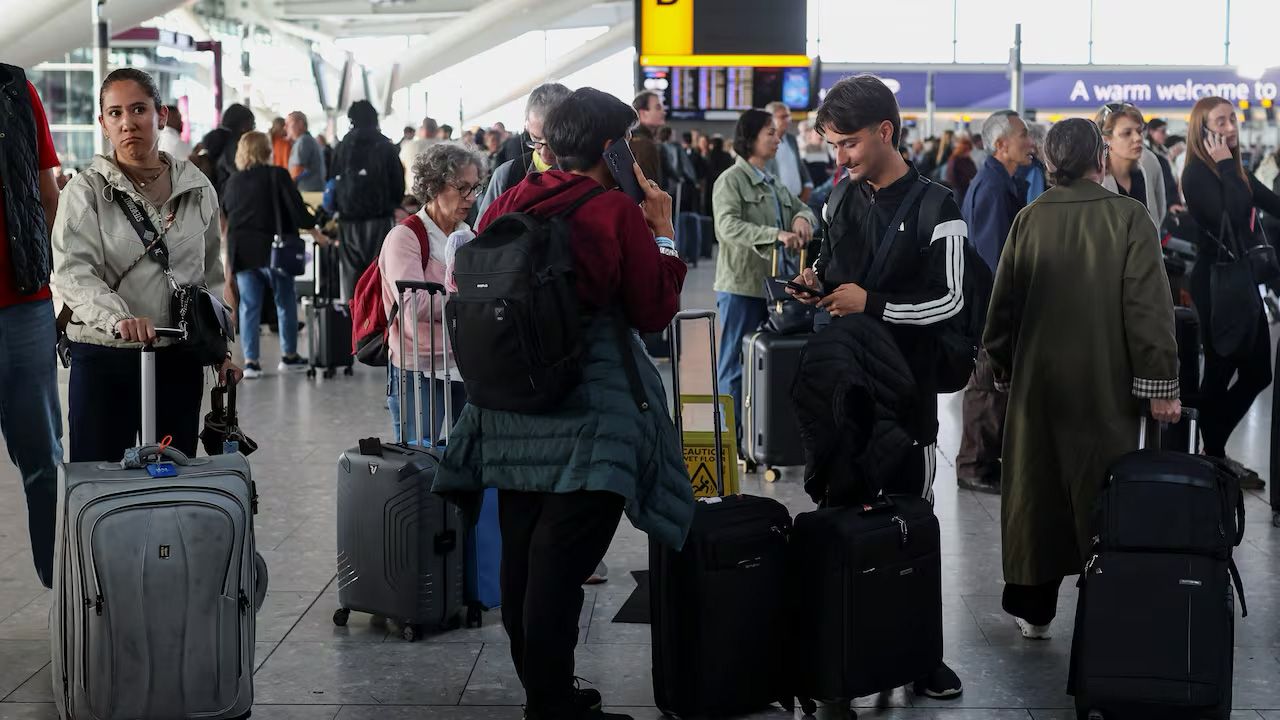 The disruption affected around fifteen airports, hitting Heathrow, Gatwick, Manchester and Birmingham hardest, and also reaching Stansted, Luton, London City and Edinburgh
 A technical failure in the flight data processing system of Britain's air traffic control provider forced the cancellation of close to a thousand flights on Tuesday and triggered a further wave of cancellations on Wednesday, in the biggest disruption to UK air traffic since 2023.
National Air Traffic Services (NATS) reported the problem at 1:46 p.m. local time from its control center in Swanwick, Hampshire, and applied a fix at around 4:40 p.m. While the fault persisted, controllers sharply reduced the number of takeoffs and landings allowed. Aviation analytics firm Cirium counted more than 1,750 cancellations to or from UK airports on Tuesday and at least 291 on Wednesday, figures higher than estimates from other industry sources, which put the first day at around a thousand.
NATS chief executive Martin Rolfe told the BBC he does not believe the episode was caused by a cyber attack and announced a full investigation. Transport Secretary Heidi Alexander also ruled out that possibility. NATS has not disclosed the specific technical trigger. “We know this is hugely frustrating and we apologize unreservedly,” the organization said, acknowledging that recovery took longer than expected.
The disruption affected around fifteen airports, hitting Heathrow, Gatwick, Manchester and Birmingham hardest, and also reaching Stansted, Luton, London City and Edinburgh. Heathrow said on Wednesday that flights were operating normally, though it warned of possible disruption while airlines repositioned aircraft and crews.
Ryanair said more than 65,000 of its passengers faced delays of up to eight hours and that it canceled more than 50 flights, with an immediate loss estimated at £3 million, around US$4.06 million. British Airways said on Wednesday it had no choice but to cancel more than 190 flights, and easyJet canceled around 200. Air India said it had to divert, delay or cancel multiple services to and from the United Kingdom, and Qatar Airways warned of delays and possible rerouting.
Ryanair chief operating officer Neal McMahon called for Rolfe's resignation and argued that the lessons promised after the 2023 episode had not been applied. A Wizz Air spokesperson said NATS in its current form is not fit for purpose. Rolfe defended the organization and said its systems are adequate, while apologizing. The UK Civil Aviation Authority said it expects a full report from NATS and will then assess whether further measures are needed.
It is the third NATS failure in three years. In August 2023, a problem in the automatic processing of flight plans caused cancellations over several days during a public holiday weekend, and in July 2025 a radar fault left more than 150 flights canceled. Separately, Heathrow — the world's seventh busiest airport by passenger volume in 2025, with more than 84 million — closed in March of that year because of a fire at an electrical substation.
Affected passengers are entitled to assistance and rerouting, though this type of incident is usually classed as an extraordinary circumstance, which in principle exempts airlines from paying fixed compensation.


Top Comments
Disclaimer & comment rulesCommenting for this story is now closed.
If you have a Facebook account, become a fan and comment on our Facebook Page!