MercoPress. South Atlantic News Agency


Bachelet withdraws her UN bid after the third Security Council straw poll
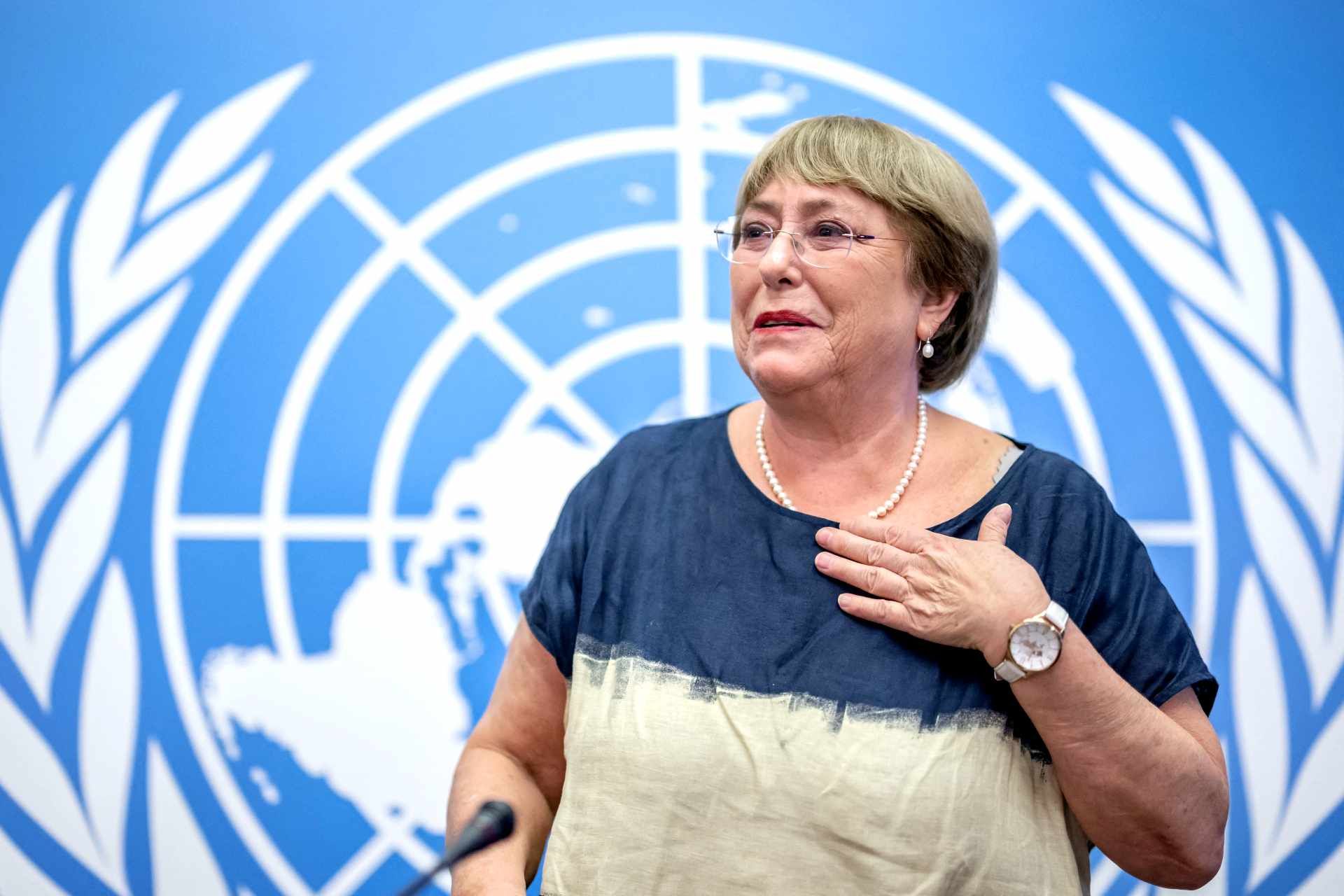 “I am convinced that leadership is not only knowing when to move forward. It is also knowing when to step aside,” she said in a video posted on her social media accounts
 Former Chilean president Michelle Bachelet announced on Saturday that she is withdrawing her candidacy for United Nations Secretary-General, a day after the third informal Security Council consultation, in which she lost ground compared with earlier rounds.
“I am convinced that leadership is not only knowing when to move forward. It is also knowing when to step aside so the process can run its course. The results of the Security Council straw polls tell me that moment has come,” she said in a video posted on her social media accounts. She attributed the adverse context to “strong winds blowing against principles such as multilateralism, against international law that is permanently transgressed,” and added: “I do not regret having taken on this great challenge. We contributed to placing on the global agenda that the next Secretary-General should be a woman from Latin America.”
The consultations are informal, non-binding and secret, held among the Security Council's fifteen members with three options: encourage, discourage or no opinion. Their results tend to leak to the press. According to preliminary figures published by PassBlue, an outlet specialising in UN coverage, Bachelet received one “encourage,” eleven “discourage” and three “no opinion” in Friday's round, the highest level of discouragement she recorded during the process; in July she had placed fourth. After these consultations, the five permanent members — the United States, China, Russia, France and the United Kingdom — must agree on a recommendation to the General Assembly, and each holds a veto. António Guterres completes his second term at the end of 2026.
Bachelet, 74, was president of Chile from 2006 to 2010 and from 2014 to 2018, was the first director of UN Women between 2011 and 2013, and headed the Office of the High Commissioner for Human Rights from September 2018 to June 2022. Her candidacy, presented in February by then president Gabriel Boric, sought to make her the first woman to lead the organisation and the second person from Latin America to hold the post, after Peru's Javier Pérez de Cuéllar.
On March 24, José Antonio Kast's government withdrew Chile's sponsorship, after assessing “the dispersion of candidates in the region and its impact on the chances of success.” Chile's foreign ministry said the country backs none of the remaining options and reaffirmed its commitment to multilateralism and to reform of the UN system. Interior Minister and spokesman Claudio Alvarado said the government had warned, even before taking office, that this was “a candidacy for which no solid base of support was apparent.” Bachelet retained the backing of Mexico and Brazil; she thanked Claudia Sheinbaum and Luiz Inácio Lula da Silva by name.
Boric responded on Sunday on X that “the dignity and consistency” with which she approached the bid “will be an example that endures in history,” and said that “even if there is a temporary defeat, that defeat will become a seed for the future.” Mexico's foreign ministry said Bachelet holds “unquestionable credentials.” In Chile, the withdrawal triggered mutual recriminations: figures close to Boric blamed Kast for dropping state support, while the opposition argued the outgoing government had failed to secure international backing before launching the bid.
Before the withdrawal, the race comprised five women and three men. Costa Rica's Rebeca Grynspan, secretary-general of UNCTAD, and Guyana's Carolyn Rodrigues-Birkett, a former foreign minister, lead the consultations. Argentina's Rafael Grossi, director general of the International Atomic Energy Agency, also lost support in Friday's round.


Top Comments
Disclaimer & comment rulesCommenting for this story is now closed.
If you have a Facebook account, become a fan and comment on our Facebook Page!