MercoPress. South Atlantic News Agency



UN general debate opens with wars, artificial intelligence and the Guterres succession
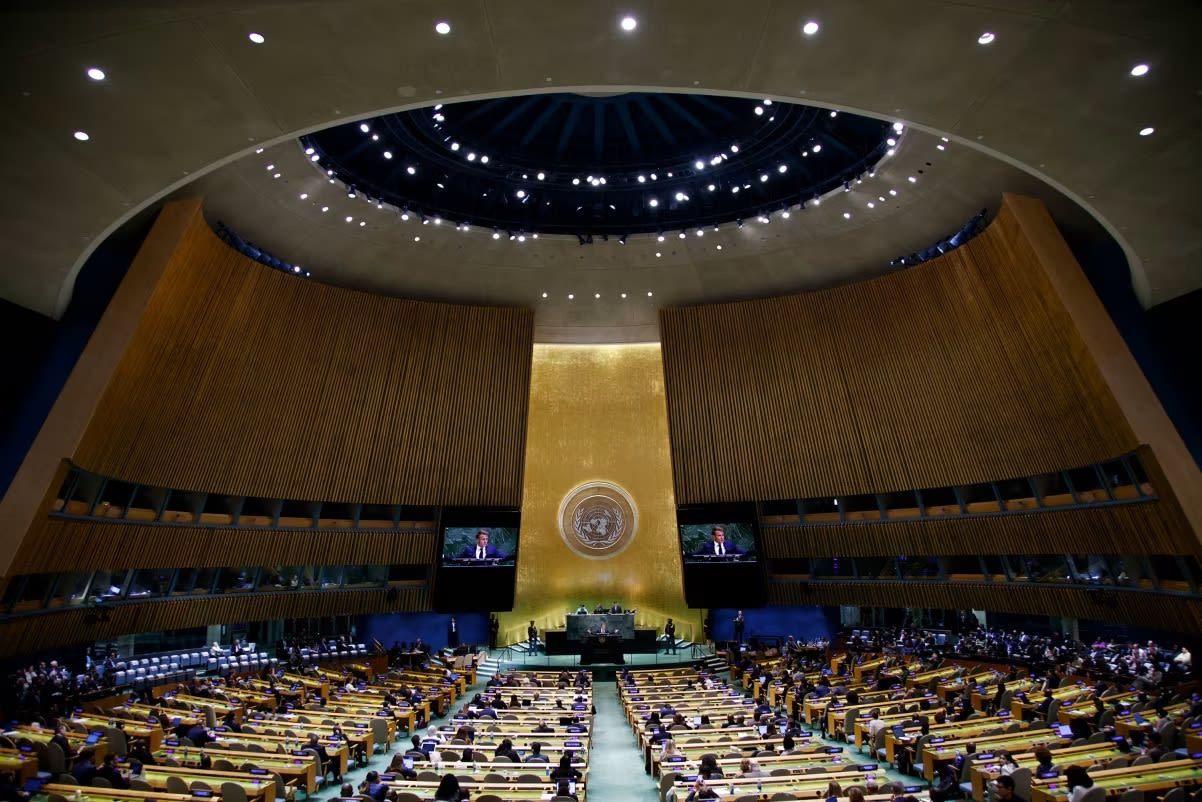 The organisation expects 73 heads of state, 45 heads of government, 49 ministers, 11 vice presidents and one crown prince
 The high-level general debate of the United Nations General Assembly opened on Tuesday in New York with the wars in Iran, Gaza, Ukraine, Sudan, Congo and Myanmar at the centre of the agenda, alongside concern over the advance of artificial intelligence without global controls and the race to succeed Secretary-General António Guterres.
The organisation expects 73 heads of state, 45 heads of government, 49 ministers, 11 vice presidents and one crown prince. The 81st session formally opened on September 8, presided over by Khalilur Rahman of Bangladesh, under the theme “Restoring trust, managing transformation: a United Nations that delivers for all”. Brazilian President Luiz Inácio Lula da Silva opened the list of speakers, in line with the tradition assigning Brazil the first address. Following Guterres's opening remarks, US President Donald Trump and France's Emmanuel Macron also spoke. Ukraine's Volodymyr Zelensky and Iran's Masoud Pezeshkian speak Wednesday, and Israeli Prime Minister Benjamin Netanyahu on Thursday.
Palestinian President Mahmoud Abbas will not travel for a second consecutive year because the United States denied him a visa, and will address the assembly by video that same Thursday. The headquarters agreement requires Washington to allow access for diplomats from all member states. New York Mayor Zohran Mamdani had called for Netanyahu's arrest over the treatment of Palestinians in Gaza; city authorities have no such power.
Who is absent is also notable. China's President Xi Jinping is sending a vice president and will meet Trump in Washington on Wednesday; the US president will spend only two days in New York. Russian President Vladimir Putin is not attending either, and Indian Prime Minister Narendra Modi withdrew.
The succession to Guterres, whose second term ends on December 31, dominates corridor talk. The race narrowed to seven candidates after Chilean former president Michelle Bachelet withdrew on Saturday, a day after the Security Council's third informal consultation. According to sources cited by Reuters, Costa Rica's Rebeca Grynspan, secretary-general of UNCTAD, leads that straw poll by a narrow margin. The United States has not formally backed any candidate; a State Department spokesperson said candidates must publicly commit to the changes Washington requires and criticised what it described as a politicised ideology that had undermined the institution's effectiveness. The appointment will not be settled this week.
Artificial intelligence has pushed onto the agenda. Days before the gathering, executives from three major companies in the sector warned about the risk of the technology escaping human control and called for a pause; Trump dismissed those warnings as “a hoax” and urged continued advances to keep the United States ahead of China. The Security Council added a high-level meeting on the subject for Wednesday afternoon. Guterres said “the world cannot afford a race to the bottom on AI safety”.
The organisation's finances remain fragile. The United States paid US$725 million towards this year's regular budget, enough to avoid losing its General Assembly vote, but still owes more than US$1 billion. Richard Gowan, of the International Crisis Group, said the UN is no longer “in freefall”, though it is “stuck in an open-ended or permanent crisis”.


Top Comments
Disclaimer & comment rulesCommenting for this story is now closed.
If you have a Facebook account, become a fan and comment on our Facebook Page!