MercoPress. South Atlantic News Agency



Iguazú Falls closed as the river’s flow tops 12,000 cubic metres per second
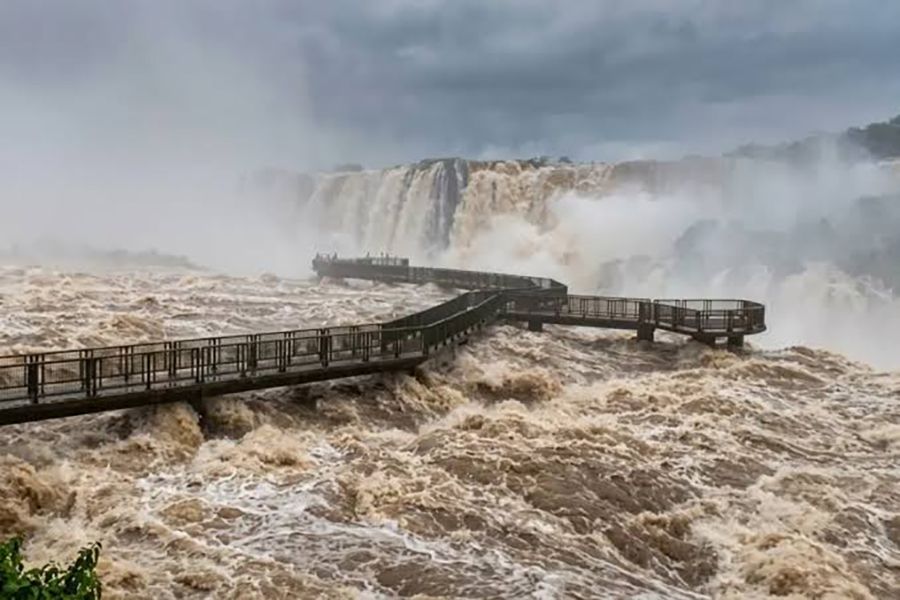 The river rose just over two metres between Sunday and Monday at Puerto Iguazú and reached a level of 24.30 metres, and was still rising
 Iguazú National Park, in Argentina’s Misiones province, closed access to the falls’ walkways on Monday because of an exceptional rise in the Iguazú River, whose flow exceeded 12,000 cubic metres per second. The flood is part of an episode of heavy rainfall linked to El Niño that has also caused the Uruguay River to burst its banks, with evacuations on both sides.
According to the Argentine Naval Prefecture, the river rose just over two metres between Sunday and Monday at Puerto Iguazú and reached a level of 24.30 metres, and was still rising. The alert level is 25 metres and the evacuation level 28. The park authority and the concessionaire halted ticket sales during Monday’s public holiday and inspected trails and infrastructure, where some small trees fell. “We may be able to open normally tomorrow,” park authorities told the newspaper La Nación. The flood had been forecast weeks in advance by the National Parks Administration.
Cierre total en las Cataratas del Iguazú por crecida histórica Las intensas y extraordinarias lluvias registradas en las cuencas de los ríos Paraná e Iguazú obligaron a las autoridades a cerrar de manera preventiva el acceso al público en el Parque Nacional Iguazú. De acuerdo con las autoridades, el flujo de agua superó los 12.000 metros cúbicos por segundo, lo que representa casi 10 veces el volumen normal de los saltos. Imágenes : Tiempo_AMBA en X y lucasdiaz.birding en Instagram
— EL TIEMPO (@ELTIEMPO) October 12, 2026
Rain in the upper basin, in southern Brazil, has also swollen the Uruguay River. In Uruguay, the first families were evacuated in Salto on October 10, and the departmental emergency committee has gone into permanent session. In Paysandú, the river reached 6.25 metres on Sunday, close to the evacuation level of 6.89, and 35 people had to leave their homes, some housed in army tents. The ferry service between Monte Caseros and Bella Unión was suspended.
On the Argentine side, seven families were evacuated in Concordia, where the river is expected to stay around 11.60 metres until Thursday, and 31 people in Paso de los Libres. The binational Salto Grande dam is releasing about 18,000 cubic metres per second.
Forecasts place the current El Niño among the most intense in recent decades. Last week, an atmospheric river intensified by the same phenomenon brought Santiago, Chile, its wettest October on record and a mudslide in the Las Condes district.


Top Comments
Disclaimer & comment rulesNo comments for this story
Please log in or register (it’s free!) to comment. Login with Facebook