MercoPress. South Atlantic News Agency
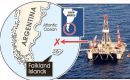


Falklands approves bill on oil pollution emergencies in relation to offshore installations, and responsibilities
 The Director of Mineral Resources will be the competent authority – “Falkland Islands contingency plan” and “offshore installations” used in the OPRC Regulations.
The Falkland Islands Executive Council has approved a set of Regulations 2026 to amend the Maritime (Oil Pollution Preparedness, Response and Co-operation Convention) Regulations 2019 (“the OPRC Regulations”) to make provision for the preparation and maintenance of oil pollution emergency plans in relation to offshore installations and to require the persons responsible for offshore installations to report oil incidents where oil is discharged into the sea.
Regulations 1 and 2 provide for the title and commencement of the Regulations. Regulation 3 provides that these Regulations amend the OPRC Regulations and the following regulations provide for specific amendments to be made to those Regulations.
Regulation 4 amends regulation 3 of the OPRC Regulations, which sets out the objects of those Regulations, to include making provision for the preparation and maintenance of oil pollution emergency plans in relation to offshore installations.
Regulation 5 amends regulation 4 of the OPRC Regulations which contains definitions of words and phrases used in those Regulations. It adds new definitions for words and phrases used in the 17 amended provisions and replaces the definitions of “competent authority” – with the effect that in relation to ships, ports, harbours and oil handling facilities the Falkland Islands Maritime Authority (FIMA) is the competent authority, but in relation to offshore installations, the Director of Mineral Resources will be the competent authority – “Falkland Islands contingency plan” and “offshore installations” used in the OPRC Regulations.
Regulation 6 amends regulation 6 of the OPRC Regulations which is the application provision, to provide that the OPRC Regulations will apply to offshore installations.
Regulation 7 amends regulation 14 of the OPRC Regulations to require an operator of an oil handling facility to ensure that no activities that pose a risk of an oil pollution incident are undertaken unless the facility has an oil pollution emergency plan approved by the authority.
Regulation 8 inserts a new Part 3A into the OPRC Regulations which makes specific provision for the preparation and maintenance of oil pollution emergency plans in relation to offshore installations.
New regulation 15A requires the responsible person for an offshore installation to prepare and maintain an oil pollution emergency plan for each offshore installation for which they are responsible, although the Director of Mineral Resources may permit joint plans in specified circumstances.
New regulation 15B requires the person preparing an oil pollution emergency plan for an offshore installation to take into account guidance issued by the Director of Mineral Resources and for the plan to comply with the requirements contained in the new Schedule to the OPRC Regulations, which is inserted by regulation 13.
New regulation 15C sets out the procedure for the submission of an oil pollution emergency plan for an offshore installation to the Director of Mineral Resources for approval and the dates by which an application must be submitted.
New regulation 15D provides that an approved oil pollution emergency plan must be reviewed every five years or before then if specified events occur. The Director of Mineral Resources may require an oil pollution emergency plan to be reviewed at any time.
New regulation 15E sets out the consequences if a responsible person for an offshore installation fails to review, submit or amend an oil pollution emergency plan. These are that an oil pollution emergency plan ceases to be approved for an offshore installation and, as a result of new regulation 15G(1), this will mean that no oil or gas operations can be carried out.
New regulation 15F gives the Director of Mineral Resources power to direct, after consultation with a responsible person, that an oil pollution emergency plan be amended if it is not compatible with the Falkland Islands contingency plan or is not appropriate for dealing with oil pollution incidents in the area of the offshore installation.
New regulation 15G sets out the duties imposed on a responsible person for an offshore installation. These include: ensuring that no oil or gas operations are carried out unless the offshore installation is subject to an oil pollution emergency plan approved by the Director of Mineral Resources; maintaining relevant equipment; and undertaking exercises. In the event of an oil pollution incident, the oil pollution emergency plan must be implemented (new regulation 15G(3)).
New regulation 15H imposes duties on the licensee (defined as a person to whom a licence has been granted by the Governor under section 6 of the Offshore Minerals Ordinance 1994) to ensure that where it appoints responsible persons, those persons are capable of satisfactorily carrying out 18 the functions and discharging their duties and that they have access to adequate financial resources to discharge their duties.
New regulation 15I requires a responsible person for an offshore installation who observes or is made aware of any event involving a discharge of oil, or probable discharge of oil, or the presence of oil in the sea to report it to the Director of Mineral Resources. Regulation 9 amends regulation 17 of the OPRC Regulations to set out the steps FIMA and the Director of Mineral Resources must take in response to a report of a discharge etc of oil.
Regulation 10 amends regulation 18 of the OPRC Regulations to now contain provision for the inspection of ships, harbours, ports, oil handling facilities and offshore installations and the powers under which the respective inspectors may operate.
Regulation 11 amends regulation 19 of the OPRC Regulations to introduce offences where a person fails to comply with or perform duties introduced by these Regulations.
Regulation 12 introduces a new regulation 20 in the OPRC Regulations which empowers the Director of Mineral Resources, FIMA and Governor to share information obtained for the purposes of the OPRC Regulations with other agencies.
Regulation 13 inserts a Schedule in the OPRC Regulations that sets out the requirements for an oil pollution emergency plan in respect of offshore installations.
Regulation 14 makes transitional provision. Published by the Attorney General’s Chambers, Stanley, Falkland Islands
Crown Copyright 2026 Falkland Islands Laws online: www.legislation.gov.fk/ Falklands Gazettes online: www.fig.gov.fk/& www.nationalarchives.gov.fk/


Top Comments
Disclaimer & comment rulesNo comments for this story
Please log in or register (it’s free!) to comment. Login with Facebook