MercoPress. South Atlantic News Agency
Argentina
-
Thursday, August 6th 2026 - 09:37 UTC
Uruguay to open Pope Leo XIV's first South American tour

Uruguay will be the first stop on Pope Leo XIV's apostolic journey to South America between November 6 and 17, the director of the Holy See Press Office, Matteo Bruni, confirmed on Wednesday.
-
Wednesday, August 5th 2026 - 23:10 UTC
Argentine government pulls chapter on land sales to foreigners from Senate debate
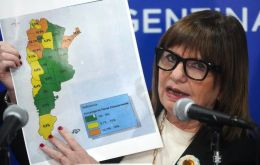
Argentina's governing bloc withdrew on Wednesday the rural land chapter of the Inviolability of Private Property bill from the Senate agenda, lacking the votes to pass it and hours before the session scheduled for Thursday.
-
Wednesday, August 5th 2026 - 21:55 UTC
Brazil ties its ambassador's return to an end to Milei's insults
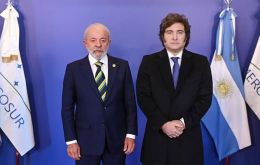
Brazilian Foreign Minister Mauro Vieira said on Wednesday that the downgrading of diplomatic relations with Argentina to chargé d'affaires level will remain in place until Argentine President Javier Milei stops what he called repeated insults and attacks against Luiz Inácio Lula da Silva.
-
Wednesday, August 5th 2026 - 08:38 UTC
Brazil downgrades ties with Argentina to chargé d'affaires level over Milei's remarks

Brazil decided on Tuesday to downgrade its diplomatic relations with Argentina to the level of chargé d'affaires and to postpone indefinitely the return of its ambassador in Buenos Aires, Julio Glinternick Bitelli, following a fresh round of remarks by Argentine President Javier Milei against his counterpart Luiz Inácio Lula da Silva.
-
Tuesday, August 4th 2026 - 06:21 UTC
Around 140 vessels stranded at Argentine ports after government deregulation decree

Around 140 vessels were waiting on Monday to enter or leave Argentine ports after maritime pilots stopped accepting new assignments in protest at a decree deregulating their profession. The figures come from industry sources; some reports put the number above 150.
-
Monday, August 3rd 2026 - 23:14 UTC
Milei: the alliance with Washington is the “key” to sovereignty over the Falklands
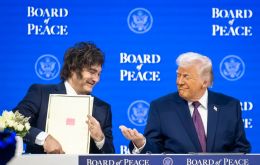
Argentine President Javier Milei said on Monday that his government's alignment with the United States will advance Argentina's sovereignty claim over the Falklands, in remarks to Radio Mitre.
-
Monday, August 3rd 2026 - 20:17 UTC
Argentina: $LIBRA investors to file civil suit after mediation fails

Un grupo de inversores que se consideran perjudicados por el lanzamiento del criptoactivo $LIBRA presentará una demanda por daños y perjuicios en el fuero civil argentino, tras no alcanzar un acuerdo en la instancia de mediación obligatoria previa.
-
Monday, August 3rd 2026 - 16:08 UTC
Milei on Lula: released over a procedural flaw, not for being innocent
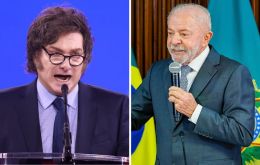
Argentine President Javier Milei repeated his accusations against Brazilian President Luiz Inácio Lula da Silva on Sunday, arguing that the corruption convictions once against him were annulled on formal grounds, in remarks that came just as Brazil's ambassador to Buenos Aires was preparing to return after being recalled for consultations.
-
Monday, August 3rd 2026 - 07:24 UTC
Milei says he has chosen a 2027 running mate amid rupture with his vice president

Argentine President Javier Milei said he has already decided who will run alongside him as vice-presidential candidate in the October 2027 elections, while withholding the name, in remarks that come amid an open confrontation with his current vice president, Victoria Villarruel.
-
Sunday, August 2nd 2026 - 21:39 UTC
A child's death in Argentina reopens debate over court-ordered family reunification

The death of a two-year-old girl in Villa Gesell, on the coast of Buenos Aires province, and the detention of her mother have drawn scrutiny to Argentina's child protection system, and in particular to court-ordered family reunification proceedings.