MercoPress. South Atlantic News Agency
Argentina
-
Friday, April 16th 2021 - 09:39 UTC
Cost of living in Argentina rises 4.8% in March alone
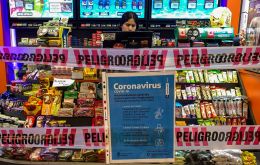
Argentina's Consumer Price Index (CPI-Cost of living) rose 4.8% during March, 1.2 percentage points above February's 3.6%, the National Institute of Statistics and Censuses (INDEC) announced Thursday.
-
Friday, April 16th 2021 - 08:45 UTC
Argentina reinstates beef exports registry
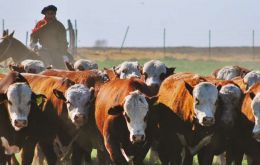
Argentina's government Thursday created a registry of beef exporters among other measures to curb under-invoicing, which authorities fear has been going on for a while now.
-
Thursday, April 15th 2021 - 09:55 UTC
Argentina: curfew extended, on-site schooling banned in Buenos Aires amid coronavirus second wave
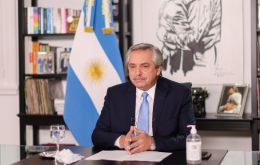
Argentine President Alberto Fernández Wednesday announced further restrictions for the Buenos Aires Metropolitan Area (AMBA) in a manoeuvre to curb the so-called second wave of the covid-19 disease.
-
Thursday, April 15th 2021 - 09:26 UTC
Argentine laboratory seeks to manufacture Sputnik V vaccine locally
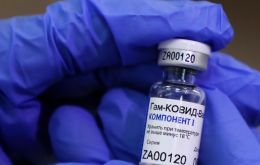
The Argentine firm Laboratorios Richmond Wednesday launched the Financial Trust “Project V.I.D.A. (Project and Immunization for Argentine Development),” to seek financing for the development of the plant where the Russian-designed Sputnik V vaccine is to be manufactured locally.
-
Thursday, April 15th 2021 - 09:06 UTC
Argentina to receive over 800,000 doses of AstraZeneca; Denmark stop giving that vaccine
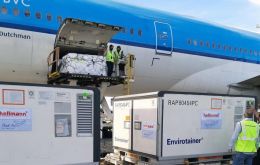
The Argentine government has announced a shipment of 864,000 doses of the AstraZeneca anti-covid-19 vaccine is due at Buenos Aires' Ezeiza airport onboard a KLM flight this coming Sunday morning.
-
Wednesday, April 14th 2021 - 14:30 UTC
Parole granted to former Argentine Public Works Secretary jailed for hiding bags with corruption money
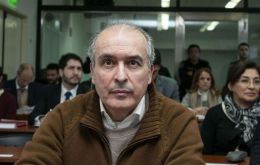
An Argentine court Tuesday granted parole to Former Argentine Public Works Secretary José López, who is serving a 7.5-year jail sentence for his involvement in what became known as the bags of money case.
-
Wednesday, April 14th 2021 - 09:42 UTC
Argentine Vice-President and aides acquitted in Central Bank “future dollar” case
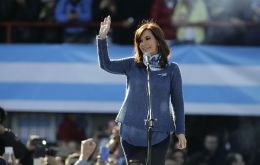
Argentina's top penal court of appeals Tuesday acquitted former President Cristina Fernández de Kirchner (2008-2015) and her aide Axel Kiciloff of all charges in the so-called future dollar case, because there had been no damage to the State, and that economic policy issues are not subject to prosecution.
-
Wednesday, April 14th 2021 - 09:30 UTC
Argentine president tells US envoy there will be no new Chinese base

Argentine President Alberto Fernández Tuesday told US National Security Council advisor Juan Gonzalez that “there will be no foreign bases,” it was reported.
-
Tuesday, April 13th 2021 - 14:32 UTC
Argentina finished Antarctica Summer Campaign without Covid-19 cases
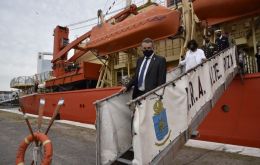
Argentina's 2020/2021 Antarctic campaign successfully finished last week after the arrival of the Argentine Navy icebreaker “Almirante Irízar” at the port of Buenos Aires without registering any positive case of Covid-19 among its 392 crew members, military and scientists.
-
Tuesday, April 13th 2021 - 09:54 UTC
Argentina: Experts advise further restrictions necessary to curb coronavirus spread
Argentine Chief of Cabinet, Santiago Cafiero and Health Minister Carla Vizzotti Monday met online with a committee of experts to assess the country's current covid situation. The recommendation was, as expected, harsher restrictions.