MercoPress. South Atlantic News Agency
Chile
-
Tuesday, September 29th 2026 - 09:02 UTC
Chile's defence minister backs trade between Punta Arenas and the Falklands
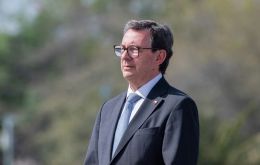
Chile's Defence Minister Fernando Barros Tocornal has backed the development of commercial activity between the Magallanes region and the Falklands, saying his country's support for Argentina's sovereignty claim does not imply restrictions on trade with the archipelago. He made the remarks in an interview with Radio Polar in Punta Arenas during a visit to the region on September 24 and 25.
-
Monday, September 28th 2026 - 08:09 UTC
Chile reinforcing its military presence in Magallanes Region and Antarctica
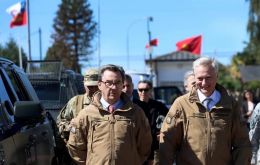
Chile announced the reinforcement of its military capacities in the Magallanes Region, extreme south of the country with a plan that includes renewal of aircraft, modernization of armored vehicles, increased vigilance and presence in the austral territory and Antarctica, updating of military strategy based on experiences from the current war scenarios in Europe and Middle East.
-
Thursday, September 24th 2026 - 23:47 UTC
Punta Arenas/Falklands maritime links are based on history, economics and geography
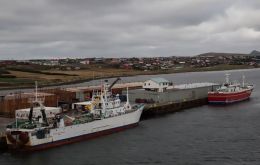
The announced maritime and trade link between Punta Arenas in Chile and the Falkland Islands has been strongly argued and supported by the main newspaper from the Chilean austral city on the Magellan Strait and capital of the Magallanes Region.
-
Wednesday, September 23rd 2026 - 17:48 UTC
Chilean Defense Committee meets in Punta Arenas to address pretensions over Magellan sovereignty
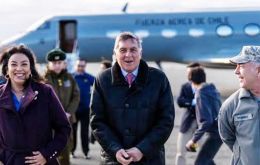
Chilean Vice-president Claudio Alvarado praised the Defense Committee from the House of Deputies which is planning to hold a formal meeting next Friday at the Austral Naval Command in Punta Arenas, to address the Defense budget, Armed Forces capability and austral sovereignty particularly the Magellan Strait.
-
Wednesday, September 23rd 2026 - 13:58 UTC
Chilean Senate reaffirms Magellan Strait sovereignty and support for Punta Arenas to trade with the world
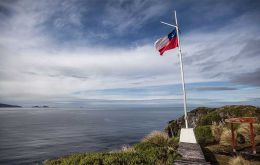
A delegation from the Chilean Senate was in Punta Arenas to subscribe a declaration reaffirming Chilean exclusive sovereignty over the Magellan Strait and committing extra funds for its maintenance and reinforcement of strategic capacities when discussing the 2027 national budget. Likewise they supported the right of the people from the Magallanes Region to freely trade with whoever they decide in the world.
-
Monday, September 21st 2026 - 04:36 UTC
Bachelet withdraws her UN bid after the third Security Council straw poll
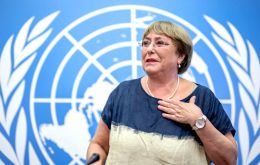
Former Chilean president Michelle Bachelet announced on Saturday that she is withdrawing her candidacy for United Nations Secretary-General, a day after the third informal Security Council consultation, in which she lost ground compared with earlier rounds.
-
Saturday, September 19th 2026 - 09:22 UTC
Falklands: official reception to celebrate Chile's Independence Day
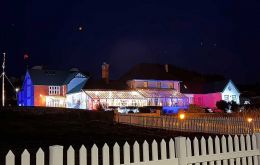
As is traditional in the Falklands, the Governor and the elected Legislative Assembly extended their congratulations and celebrated with great enthusiasm Chile's Fiestas Patrias, and in particular September 18, Independence Day.
-
Friday, September 11th 2026 - 09:06 UTC
Chilean deputy likens British sovereignty in the Falklands to Chile's in Magellan

A Chilean lawmaker compared British sovereignty over the Falklands with Chile's over the Strait of Magellan during a parliamentary session, a position that runs counter to the official line of Santiago's government, which backs Argentina's claim to the archipelago.
-
Thursday, September 10th 2026 - 08:25 UTC
Argentina claims Chile is committed to no logistic support for Falklands’ oil industry
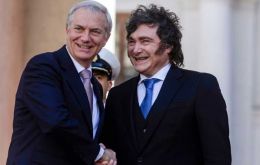
The Argentine government has insisted, following the recent presidential Summit between Javie Milei and Chilean leaded Jose Antonio Kast, that their Andean neighbor will continue to strongly support Argentina’s claim over the Falkland Islands and will render no logistic support related to any hydrocarbons extraction in the Islands”.
-
Friday, September 4th 2026 - 23:30 UTC
Bachelet concedes difficulty of her UN bid: “I know I'm not going to be secretary-general”
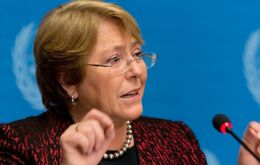
Former Chilean President Michelle Bachelet acknowledged on Thursday the difficulties facing her candidacy for United Nations secretary-general. Asked at a public event in Santiago why she wants to lead the organization, she replied in a light tone: “That's what I ask myself. Perhaps because I know I'm not going to be secretary-general.”