MercoPress. South Atlantic News Agency
Economy
-
Wednesday, May 17th 2023 - 11:09 UTC
Leading world central bankers to meet in Sao Paulo to address “past and present challenges”
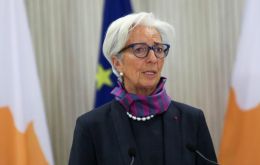
Christine Lagarde from the European Central Bank, Agustín Carstens, General Manager of the Bank for International Settlements (BIS), and Mark Carney, former Governor of the Bank of England (BoE), among other recognized world central bankers will be attending a Brazilian Central Bank seminar on central banks “past and present challenges” to take place in Sao Paulo on May 19th.
-
Wednesday, May 17th 2023 - 10:51 UTC
Brexit aftermath, UK Parliament takes initiative as to how and when scrapping EU legislation
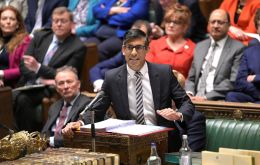
The British government has suffered defeats in the House of Lords over plans to scrap certain EU laws by the end of the year, reports BBC. Peers backed an amendment which would give Parliament greater scrutiny over which rules should be ditched and also voted to give devolved governments, rather than Westminster ministers, the final say on whether EU rights should be kept.
-
Wednesday, May 17th 2023 - 10:18 UTC
ECLAC calls for broader financing for Latin American countries
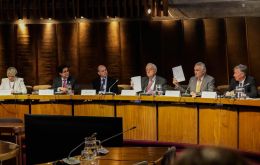
The Economic Commission for Latin America and the Caribbean (ECLAC) Tuesday said it considered that the current level of indebtedness in Latin America requires a transformation of the international financial architecture to offer countries other alternatives to attain “inclusive and sustainable” development.
-
Tuesday, May 16th 2023 - 10:59 UTC
Argentina: “Blue” dollar goes back up after Massa's new measures
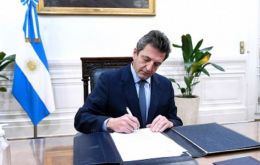
As Argentina raised the interest rate to 97% and adopted other measures such as the opening of food imports to control inflation while at the same time further restricting people's access to foreign currency, the “Blue” (a euphemism for “black market”) dollar rose again Monday to AR$ 483, it was reported in Buenos Aires.
-
Tuesday, May 16th 2023 - 03:01 UTC
Brazil and UK agree to speed up poultry trade with de-bureaucratization
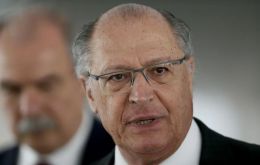
Brazil's vice president and Minister of Development, Industry, Commerce, and Services, Geraldo Alckmin, announced the UK’s endorsement for the de-bureaucratization of chicken exports from Brazil, in which poultry meat exporters will have zero cost when it comes to the issuing of market Certificates of Origin.
-
Monday, May 15th 2023 - 10:38 UTC
Argentina to import food to curb price hikes

Argentine authorities Sunday announced a set of measures to tackle inflation, which include more active involvement in the foreign exchange market. But the most striking of them all was the opening of food imports at zero tariffs to hit local producers who over-benefitted from protectionism.
-
Saturday, May 13th 2023 - 10:58 UTC
Argentina: April's monthly inflation set at 8.4%

Argentina's National Institute of Statistics and Census (Indec) Friday announced that inflation for the month of April of 2023 was 8.4%, way above all projections. Interannually, the Consumer Price Index (CPI) reached 108.8% and the accumulated variation in the first four months of the year was 32%. It is the highest monthly inflation since April 2002 (10.4%) and the highest year-on-year figure since 1991. Since Alberto Fernández took office in December 2019, prices increased 448%.
-
Friday, May 12th 2023 - 10:59 UTC
Brazil asks US to help Argentine with IMF talks
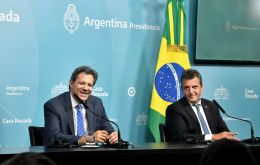
The Brazilian Government of President Luiz Inàcio Lula Da Silva Thursday asked the US Treasury Department to exert some pressure on the International Monetary Fund (IMF) -of which the US is the largest shareholder- to help Argentina overcome the current crisis caused by the drought while still bound by commitments signed with the world entity, which are holding back the economic development of the South American country.
-
Friday, May 12th 2023 - 10:55 UTC
On Brazil's lead, Canada and Mercosur advance trade negotiations
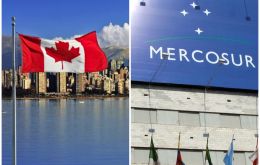
Brazil is leading efforts to increase its own and Mercosur interests in closer trade and investment relations with Canada. This week the Brazilian Foreign Trade Secretary from the Ministry of Development, Industry, Trade and Services, MDIC, Tatiana Prazeres received the Canadian ambassador in Brasilia, Emmanuel Kamarianakis and special representatives, with the purpose of strengthening trade relations between both countries and the regional block Mercosur.
-
Friday, May 12th 2023 - 10:45 UTC
Brazilian FM says EU's proposal too demanding for Mercosur-EU FTA
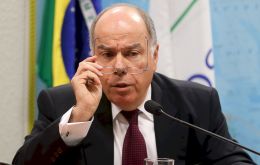
Brazil's Foreign Minister Mauro Vieira Thursday said during an appearance before his country's Senatorial Foreign Relations Committee that the European Union's (EU) new environmental requirements for the Mercosur-EU agreement could cause “enormous damage” to the South American bloc.