MercoPress. South Atlantic News Agency
Economy
-
Friday, June 11th 2010 - 06:03 UTC
Euro-zone rates unchanged; strong ECB support for budget austerity measures

The European Central Bank kept interest rates in the Euro zone at 1% on Thursday as expected. June was the thirteenths month running that rates have been left on hold. ECB also supported the recent budget deficit cuts announced by several EU countries.
-
Friday, June 11th 2010 - 06:00 UTC
Finland is the first Euro-zone economy to re-enter recession

Finland's economy slipped back into recession during the first three months of 2010, official figures have shown. During the January to March quarter, its economy contracted by a seasonally-adjusted 0.4%, after a decline of 0.2% in October to December of last year.
-
Friday, June 11th 2010 - 05:49 UTC
Swiss researchers uncover microscopic fungus which speeds rice growth
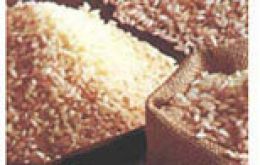
Researchers at a Swiss university said Thursday that they have uncovered a microscopic fungus that is able to increase the speed of rice growth by five times. In a study published by Switzerland's University of Lausanne, researchers claimed that the fungus mycorrhiza would not only cut the use of phosphate fertilizers, it was also “completely natural” or GM-free.
-
Friday, June 11th 2010 - 05:44 UTC
Trying to cool the economy Brazil raises basic interest rate 75 point to 10.25%
Brazil’s central bank raised its benchmark Selic interest rate for a second straight meeting to contain inflation following strong signs the economy is overheating.
-
Friday, June 11th 2010 - 00:37 UTC
Bank of England leaves rates and quantitative easing funds unchanged
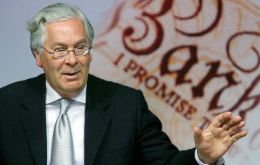
UK interest rates have been kept on hold at a record low of 0.5% for the 15th month in a row. The Bank of England also decided on Thursday not to inject any more money into the UK economy under its policy of quantitative easing (QE).
-
Thursday, June 10th 2010 - 18:20 UTC
Global economic reforms impeded by China’s Yuan policy, claims US

Global economic reforms are being impeded by China's refusal to revalue its currency, the Yuan, US Treasury Secretary Timothy Geithner has said. Addressing the US Senate Committee on Finance he said that distortions caused by China's stance were “an impediment to the global rebalancing we need”.
-
Thursday, June 10th 2010 - 06:52 UTC
Cuba is coffee dry: the country has become a net importer of the bean

Cuban coffee production tumbled 90% in the last few years forcing the government of President Raul Castro to spend 50 million US dollars annually in importing the beans to ensure domestic consumption revealed the official weekly Trabajadores.
-
Thursday, June 10th 2010 - 06:47 UTC
Chinese exports displace Brazilian goods overseas and at home

Brazil lost an estimated 12.6 billion US dollars in exports between 2004 and 2009 because of Chinese penetration in the country’s main international markets according to a report from the powerful Federation of Sao Paulo States industries, FIESP, released Wednesday.
-
Thursday, June 10th 2010 - 06:42 UTC
Annual plunder of developing countries could finance 48.000 km of paved roads

At a time of global economic hardship, corruption fighters from around the world convened this week in Paris to work against further plundering of developing countries, by supporting efforts against asset theft and safe havens for ill-gotten gains.
-
Thursday, June 10th 2010 - 06:39 UTC
China’s exports soar 48.5% in May, the highest in more than six years

China’s exports jumped 48.5% in May from a year earlier, the biggest gain in more than six years. However the impact of the European crisis is still to be seen following on this week’s IMF warning that global economic risks have risen significantly.