MercoPress. South Atlantic News Agency
Economy
-
Wednesday, June 4th 2008 - 21:00 UTC
UN program promises 1.2 billion food aid for 62 countries
The United Nations World Food Programme said on Wednesday that it will provide 1.2 billion US dollars in additional food aid in the 62 countries hit hardest by the current crisis resulting from the surge in food and fuel prices.
-
Wednesday, June 4th 2008 - 21:00 UTC
Bernanke confirms inflation is the Fed's main concern
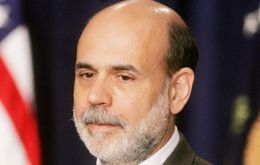
Federal Reserve Chairman Ben Bernanke said Wednesday that long term inflationary expectations are concerning but he does not believe the United States will experience the out-of-control prices seen with 1970s oil shocks.
-
Wednesday, June 4th 2008 - 21:00 UTC
Chilean truckers strike 48 hours to demand fuel relief
Despite Chilean President Michelle Bachelet's announcement of a one billion US dollars subsidy boost, Chile's Confederation of Truck Drivers, CNDC, said that demands for fuel tax relief have not been met.
-
Tuesday, June 3rd 2008 - 21:00 UTC
Brazil to sell Super Tucano light attack planes to US
Brazilian aircraft manufacturer Embraer is participating in preliminary negotiations to sell the U.S. government eight 314-B1 Super Tucano light attack and training planes for use in Iraq, the company said Monday, according to press reports from Brazil.
-
Tuesday, June 3rd 2008 - 21:00 UTC
UN Chief Ban Ki-moon urges action on food crisis
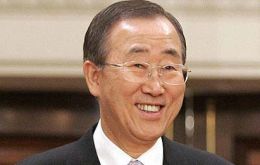
U.N. Secretary General Ban Ki-moon will issue an urgent plea to world leaders at a food summit in Rome on Tuesday to immediately suspend trade restrictions, agricultural taxes and other price controls that have helped fuel the highest food prices in 30 years, according to U.N. officials.
-
Tuesday, June 3rd 2008 - 21:00 UTC
May inflation in Uruguay up 0.87% and 4.10% in 2008
Consumer prices in Uruguay during May increased 0.87%, accumulating 4.10% in the first five months of 2008, according to the country's Statistics Institute (INE), latest release. The index is higher than the average forecasted by 28 Central Bank consultants that anticipated 0.7%.
-
Tuesday, June 3rd 2008 - 21:00 UTC
Trichet warns Europe about reactions to crude prices crisis
The European Central Bank president Jean-Claude Trichet set the tone at the ECB's 10th anniversary event by warning that bad management of the oil crisis in the 1970s (meaning large wage rises and low interest rates) seriously hurt the economy and jobs, and that the errors of the past must not be repeated. “This anniversary is no time for complacency,” Trichet said.
-
Tuesday, June 3rd 2008 - 21:00 UTC
Argentine “inflation alert” according to the Daily Telegraph
Under the title of “Argentine alert as inflation specter stalks half the world”, London's Daily Telegraph, --using Argentina as a lead case--, describes how international bankers managed to convince pension funds to invest in an estimated 300 billion US dollars in inflation linked sovereign bonds from emerging economies, which “hawk eyes” then considered safe.
-
Monday, June 2nd 2008 - 21:00 UTC
Peru plans to grow 7% annually until at least 2015
Peru is planning a sustained growth averaging 7% until 2015, with minimum inflation based on the opening of the economy that has seen tariffs drastically cut in the last two years, said the country's Economy minister Luis Carranza during a visit to Chile where he was the main speaker at a trade forum.
-
Monday, June 2nd 2008 - 21:00 UTC
Chile pumps one billion dollars to help stabilize fuel prices

Chile announced Monday a one billion US dollars injection to the fuel prices stabilization fund and another 250 million US dollars to prop the government owned fuel company ENAP in an attempt to ease the impact of ever increasing international crude prices.

