MercoPress. South Atlantic News Agency
Economy
-
Saturday, September 1st 2007 - 21:00 UTC
Latinamerican markets react positively to Bernanke's comments
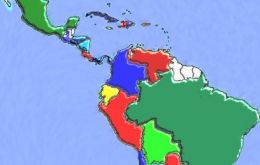
Latinamerican markets reacted positively on Friday to comments from Federal Reserve Chairman Ben Bernanke. In Brazil, the benchmark Bovespa stocks index rose 3.41% in intraday trading, tracking strong gains on Wall Street.
-
Friday, August 31st 2007 - 21:00 UTC
WTO to investigate alleged Chinese industrial subsidies

The World Trade Organisation announced Friday it will investigate whether Chinese industrial subsidies breach international trade rules following a complaint by the United States and Mexico.
-
Friday, August 31st 2007 - 21:00 UTC
Wheat prices at all times record soar to 8 dollars per bushel

Wheat prices on Friday surged more than 6% to a fresh all-time high driven by thin global supplies and heavy export demand. The sharp price increase, which came on top of the 5% jump on Thursday, reinforced fears of a spike in food inflation as industry begins to pass the costs on to consumers.
-
Friday, August 31st 2007 - 21:00 UTC
Bernanke and Bush: no interest rate cuts to bail out investors
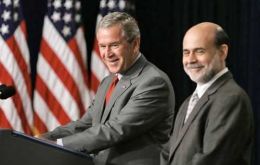
Chairman Ben Bernanke offered no clear signal that the Federal Reserve is poised to cut interest rates in a speech to central bankers on Friday, even as he reaffirmed its commitment to take into account the likely effects of financial market turmoil on the economy.
-
Thursday, August 30th 2007 - 21:00 UTC
Fed prepared “to act as needed” to mitigate adverse effects
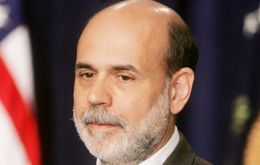
Ben Bernanke said in a letter to an influential New York Senator that the Federal Reserve is ready “to act as needed” to help the US economy if the current market turmoil spills over into the broader economy.
-
Thursday, August 30th 2007 - 21:00 UTC
Mixed trading in global markets on hopes of lower interest rates

United States shares recovered Wednesday almost all of Tuesday's heavy falls with the Dow Jones index gaining 1.9% as investors looked to pick up bargains. Increased hopes that the Federal Reserve could cut interest rates following a letter from Chairman Ben Bernanke buoyed investors
-
Thursday, August 30th 2007 - 21:00 UTC
US economy expands 4% in Q2 boosted by exports

Improved trade and investment figures helped the US economy grow at an annual rate of 4% in the second quarter, according to the latest release from the Commerce Department.
-
Wednesday, August 29th 2007 - 21:00 UTC
Global markets react fearful of big banks performance
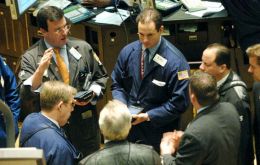
Wall Street shares cast a shadow over global stock markets again after warnings that the problems in credit markets will hit big banks' profits. The Dow Jones suffered its biggest fall since 9 August on Tuesday, closing down 280.3 points or 2.1% at 13,041.9.
-
Wednesday, August 29th 2007 - 21:00 UTC
Mercosur received 300 billion in foreign direct investment
Mercosur member countries received 300 billion US dollars in foreign direct investments between 1990 and 2004, reported the United Nationd Economic Commission for Latinamerica and the Caribbean, Cepal.
-
Wednesday, August 29th 2007 - 21:00 UTC
Argentina trusts China will not adopt trade counter measures

Argentina trusts China will not adopt reprisals following the latest trade restrictions on imports recently decided by President Nestor Kirchner's administration and which affect many Chinese goods, Argentine Secretary of Commerce Alfredo Chiaradía said on Wednesday.