MercoPress. South Atlantic News Agency
Economy
-
Saturday, October 8th 2022 - 10:05 UTC
Argentina passes IMF test, gets US$ 3.8 billion
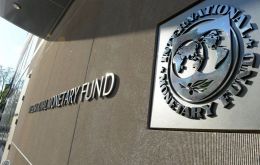
The International Monetary Fund's Board of Directors Friday approved the 2022 second semester review, thus clearing the way for a US$ 3.8 billion disbursement in favor of Argentina.
-
Friday, October 7th 2022 - 10:20 UTC
Blinken discusses bilateral issues with Boric in Santiago

US Secretary of State Antony Blinken met with Chilean President Gabriel Boric Font Wednesday at the Palacio de la Moneda, in Santiago, to discuss further investments in the South American country, it was reported.
-
Friday, October 7th 2022 - 10:18 UTC
Brazil files key memorandum to join OECD
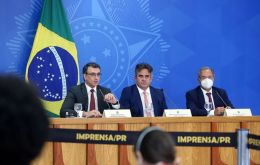
The Government of Brazil has taken yet another step toward joining the Organization for Economic Cooperation and Development (OECD) by sending the initial memorandum of accession, it was reported Thursday. The OECD brings together the most industrialized economies on the planet.
-
Friday, October 7th 2022 - 09:53 UTC
Latin American economies at pre-pandemic levels but GDPs hide much poverty and inequality
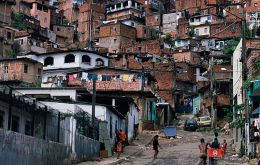
“Latin American and Caribbean economies have recovered their pre-pandemic levels and the region recovered certain feeling of normality, although the overall economy must rebuild to avoid a new cycle of low growth,” points out the latest from the World Bank under the heading of “New approaches to closing the Fiscal Gap.”
-
Thursday, October 6th 2022 - 10:38 UTC
Argentines striving between childhood poverty and indigence, CFK's favorite economist pointed out
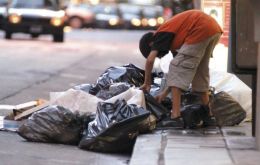
Following last week's figures from Argentina's National Institute of Statistics and Census (Indec) pointing out that 50% of the country's children under 15 lived in poverty, researcher Agustín Salvia said the data were “in line with what was expected.”
-
Thursday, October 6th 2022 - 10:09 UTC
Liz Truss after long term gas provision deals with Norway and Qatar
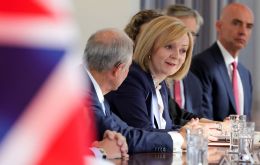
The new government of Liz Truss is focusing in long-term gas deals with Norway, Qatar and other countries, as energy supply has become the priority of the United Kingdom and ensuring heating and lights this winter.
-
Thursday, October 6th 2022 - 09:11 UTC
Mortgage rates in UK on the rise, first time since 2014

Mortgage rates in the UK have been going up for months, but recorded a sharp increase in response to the fall-out from the mini-budget nearly two weeks ago. First-time buyers and those looking to remortgage are affected.
-
Wednesday, October 5th 2022 - 19:08 UTC
Tenants group advances “no empty house” bill in Buenos Aires

An organization claiming to represent Buenos Aires' tenants has submitted a bill before the City Hall whereby idle units are to be put out for rent on a mandatory basis after 90 days.
-
Wednesday, October 5th 2022 - 14:51 UTC
Brazil, with Mercosur partners, plans to become a global rice exporting hub

As India, the world leader in exports restricts rice shipments, Brazil signaled at the World Trade Organization (WTO) that together with Mercosur partners, it is ready to expand exports and help with global food security.
-
Wednesday, October 5th 2022 - 10:12 UTC
EU-Mercosur agreement ratified in 2023? Uruguayan Foreign Minister sees it possible

It's been more than two decades since the negotiations began. Yet, geopolitical conditions have never been favorable to ratify the agreement between the European Union (EU) and Mercosur. However, the Minister of Foreign Affairs of Uruguay, Francisco Bustillo, said Tuesday during a press conference that there is “a window of opportunity” to ratify the accord between the European and South American blocs in 2023, during the pro tempore rulings of Spain and Brazil in each group.

