MercoPress. South Atlantic News Agency
Economy
-
Wednesday, December 15th 2021 - 09:50 UTC
Chilean central bank increases interest rate reference to 4%, highest since 2014

The Chilean Central Bank's Monetary Policy meeting on Tuesday raised the reference interest rate 125 base points to 4%, the highest since June 2014. The decision came as no surprise for markets since the bank is determined to contain inflation, (6,7% in the twelve months to November) and anticipated it will continue on the path for as long as necessary.
-
Wednesday, December 15th 2021 - 09:40 UTC
Flybondi fleet to grow, new jobs created

Argentine budget airline Flybondi has announced plans to expand its fleet to 10 aircraft. The increase in operations would result in 400 new direct jobs, CEO Maurio Sana, announced Tuesday
-
Wednesday, December 15th 2021 - 09:38 UTC
Putin eyes ruble-peso scheme with Argentina to drop US dollar in bilateral trade

Russian officials who met last week with Argentine economy authorities have reportedly conveyed a proposal from President Vladimir Putin's Government to drop the US dollar and hold bilateral trade operations through a conversion scheme between rubles and pesos.
-
Monday, December 13th 2021 - 19:45 UTC
BMW signs deal to buy Argentine lithium

German automaker BMW has signed a deal whereby Livent, a company that has invested US $ 640 million to extract lithium in the Argentine province of Catamarca, will become the brand's second-largest supplier of the mineral in 2022.
-
Saturday, December 11th 2021 - 09:58 UTC
Argentina will not jeopardize growth, president says

President Alberto Fernández Friday said his country will not accept any imposition which may put growth at risk when negotiating with foreign creditors. The Argentine head of state made those remarks from a stage in front of Casa Rosada he shared with former Presidents José Mujica of Uruguay, Luiz Inácio Lula Da Silva of Brazil and Cristina Fernández de Kirchner, Argentina's current Vice President.
-
Saturday, December 11th 2021 - 09:20 UTC
Brazil 12 month inflation in November at an eighteen year record of 10,74%

Brazil's November inflation reached the highest in eighteen years, 10,74%, almost three times this year's central bank target (3,75%), but the rising trend seems to be flattening, according to the national stats office.
-
Friday, December 10th 2021 - 09:56 UTC
Brazil raised the benchmark interest rate to 9,25% to try and contain inflation
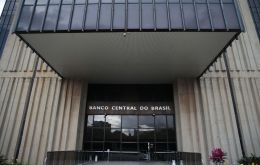
Brazil's Central Bank raised its benchmark interest rate 150 basis points for the second time running to 9,25%, the highest since 2017, in an effort to contain growing inflation.
-
Friday, December 10th 2021 - 09:34 UTC
Latin America's exports this year to increase 8% in volume and 17% in value, ECLAC report
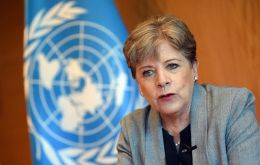
The United Nations Economic Commission for Latin America and the Caribbean estimates a 25% increase in the value of regional goods exports during 2021, following a 10% drop in 2020, driven by a 17% rise in export prices and an 8% expansion in the volume of shipments.
-
Friday, December 10th 2021 - 09:04 UTC
Paraguay decrees tax cut to boost sales to foreign residents in bordering cities

Paraguayan authorities have decided to cut down the Value Added Tax (VAT) by 1% until March 2022 in a move to boost across-the-border trade. The measure applies to goods imported through the so-called Tourism Regime and includes beverages and perfumes.
-
Friday, December 10th 2021 - 08:58 UTC
Living conditions of Brazilians has deteriorated under Bolsonaro, study says

A survey released this week has shown that the overall living conditions of Brazilians under President Jair Bolsonaro has taken a turn for the worse, which would account for the drop in his approval ratings, which do not make him the favorite to win next year's elections.