MercoPress. South Atlantic News Agency
Economy
-
Thursday, February 4th 2021 - 09:32 UTC
Brazil ends the Car Wash anti corruption unit, which sent top politicians and business leaders to jail

Brazil’s Car Wash anti-corruption unit has officially been disbanded putting an end for a team of prosecutors that sent dozens of Brazilian and regional political and business leaders to jail, including several former presidents.
-
Wednesday, February 3rd 2021 - 09:20 UTC
Brazil industrial production down 4,5% last year, auto and clothing worst hit
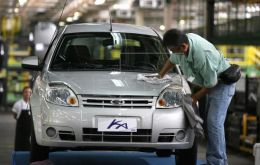
Brazil’s industrial output plunged by 4.5% last year as the coronavirus pandemic battered Latin America’s largest economy, particularly the auto and clothing industries, the national statistics institute reported on Tuesday.
-
Wednesday, February 3rd 2021 - 08:00 UTC
Dragui, ex ECB chief invited to form a new government in Italy
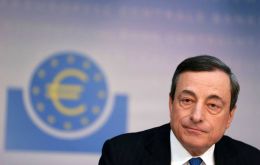
Italian President Sergio Mattarella has invited former European Central Bank (ECB) chief Mario Draghi to talk about forming a new government. Dragui passed the ECB baton to Christine Lagarde in 2019 after an eight-year stint. Draghi is set to meet President Matarella later on Wednesday.
-
Wednesday, February 3rd 2021 - 06:42 UTC
Impact on Scotland's economy if it breaks away from the UK, LSE report
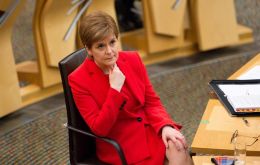
Reuters – The economy of Scotland will suffer a trade shock two to three times more severe than the impact of Brexit if it leaves the United Kingdom, according to an academic study published this Wednesday.
-
Tuesday, February 2nd 2021 - 09:16 UTC
Brazilian teamsters strike to protest fuel prices fizzles out
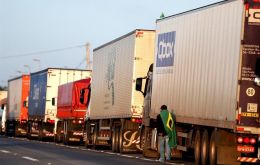
Brazil independent truckers strike got off on Monday to a weak start because of internal divisions on how to protest fuel prices. The government said traffic was flowing freely on all of the country's highways far from fears of a repeat of the 2018 protest that disrupted food and fuel supplies.
-
Tuesday, February 2nd 2021 - 09:10 UTC
UK will formally apply to join the Trans Pacific Partnership
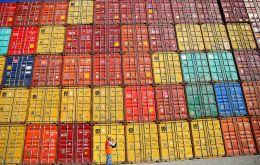
The United Kingdom will formally apply to join one of the world’s largest free-trade areas, deepening trade ties with some of the fastest-growing markets in the world. International Trade Secretary Liz Truss will speak to ministers in Japan and New Zealand to request to join the Comprehensive and Progressive Trans-Pacific Partnership (CPTPP), with formal negotiations set to start this year.
-
Saturday, January 30th 2021 - 09:55 UTC
Official 2020 inflation in Argentina at 36,1%, but several points higher for the poor half of the country
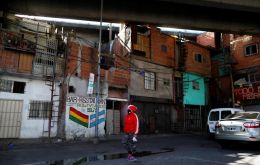
Argentina registered inflation of 36,1% in 2020, with the declining rate during three quarters, picking up strongly in the last three months particularly basics such as food which is serious since almost half of the Argentine population are cataloged as poor or living below the poverty line.
-
Saturday, January 30th 2021 - 09:34 UTC
One for Bolsonaro: Brazil almost broke; primary deficit reaches 10% of GDP
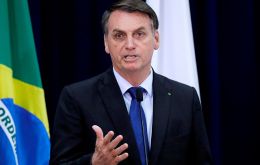
Only a week ago, President Jair Bolsonaro said Brazil was “broke” and the latest Treasury numbers have come close to backing the statement. Last year the country reported a record primary budget deficit of 743.1 billion reais (US$138 billion), a record 10% of GDP.
-
Saturday, January 30th 2021 - 09:23 UTC
US economy hazy despite S&P surge, ten million workers jobless and record high unemployment applications
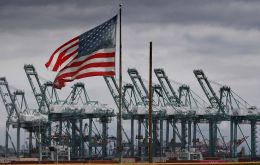
The United States grew at a 4% annual rate in the final three months of 2020 and shrank last year by the largest amount in 74 years. The coronavirus inflicted the worst economic freeze since the end of World War II, the economy contracted 3.5% and clouded the outlook for this year.
-
Friday, January 29th 2021 - 08:55 UTC
Argentina expected to grow 5,4% in 2021, far from mitigating pandemic's impact
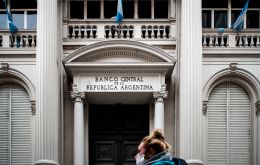
The International Monetary Fund, IMF, lowered Argentina's growth estimate for this year to 4,5% from its previous 4.9% forecast, according to the World Economic Outlook, WEO, delivered this week and which includes some forty countries, among which Argentina since it is a member of G20.