MercoPress. South Atlantic News Agency
Economy
-
Monday, June 10th 2019 - 08:37 UTC
IMF fears the impact on the financial system of the power of a a few giant technology companies

Giant technology companies might cause significant disruption to the world's financial system, the head of the International Monetary Fund has warned. Christine Lagarde said just a few firms with big data access and artificial intelligence could run the global payment and settlement arrangements.
-
Saturday, June 8th 2019 - 22:19 UTC
Argentina: Overprices of up to 90% in sales to Venezuela detected
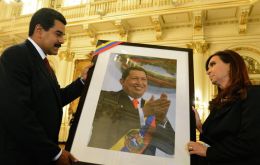
Inconsistencies were found in binational businesses for overpricing and irregular billing for more than 20,000 million dollars between Venezuela and Argentina. According to a report from the General Syndicature of the Nation (Sigen), which was accessed by the newspaper La Nación, between 2012 and 2016 at least 15 Argentine companies would be involved in the escrow between the two countries.
-
Saturday, June 8th 2019 - 09:53 UTC
Brazil central bank denies plans for a monetary union with Argentina
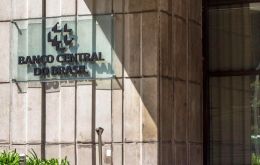
Brazil’s central bank has denied any planning is underway to create a monetary union with Argentina, after a spokesman for the government in Buenos Aires said on Thursday it was the case.
-
Saturday, June 8th 2019 - 07:53 UTC
US economy creates less jobs than forecasted in May; unemployment remains at its lowest in 50 years

The US economy created far fewer jobs than expected last month and wages also rose less than forecast. Some 75,000 jobs were created in May rather than the 185,000 expected by analysts, the Bureau of Labor Statistics said.
-
Saturday, June 8th 2019 - 07:42 UTC
Putin and Xi call for a rethinking of the US dollar role in global trade
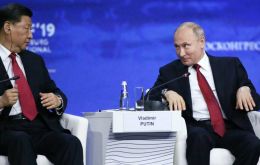
China's Xi Jinping and Russia's Vladimir Putin hit back at US global economic dominance on Friday as they took the stage together at Russia's showcase business forum.
-
Friday, June 7th 2019 - 09:59 UTC
Bolsonaro and Macri announce the EU/Mercosur trade deal is “imminent”
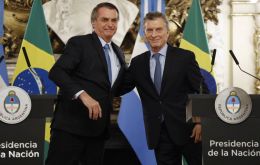
The presidents of Argentina and Brazil said on Thursday that an agreement is imminent on a free trade agreement between the European Union and Mercosur. Brazil's President Jair Bolsonaro and Argentina's Mauricio Macri expressed confidence that the deal would soon be signed as they met in Buenos Aires for talks.
-
Friday, June 7th 2019 - 09:43 UTC
Argentine Justices uphold Glacier Law: setback for one of world's biggest gold miners
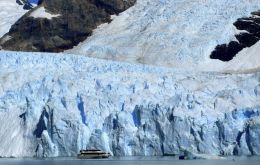
The Argentine Supreme Court ruled against a legal claim by mining companies Barrick Gold Corp and Minera Argentina Gold arguing that Argentina's Glacier Law was unconstitutional. The decision was praised by environmentalists and marked a setback for one of the world's biggest gold miners.
-
Thursday, June 6th 2019 - 09:59 UTC
Lagarde admits underestimating the Argentine economic situation
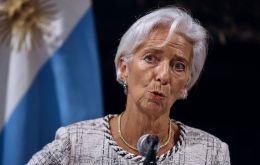
The International Monetary Fund, IMF, admitted on Wednesday that it had underestimated the “incredibly complicated situation” of the Argentine economy and also that taming inflation had taken much longer than originally expected.
-
Thursday, June 6th 2019 - 09:58 UTC
Mercosur's Common External Tax in the agenda Bolsonaro will discuss with Macri in Buenos Aires
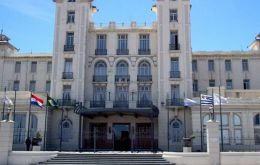
Brazil and Argentina have started discussing a reduction in the common external tariff (TEC) of the Mercosur trade block, sources in both governments revealed on Wednesday, as their market-friendly presidents look to boost economic growth.
-
Thursday, June 6th 2019 - 09:57 UTC
Falklands' MPA catering and logistics service contract extended three years

Sodexo has extended its contracts with the Ministry of Defense (MoD) to provide a range of support services to the UK’s Armed Forces in Cyprus and the Falkland Islands for a further three years.