MercoPress. South Atlantic News Agency
Economy
-
Thursday, February 20th 2025 - 10:46 UTC
Milei’s crypto scandal deepens, now involving his sister 'The Boss'

The fallout from Argentine President Javier Milei’s involvement in a crypto scandal has expanded, now implicating his sister and closest adviser, Karina Milei. Allegations have surfaced that she was directly approached by those behind the controversial Libra memecoin, which skyrocketed and then collapsed after Milei endorsed it on social media.
-
Thursday, February 20th 2025 - 09:37 UTC
Lula highlights Brazil's economic improvements
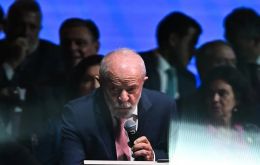
Brazil's President Luiz Inácio Lula da Silva highlighted Wednesday that his country's economy has outperformed expectations in the past two years when it reached 3.2% in 2023 and 3.8% in 2024 amid projections of +0.8% and +2.5% respectively.
-
Wednesday, February 19th 2025 - 15:02 UTC
UK January inflation climbs to 3%; Bank of England anticipates ‘bumpy road’ ahead
The UK rate of inflation reached 3% in January, from 2.5% in December, higher than forecasts and with the Bank of England anticipating a “bumpy road” ahead. Forecasts are that it will hit 3.7% later in the year and moving even further away from the Bank's 2% target.
-
Tuesday, February 18th 2025 - 10:52 UTC
Footage of Milei's interview twitched released
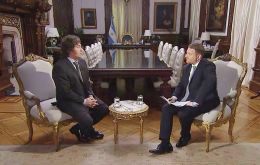
Video footage of an advisor - believed to be Santiago Caputo - cutting President Javier Milei's interview with Jonatan Viale to have some inconvenient parts removed was leaked through X late Monday. “It can cause you a judicial mess,” Viale admits as he agrees to the interruption while the head of State sought to explain his side of the $LIBRA cryptocurrency scandal on TN in a friendly environment. The controversial part of the interview was aired live through YouTube.
-
Tuesday, February 18th 2025 - 01:04 UTC
Milei takes full responsibility for $LIBRA scandal
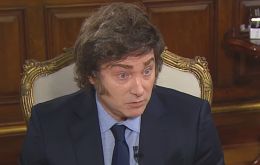
Weathering the storm against all odds, Argentine President Javier Milei blamed nobody and took full responsibility for his mistake in the so-called “cryptocurrency” scandal in which he endorsed the $LIBRA asset only to see it lose over 95% of its value in just a few hours after the head of state's posting. “I got a slap in the face,” he reckoned. It had been speculated that Milei was to blame an advisor for his or her poor judgment and then sack him or her as a scapegoat.
-
Monday, February 17th 2025 - 10:55 UTC
Repercussions of Milei's support for cryptocurrency that vanishes

Argentine President Javier Milei is under heavy flak after praising the $LIBRA cryptocurrency token, which would boost the country's development from the private sector, only to vanish into thin air after many investors trusted in the advice of the head of State, who is also a graduate economist.
-
Monday, February 17th 2025 - 09:08 UTC
Argentine deregulation minister meets with IMF Chief in Saudi Arabia
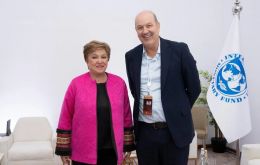
Argentina's Deregulation Minister Federico Sturzenegger met Sunday in AlUla, Saudi Arabia, with International Monetary Fund (IMF) Managing Director Kristalina Georgieva. They were both attending the Conference for Emerging Market Economies.
-
Saturday, February 15th 2025 - 10:35 UTC
Paraguay hopes to double beef exports to Morocco
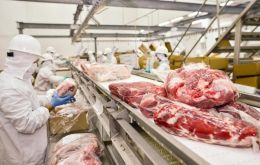
Paraguayan meat shipments to Morocco are expected to double after a team from the South American country met with buyers this week to discuss cooperation in the agricultural sector, with an emphasis on accessing advanced technology and essential fertilizers. Presiding over the mission to Rabat was Representative Carlos Alberto Núñez Salinas of the Latin American and Caribbean Parliament (Parlatino).
-
Friday, February 14th 2025 - 10:37 UTC
Argentina: Indec says January's inflation stood at 2.2%
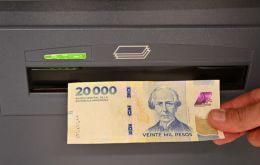
Argentina's inflation in January 2025 stood at 2.2%, down from 2.7% in December, the National Institute of Statistics and Census (Indec) said in a report released Thursday, which also showed yoy values of 84.5%. January's was the lowest Consumer Price Index (CPI) since July 2020 - 1.9% amid the Covid-19 pandemic - and also the best under Javier Milei, who took office on Dec. 10, 2023. The President's best previous CPI was in November 2024 at 2.4%.
-
Thursday, February 13th 2025 - 13:20 UTC
Cuba going through one of its worst electricity-generation crises

Cuba has been reported to be facing severe power outages after the unexpected breakdown of the Felton 1 Thermoelectric Power Plant, worsening the situation in Havana and other parts of the island. The State-run National Electric Union (UNE) said numerous generation plants were out of service due to fuel shortages, local authorities blaming the US economic blockade for their hardships, when in reality infrastructure failures and poor maintenance to already obsolete equipment were other contributing factors. A total of 57 generation plants in the country, in addition to two floating units, were affected by the lack of fuel.