MercoPress. South Atlantic News Agency
Economy
-
Monday, August 10th 2015 - 07:00 UTC
Dairy and vegetable oils prices help FAO's July food index reach its lowest since 2009

Prices for major food commodities in July hit their lowest average monthly level since September 2009 as sharp drops in the prices of dairy products and vegetable oils more than offset some increases for those of sugar and cereals. Meat prices, meanwhile, remained stable.
-
Monday, August 10th 2015 - 06:46 UTC
Global oil supply more fragile than you think
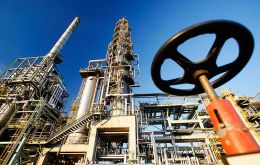
Many oil companies had trimmed their budgets heading into 2015 to deal with lower oil prices. But the rebound in April and May to $60 per barrel from the mid-$40s suggested that the severe drop was merely temporary.
-
Monday, August 10th 2015 - 06:05 UTC
Scotland to ban growing genetically modified crops

Scotland is to ban the growing of genetically modified crops, the country's rural affairs secretary has announced. Richard Lochhead said the Scottish government was not prepared to “gamble” with the future of the country's £14bn food and drink sector.
-
Sunday, August 9th 2015 - 14:55 UTC
US economy adds 215.000 jobs in July; unemployment at seven-year-low of 5.3%
The US economy added 215,000 jobs in July, while the unemployment rate held at a seven-year-low of 5.3%. The Bureau of Labor Statistics said on Friday job gains came in retail trade, health care, professional and technical services, and financial activities.
-
Saturday, August 8th 2015 - 10:42 UTC
Petrobras profits plunge 89% in 2Q; underperforming assets dumped

Brazilian state-led oil company Petrobras said its second-quarter net income plunged 89% after a one-time charge for underperforming assets that caught analysts off guard. The 1.28-billion-real charge was taken as Petrobras' new executives and board of directors try to control the company's $132 billion debt, the oil-industry's largest, by preparing up to $15bn of assets for sale by the end of 2016.
-
Saturday, August 8th 2015 - 09:44 UTC
FAO pressing countries to ratify agreement on illegal, unreported, unregulated fishing
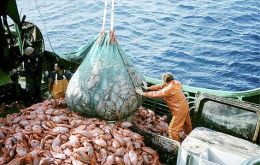
A growing number of countries are ratifying an international agreement to combat illegal fishing, fueling interest in how best to implement the instrument. Illegal, unreported and unregulated (IUU) fishing is estimated to strip between $10 billion and $23 billion from the global economy, and their impacts undermine the way fish stocks are managed to make it a double concern around the world.
-
Saturday, August 8th 2015 - 09:31 UTC
Chile's inflation climbs 0.4% in July to an annualized 4.6%; Peso slides 11%

Chile’s inflation rate rose to the highest this year in July as the Peso approaches its weakest level in more than a decade. Prices climbed 0.4% in the month, the National Statistics Institute said on its website Friday. Annual inflation accelerated to 4.6% from 4.4% the month before, while the central bank target is between 2% and 4%.
-
Saturday, August 8th 2015 - 09:20 UTC
Brazil's July inflation climbed to 9.56%, powered by electricity bills, up 57.8%

Brazil's annual inflation rate climbed to 9.56% in July, the highest level since 2003, official data showed Friday. Prices are being driven higher by the rising cost of electricity -- up 57.8% in the past 12 months -- as well as increasingly expensive housing, food and beverages, and health care.
-
Saturday, August 8th 2015 - 08:54 UTC
Argentine embassy in US launches website on the struggle with 'vulture funds'

The Argentine Embassy in the United States has launched a website to explain the conflict between Argentina and holdout investors commonly referred to as “vulture funds”. The website explains the origins of the conflict, its history, and provides documents and expert opinions on the subject. Its virtual library has until now over 200 documents and 100 independent sources.
-
Saturday, August 8th 2015 - 08:22 UTC
Bank of England keeps rates unchanged; little talk of rise because of China and Greece

UK interest rates have been held at 0.5% again by the Bank of England's Monetary Policy Committee (MPC). Members voted 8-1 to keep rates on hold - the first time for months the decision has not been unanimous, with Ian McCafferty voting for an increase.