MercoPress. South Atlantic News Agency
Environment
-
Friday, August 21st 2020 - 09:40 UTC
Oil spill from refinery triggers an environmental disaster along the Venezuelan coastline
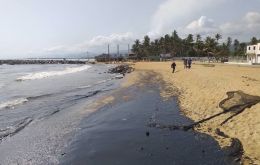
A strip of Venezuela's western coastline boasting pristine beaches and fragile ecosystems such as mangroves and coral reefs could take more than half a century to fully recover from the environmental impacts of a recent oil spill, a researcher said.
-
Thursday, August 20th 2020 - 08:44 UTC
Brazil invites actor Leonardo DiCaprio to visit the reality of the Amazon

Brazilian Vice President Hamilton Mourao on Wednesday called on actor Leonardo DiCaprio to visit the Amazon to see the reality of the situation there, as the government faces criticisms for rising destruction in the world's largest rainforest.
-
Wednesday, August 19th 2020 - 09:21 UTC
Amazon indigenous protest demanding environment compensation from Brazilian government and improved Covid-19 care
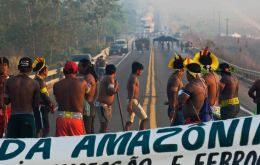
Indigenous protesters in Brazil agreed on Tuesday to suspend their roadblock of a key highway amid a court battle but vowed to fight on for more help against COVID-19 and an end to deforestation.
-
Wednesday, August 19th 2020 - 09:19 UTC
Some 21 million tons of micro plastic floating in the Atlantic ocean

There are 12-21 million tons of tiny plastic fragments floating in the Atlantic Ocean, scientists have found. A study, led by the UK's National Oceanography Centre, scooped through layers of the upper 200m of the ocean during a research expedition through the middle of the Atlantic.
-
Tuesday, August 18th 2020 - 08:33 UTC
Hottest temperature in at least a century on Sunday in Death Valley, Mojave Desert
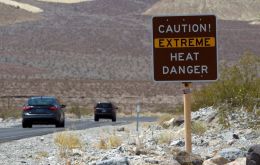
One of the hottest air temperatures recorded anywhere on the planet in at least a century, and possibly ever, was reached on Sunday afternoon at Death Valley in California’s Mojave Desert where it soared to 130 Fahrenheit (54.4 Celsius).
-
Monday, August 17th 2020 - 09:57 UTC
Climate change could trigger epidemics: malaria, dengue, zika, smallpox and pathogens from Siberian permafrost
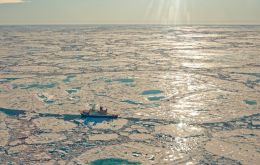
The COVID-19 pandemic that has swept the globe and claimed more than 760,000 lives so far almost certainly came from a wild bat, highlighting the danger of humanity's constant encroachment on the planet's dwindling wild spaces.
-
Monday, August 17th 2020 - 09:54 UTC
Falklands' Conservation Zone management could be undermined by unregulated longlining
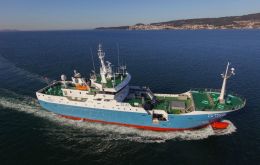
A recent study has found that unregulated longline fishing for Patagonian Toothfish immediately outside the 200-mile Falkland Islands Outer Conservation Zone (FOCZ) is likely to be having significant impacts on deepwater seabed vulnerable marine ecosystems compared to the low impacts observed in licensed longline fisheries within Falklands' waters.
-
Monday, August 17th 2020 - 08:52 UTC
Indigenous people in Chile fighting to have top lithium miner permits revoked

Indigenous groups in Chile´s lithium-rich Atacama salt flat, fresh off a resounding legal victory earlier this week, said they will push to see top lithium miner SQM´s environmental permits revoked and its operations shut down.
-
Friday, August 14th 2020 - 08:38 UTC
Aberdeen scientists to address Falklands' peat lands research project
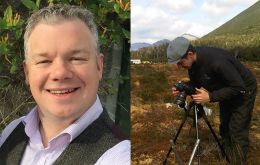
Scientists from Aberdeen University will travel to the Falkland Islands as part of a £230,000 research project to help prevent peatland fires. The project will use various techniques to study how the frequency, extent and intensity of burning affects the ability of peat land environments to store carbon. The news was announced by north Scotland daily The Press and Journal.
-
Wednesday, August 12th 2020 - 09:58 UTC
Bolsonaro denies fires in the Amazon rainforest and calls reports a “lie”
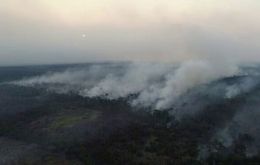
Brazil's President Jair Bolsonaro on Tuesday angrily denied the existence of fires in the Amazon rainforest, calling it a “lie”, despite data produced by his own government showing that thousands of fires are surging across the region.