MercoPress. South Atlantic News Agency
Health & Science
-
Thursday, December 31st 2020 - 08:50 UTC
Argentina's regulator approves the AstraZeneca and Oxford University Covid-19 vaccine
Argentina's regulator on Wednesday approved the COVID-19 vaccine developed by AstraZeneca and Oxford University for emergency use, AstraZeneca said in a statement.
-
Thursday, December 31st 2020 - 08:35 UTC
Brazil dispute with Pfizer vaccine; pledges emergency use for AstraZeneca's shots probably by mid January
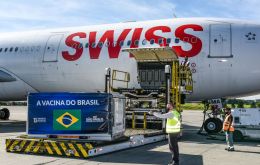
Brazil will soon weigh emergency-use approval for AstraZeneca's COVID-19 vaccine after Britain gave the green light on Wednesday, as Latin America's largest country rushes to catch up with immunization programs under way around the hard-hit region.
-
Thursday, December 31st 2020 - 08:23 UTC
Brazilian medical suppliers in conflict with government over syringe and needle prices

Brazilian syringe and needle makers warned on Wednesday the country's coronavirus vaccination program was at risk after the government set auction prices too low and failed to draw bids for enough syringes to meet its requirements.
-
Thursday, December 31st 2020 - 08:20 UTC
US “will likely authorize” the AstraZeneca Oxford University vaccine next April

The COVID-19 vaccine developed by British drug maker AstraZeneca Plc and Oxford University will likely be authorized for emergency use in the United States in April, the chief adviser for the U.S. COVID-19 vaccine program said on Wednesday.
-
Thursday, December 31st 2020 - 08:01 UTC
Covid-19 outbreak in Wuhan had most probably ten times more cases, China public health report

The scale of the Covid-19 outbreak in Wuhan early this year may have been nearly 10 times the recorded tally, a study conducted by China's public health authorities indicates, leaving the city where the coronavirus first took hold still well short of the immunity required to protect against a potential resurgence.
-
Thursday, December 31st 2020 - 08:00 UTC
Australia's Antarctic Program MPV Everest scheduled to leave Hobart next 9 January

MPV Everest arrived in Hobart, Tasmania, on Wednesday to commence work for the Australian Antarctic Program, resupplying Australian stations and changing over personnel this summer.
-
Wednesday, December 30th 2020 - 08:52 UTC
Sophisticated Roman baths uncovered in Amman during building of a major drainage system
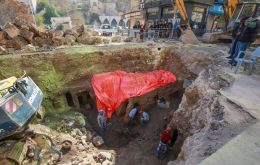
The discovery of the ruins of old Roman baths during the construction of a major drainage system in the heart of Jordan's capital has posed a dilemma: how to preserve the country's ancient past while providing for its modern future?
-
Wednesday, December 30th 2020 - 08:24 UTC
WHO warns vaccines have yet to prove that they are effective at preventing Covid-19 transmission
Officials at the World Health Organization warned that the COVID-19 pandemic that has ravaged every corner of the world “is not necessarily the big one” — and that the novel coronavirus may never truly go away.
-
Wednesday, December 30th 2020 - 08:11 UTC
Coronavirus new variant “does not appear to cause more severe illness”, Public Health England
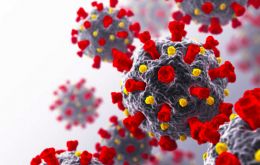
A new variant of the novel coronavirus does not appear to cause more severe illness than other variants, according to a matched study by Public Health England. Scientists say the new variant can spread more rapidity It was found in England in mid-December and led to other countries imposing travel restrictions to the United Kingdom. Several other countries have reported the variant.
-
Wednesday, December 30th 2020 - 08:10 UTC
Boris Johnson considering tougher measures extending tier 4 restrictions
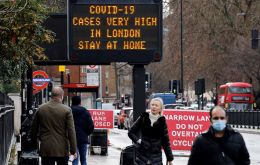
British Prime Minister Boris Johnson has approved placing more parts of the country into tier 4 restrictions, as the country battles a new variant of Covid-19 which scientists say can spread more rapidly, The Times reported.
