MercoPress. South Atlantic News Agency
Health & Science
-
Friday, February 13th 2009 - 20:00 UTC
Bolivian appeal for aid to combat dengue epidemic
The Bolivian government appealed for international economic aid and fumigation equipments to fight the mosquito transmitted dengue epidemics which broke out at the beginning of the year and already has 17.371 reported cases.
-
Wednesday, February 11th 2009 - 20:00 UTC
Mudslide in north Argentina drags away villagers

Nine people were missing Tuesday after a mudslide in northern Argentina that prompted the evacuation of more than 700 people, officials said. The disaster occurred Monday in the town of Tartagal, close to the border with Bolivia.
-
Tuesday, February 10th 2009 - 20:00 UTC
South Brazil admits dengue epidemics but fears yellow fever

South Brazil authorities fear that the yellow fever outbreak reported along the Paraguayan and Argentine border could spread to the state of Rio Grande do Sul and are taking special precautions.
-
Sunday, February 8th 2009 - 20:00 UTC
56-year-old becomes 1st woman to swim Atlantic

Jennifer Figge pressed her toes into the Caribbean sand, exhilarated and exhausted as she touched land this week for the first time in almost a month.
-
Saturday, February 7th 2009 - 20:00 UTC
Snow storms and freezing temperatures shutdowns UK
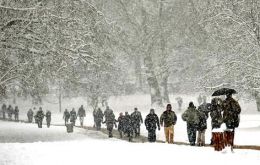
Forecasters have warned of very low temperatures overnight, after snow brought a fifth day of chaos to the UK. Road, rail and air transport was again badly affected, while hundreds of schools were again closed.
-
Thursday, February 5th 2009 - 20:00 UTC
Fossil remains of snake “as long as a bus” in Colombia

The discovery of fossilised remains belonging to the world's largest snake has been reported in Nature journal. Titanoboa was 13 meters long - about the length of a bus - and lived in the rainforest of north-east Colombia 58-60 million years ago.
-
Thursday, February 5th 2009 - 20:00 UTC
Bolivia admits dengue epidemic is “out of control”

Bolivia's Public Health Minister Ramiro Tapia admitted Wednesday that the mosquito transmitted dengue epidemics which has extended to the whole territory is “out of control” and said a total 8.152 cases had been reported of which 7 deaths.
-
Wednesday, February 4th 2009 - 20:00 UTC
Storm kills five, blackouts Argentina's second city
Five people, including two children, died and at least 47 others have been injured in the storm that is battering central Argentina, which was recently hit by the worst drought in the past 50 years, officials said Tuesday.
-
Tuesday, February 3rd 2009 - 20:00 UTC
Warning on the “other CO2 problem”: ocean acidification
The world's marine ecosystems risk being severely damaged by ocean acidification unless there are dramatic cuts in CO2 emissions, warn scientists. More than 150 top marine researchers have voiced their concerns through the “Monaco Declaration”, which warns that changes in acidity are accelerating.
-
Monday, February 2nd 2009 - 20:00 UTC
“Sterile flies” to combat cattle screw worm in Uruguay

Mexico made a first shipment of sterile parasitic flies to Uruguay to help combat the cattle “screw worm” or Cochliomyia hominivorax, an insect whose larvae or maggots eat living tissue, and which has gradually spread from Brazil to the southern pastures of South America.
