MercoPress. South Atlantic News Agency
International
-
Saturday, January 8th 2022 - 12:30 UTC
Anvisa okays COVID-19 vaccine entirely produced in Brazil
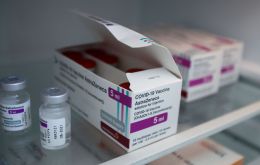
Brazil's National Health Surveillance Agency (Anvisa) Friday approved the first nationally manufactured COVID-19 vaccine. The body is also considering a second pediatric drug after having cleared Pfizer's for children aged 5 to 11.
-
Friday, January 7th 2022 - 20:49 UTC
First fatal victim of bird flu reported in UK
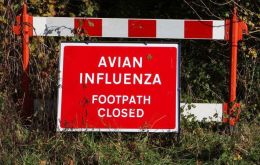
British health authorities Friday reported what seems to be the first fatal case in humans of the H5N1 variant of bird flu, which rarely infects humans, but when it does, it has a mortality rate of about 60%.
-
Thursday, January 6th 2022 - 08:58 UTC
Unvaccinated Djokovic denied entry to defend Australian Open crown

Tennis' number one player Novak Djokovoc was held for eight hours at Melbourne's international airport and later deported for not complying with Australian protocols regarding vaccination against COVID-19 for foreign travelers.
The Serbian Djokovic was to defend his Australian Open title, which he has won 9 timers altogether, including the last three consecutive editions. -
Thursday, January 6th 2022 - 08:34 UTC
COVID-19 vaccination mandatory for people over 50 in Italy
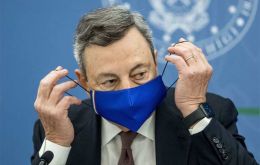
The Government of Italy Wednesday issued a decree making COVID-19 vaccination mandatory for all those over the age of 50, it was announced. Out of Italy’s 59 million people, 28 million fall over the age of 50.
-
Thursday, January 6th 2022 - 08:23 UTC
Apple, first company to reach a market value of US$ 3 trillion

Apple Inc. reached a market value of US$ 3 trillion (twelve zeroes) during intraday trading on Monday, when its share price hit US$ 182,86. Although the milestone is mainly symbolic, (Wednesday shares were down to US$ 175) it shows investors remain bullish on Apple stock.
-
Thursday, January 6th 2022 - 08:07 UTC
Sir Ernest Shackleton's legacy, a new era of Antarctic Exploration
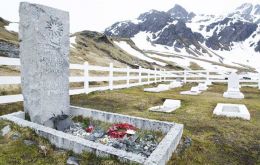
One hundred years on from the death of the famous polar explorer Sir Ernest Shackleton, the UK’s new polar research ship, RRS Sir David Attenborough, will be exploring the very same region where his ship, The Endurance, was lost in the pack ice – heralding a new age of Antarctic exploration.
-
Thursday, January 6th 2022 - 07:55 UTC
Bank of England answers, “Why can't we just print more money?”

“Can’t we just print more money?” is a new pop-economics book, written by the Bank of England, which will be published this May in partnership with Cornerstone Press (Penguin Random House).
-
Thursday, January 6th 2022 - 07:37 UTC
UK/Falklands 2021 trade in goods and services was down 9,7% compared to the previous year
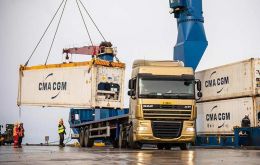
Total trade in goods and services (exports plus imports) between the UK and Falkland Islands was £112 million in the four quarters to the end of Q2 2021, a decrease of 9.7% or £12 million from the four quarters to the end of Q2 2020. Figures are from the UK ONS, Office for National Statistics.
-
Thursday, January 6th 2022 - 07:27 UTC
GM no longer King of the Hill; Toyota tops car sales in US market for the first time
General Motors is no longer King of the Hill. Japanese carmaker Toyota led United States automobile sales for the first time in 2021 indicated Automotive News. The shift at the top of the rankings came after a year in which assembly lines were plagued by a scarcity of crucial computer chips, resulting in steep fourth-quarter sales declines for both companies.
-
Thursday, January 6th 2022 - 07:12 UTC
More than half a million sign petition to have Sir Tony Blair's knighthood “rescinded”
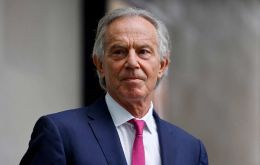
More than half a million people have signed a petition to have former UK prime minister Sir Tony Blair's knighthood “rescinded”. Sir Tony was appointed by the Queen a Knight Companion of the Most Noble Order of the Garter, the oldest and most senior British Order of Chivalry.