MercoPress. South Atlantic News Agency
Latin America
-
Monday, March 16th 2026 - 05:17 UTC
Colombia and Venezuela will seek full Mercosur membership, Petro says
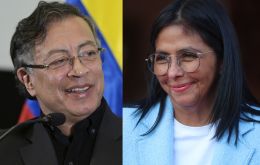
Colombian President Gustavo Petro said his country and Venezuela will seek admission to Mercosur as full members, one day after a ministerial meeting in Caracas that he described as “extremely successful,” according to EFE. In a message posted on X, Petro said: “We will ask for the moratorium to be lifted so Venezuela can enter Mercosur as a full member, and Colombia will submit its own request to join as a full member.”
-
Monday, March 16th 2026 - 00:46 UTC
Protest in Morón turns into attack on Communist Party office amid Cuba blackouts
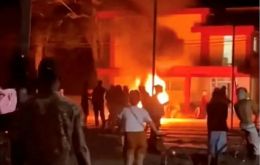
A protest over blackouts and shortages in the Cuban city of Morón turned into a partial attack on the local Communist Party headquarters early on Saturday, in one of the most unusual recent expressions of public unrest on the island. Authorities reported at least five arrests and said an investigation had been opened into the incident.
-
Friday, March 13th 2026 - 16:26 UTC
Cuba confirms talks with the United States amid its deepest energy crisis in years
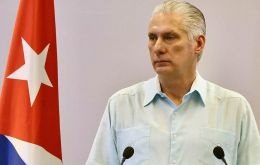
Cuban President Miguel Díaz-Canel said on Friday that his government has recently held talks with U.S. officials, the first public acknowledgment of such bilateral contacts in more than a decade, as the island faces a severe fuel and electricity crisis. He said the exchanges were aimed at seeking solutions to bilateral differences and exploring areas of cooperation based on equality, sovereignty and mutual respect.
-
Friday, March 13th 2026 - 16:03 UTC
Uruguayan fugitive Sebastián Marset captured in Bolivia and placed in U.S. custody

Suspected Uruguayan drug trafficker Sebastián Marset was captured on Friday in Santa Cruz de la Sierra, Bolivia, in an operation that ends one of the Southern Cone’s longest and most visible manhunts. Paraguayan authorities confirmed the arrest and said Marset had been secured after a raid carried out by Bolivian forces.
-
Friday, March 13th 2026 - 03:12 UTC
Petro sends ministers to Caracas after meeting with Delcy Rodríguez is called off
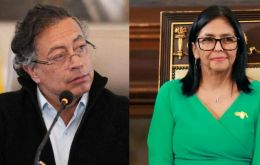
Colombia and Venezuela shifted their planned bilateral contact to the ministerial level on Friday after a presidential meeting announced for the border was abruptly canceled under the formula of “force majeure.” Instead of the face-to-face encounter scheduled between Gustavo Petro and Delcy Rodríguez at the Atanasio Girardot bridge, Bogotá sent a delegation to Caracas led by Foreign Minister Rosa Villavicencio and including the ministers of defense, trade, and mines and energy.
-
Wednesday, March 11th 2026 - 03:55 UTC
Lula withdraws from Kast inauguration amid presence of Flávio Bolsonaro
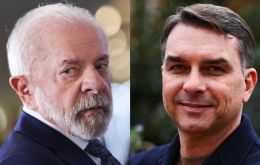
Brazilian President Luiz Inácio Lula da Silva has canceled a planned trip to Chile to attend José Antonio Kast’s inauguration on Wednesday and will instead be represented at the ceremony by Foreign Minister Mauro Vieira. Brazilian officials said the change was due to “scheduling reasons.”
-
Wednesday, March 11th 2026 - 03:49 UTC
María Corina Machado arrives in Chile for Kast’s inauguration and meeting with Venezuelan migrants
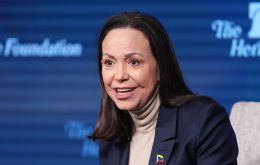
Venezuelan opposition leader María Corina Machado has arrived in Chile to attend Wednesday’s ceremony in which Gabriel Boric will hand over the presidency to José Antonio Kast, in a visit that also includes an event with Venezuelan residents in Santiago and several public appearances in the capital. She is among the international guests invited to the transfer of power, where Kast will formally take office at Congress in Valparaíso.
-
Monday, March 9th 2026 - 10:56 UTC
Women’s Day rallies in Brazil, Argentina and Uruguay focused on femicide, austerity and public funding
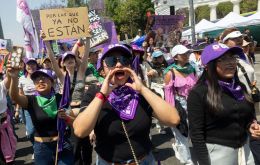
International Women’s Day rallies in Brazil, Argentina and Uruguay this weekend produced a shared Southern Cone agenda: opposition to gender-based violence, demands for sustained public policies and warnings about the impact of economic strain and state cutbacks on women’s lives. In Brazil, the message centered on rising femicide; in Argentina, on a strike-backed protest against President Javier Milei’s austerity drive; and in Uruguay, on demands for more funding to enforce gender-violence laws and renewed attention to vicarious violence.
-
Monday, March 9th 2026 - 02:06 UTC
Historic Pact and Democratic Center lead Colombia’s Senate race after legislative vote
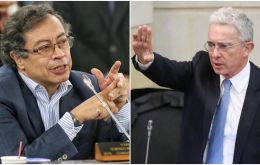
Historic Pact, the left-wing coalition linked to President Gustavo Petro, and the Democratic Center, led by former president Alvaro Uribe, were on Sunday emerging as the two main forces in Colombia’s Senate for the 2026-2030 term, according to preliminary pre-count results. Colombia’s electoral authority, the Registraduría, was publishing official real-time results on its election portal, while local media reported that Senate bulletin 25 showed Historic Pact with 3,599,411 votes and Democratic Center with 2,473,529.
-
Saturday, March 7th 2026 - 22:40 UTC
Trump launches anti-cartel coalition, says Cuba regime “in its final days”
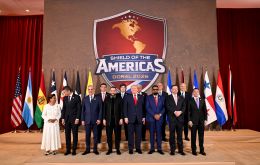
U.S. President Donald Trump on Saturday opened the first Shield of the Americas summit in Doral, Florida, bringing together a group of like-minded Latin American and Caribbean leaders to unveil a new regional security alliance focused on fighting drug cartels. In his remarks, he said Cuba was “very much at the end of the line,” claimed Havana wanted to negotiate with Washington, and said his administration had formally recognized the interim government of Delcy Rodríguez in Venezuela as diplomatic ties between the two countries were being restored.