MercoPress. South Atlantic News Agency
Latin America
-
Thursday, January 24th 2019 - 09:35 UTC
Guaido recognized as interim president by Lima Group and US; Uruguay and Mexico call for negotiations
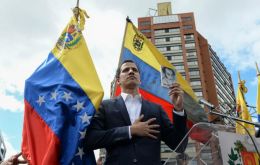
Most Latin American nations recognized Venezuelan opposition leader Juan Guaido as interim president on Wednesday, leaving Nicolas Maduro ever more isolated as he faces unrest at home and threats from the United States.
-
Thursday, January 24th 2019 - 09:34 UTC
Pope Francis arrives in Panama for the World Youth Day; immigration high in the agenda
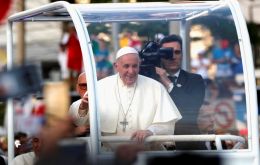
Pope Francis wasted no time wading in on the standoff over funding for a U.S.-Mexico border wall on Wednesday as he started his trip to Panama, saying on the plane from Rome that hostility to immigrants was driven by irrational fear. In a brief conversation between the pope and journalists on the flight, one reporter described the barrier that juts out into the Pacific Ocean between the two countries in San Diego, California, as a “folly”.
-
Thursday, January 24th 2019 - 06:04 UTC
Who is Juan Guaido?, proclaimed by the opposition as Venezuelan acting president
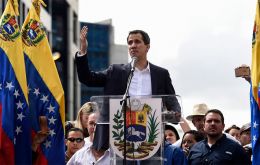
Juan Guaido has declared himself president of Venezuela — a move quickly endorsed by several Latin American countries, as well as Canada and the United States. Just two months ago, many people around the world, and even inside Venezuela, may not have known Guaido's name.
-
Wednesday, January 23rd 2019 - 08:56 UTC
Mexican fuel pipeline explosion death toll climbs to 91, and could increase

The death toll from a fuel pipeline explosion in central Mexico last week rose to 91 as Pemex defended its response to one of the deadliest incidents to hit the state-run oil company in years.
-
Tuesday, January 22nd 2019 - 08:37 UTC
Venezuela foils uprising by National Guardsmen; massive protest march announced for Wednesday
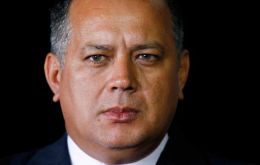
Venezuela plunged deeper into turmoil Monday as security forces put down a pre-dawn uprising by National Guardsmen that triggered violent street protests, and the Supreme Court moved to undercut the opposition-controlled congress' defiant new leadership. Socialist party chief Diosdado Cabello said 27 guardsmen were arrested and more could be detained as the investigation unfolds.
-
Sunday, January 20th 2019 - 05:07 UTC
Lopez Obrador vows to end fuel theft; dozens die when thieves puncture gasoline pipeline
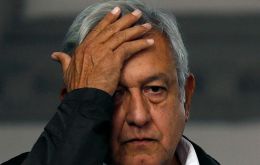
Mexico’s president vowed on Saturday to redouble his fight against an epidemic of fuel theft after thieves punctured a pipeline north of Mexico City, causing an explosion that killed at least 73 people and injured 75 others. The blast underscored the deadly perils of the fuel-theft racket, which has cost the government billions of dollars a year and has been the target of a weeks' long crackdown by the administration of Mexico’s new president, Andrés Manuel López Obrador.
-
Friday, January 18th 2019 - 10:12 UTC
Evo Morales’ Bolivia: Abiding the constitution or ensuring the results of sustained economic growth

The Economist has published a piece on Bolivia and its first indigenous president, Evo Morales, who has managed the economy of the continent's poorest country with sustained success during thirteen years. But he has also a strong authoritarian attitude, given his dominance of government branches, and the support of the electorate, mostly indigenous or mestizo. In this scenario, he is running for a fourth consecutive presidential period, which the Constitution bans.
-
Friday, January 18th 2019 - 09:30 UTC
Brazilian government meets Venezuelan opposition leaders to discuss Maduro's “illegitimacy”
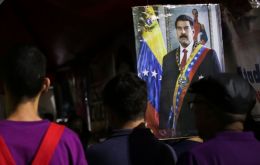
Brazilian and US officials met Venezuelan opposition leaders in Brasilia on Thursday to discuss the political crisis in the oil-rich country ruled by president Nicolas Maduro, Brazil's foreign ministry reported.
-
Thursday, January 17th 2019 - 19:30 UTC
Nine killed and dozens injured with car-bomb in Bogotá next to police academy
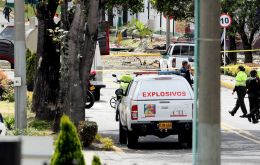
At least nine people were killed and dozens more injured in a car bombing at a police academy in Colombia's capital, Bogotá on Thursday, recalling the high-profile attacks associated with bloodiest chapters of the country's drug-fueled guerrilla conflict.
-
Thursday, January 17th 2019 - 07:42 UTC
Bolsonaro and Macri agree to “review and perfect” Mercosur, and advance trade talks with EU
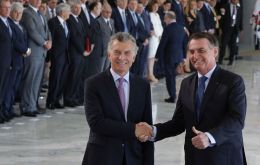
Brazil’s president Jair Bolsonaro and Argentina’s president Mauricio Macri said they agreed to continue integrating their economies (number one and two in South America), as strategic partners, by “perfecting” the Mercosur trade block and pressing ahead with negotiations that are already underway, such as the ongoing free trade and cooperation agreement with the European Union.

