MercoPress. South Atlantic News Agency
Tag: Brexit
-
Wednesday, August 23rd 2017 - 09:16 UTC
European Court of Justice with no jurisdiction in the UK after Brexit, says PM May government
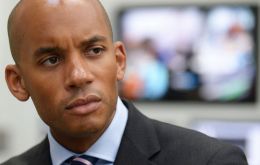
The UK will no longer be under the “direct jurisdiction” of the European Court of Justice (ECJ) after Brexit, a government policy paper will say. Ministers say they want a “special partnership” with the EU, but it is “neither necessary nor appropriate” for the ECJ to police it. However critics say the word “direct” leaves room for the ECJ to still play a part.
-
Tuesday, August 22nd 2017 - 17:56 UTC
UK sets out post Brexit papers; EU insists citizens rights, financial settlement and Ireland come first

The UK government has set out proposals to ensure trade in goods and services can continue on the day the UK leaves the EU in March 2019. A position paper calls for goods already on the market to be allowed to remain on sale in the UK and EU without additional restrictions. It also calls for consumer protections to remain in place.
-
Tuesday, August 22nd 2017 - 07:04 UTC
Brexit: A paper on the role of the European Court of Justice expected this week

In the latest in a series of papers setting out its Brexit negotiating plans, the government will say disputes need to be resolved “in a clear and sensible way”, saying it is determined to agree new arrangements. This will be crucial for both UK and EU citizens and businesses that buy and sell across borders, it says.
-
Monday, August 21st 2017 - 10:42 UTC
Warnings about Northern Ireland peace funding and Brexit negotiations
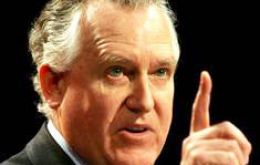
Lord Peter Hain has called on the government to “soften” its approach to ”taking the UK out of the jurisdiction of the European Court of Justice (ECJ).” The former secretary of state claimed that such a move could result in Northern Ireland losing millions of pounds of peace funding. The ECJ oversees reconciliation grants to North Ireland in the region of £240 million.
-
Monday, August 21st 2017 - 08:45 UTC
Hard Brexit proposal to remove all trade tariffs and barriers sparks strong controversy

Removing all trade tariffs and barriers would help generate an annual £135bn uplift to the UK economy, according to a group of pro-Brexit economists. A “hard” Brexit is “economically much superior to soft” argues Prof Patrick Minford, lead author of a report from Economists for Free Trade, which insists that eliminating tariffs, either within free trade deals or unilaterally, would deliver huge gains.
-
Saturday, August 19th 2017 - 06:42 UTC
Lord Hague: Brexit, “the most complex task”, any government has faced since the WW2

Lord Hague has compared Brexit to taking control of a gun, saying it is possible to find a solution without using it to “shoot your foot off”. The former Conservative leader said he believes there is sufficient common ground among the different political parties to negotiate with the EU.
-
Saturday, August 19th 2017 - 06:32 UTC
Number of students accepted at UK university drops: demographics, funding and Brexit

The number of students accepted on to UK degree courses has fallen this year, early UCAS (Universities and Colleges Admissions Service) figures show. In total, 416,310 people have taken up places, down 2% compared with the same point last year.
-
Thursday, August 17th 2017 - 12:05 UTC
Scotland and Wales coordinate opposition to Brexit “green” legislation
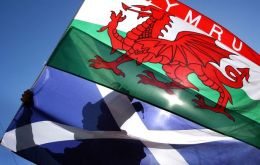
Scottish and Welsh environment ministers are to meet to co-ordinate opposition to Brexit legislation. The two administrations fear the Westminster government is planning to take over powers which are currently devolved, but exercised in Brussels.
-
Thursday, August 17th 2017 - 07:34 UTC
Theresa May writes for The Irish Times: Brexit, the border and Irish citizenship
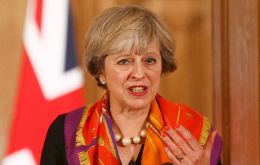
Over the past 12 months, I've said many times that while the UK is leaving the EU, we are not leaving Europe. No one voted to end the special ties between the UK and Ireland or to undermine the unique arrangements between Ireland and Northern Ireland which have underpinned the peace process and have been in place well before our membership of the EU.
-
Wednesday, August 16th 2017 - 13:45 UTC
Calls for a Brexit minister in Welsh cabinet: “the biggest constitutional challenge of our time”
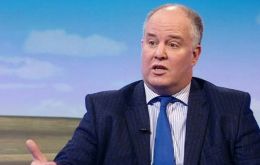
A Brexit minister should be appointed to put Wales' interests “at the centre” of negotiations, Welsh Conservative leader Andrew RT Davies has said. Mr Davies said the first minister could not handle the “biggest constitutional challenge of our time” alone and insisted the Welsh government should be reconfigured to give “strong and constructive representation” to UK ministers on EU negotiations.