MercoPress. South Atlantic News Agency
Tag: Central Bank of Paraguay
-
Thursday, November 12th 2026 - 11:20 UTC
Paraguay’s banking superintendent arrested in the Ueno Bank investigation

Paraguay’s Superintendent of Banks, Holger Insfrán, was arrested on Thursday as part of the investigation into the collapse of Ueno Bank, which has already led to the pre-trial detention of former President Santiago Peña and former Central Bank president Carlos Carvallo, according to prosecution sources cited by the EFE news agency. The charges against him have not been disclosed.
-
Monday, November 9th 2026 - 03:07 UTC
Lost savings and broken trust: life for those hit by Ueno Bank’s closure

For nearly three million Paraguayans, November 3 began with a message on their phone screens: “We cannot display your balance.” Early that morning, Paraguay’s Central Bank took over Ueno Bank over a critical solvency problem and froze its deposits. A week later, with President Santiago Peña removed from office and in pre-trial detention, many of those affected still have no access to their money and say they have also lost faith in the country’s institutions.
-
Wednesday, November 4th 2026 - 08:27 UTC
Paraguay takes over Ueno Bank, with 3 million customers, and freezes its deposits

Paraguay’s Central Bank on Tuesday took over Ueno Bank, one of the country’s largest banks, after its solvency ratio fell below 50% of the legal minimum, and froze all its assets and liabilities, including the savings of some 3 million customers and more than US$800 million in public funds. The bank immediately suspended all its services.
-
Sunday, October 18th 2026 - 17:51 UTC
Pressure mounts on Paraguay’s Central Bank over doubts about some lenders’ solvency
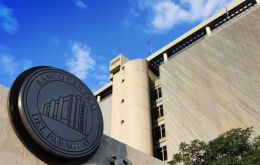
The Association of Banks of Paraguay, which groups 14 private lenders, on Sunday asked the Central Bank of Paraguay to report on the solvency of institutions that received facilities in merger processes, days after senators from the ruling party and the opposition called on President Santiago Peña to remove the institution’s leadership.
-
Tuesday, March 3rd 2026 - 02:57 UTC
Paraguay central bank cuts rates as inflation runs below target
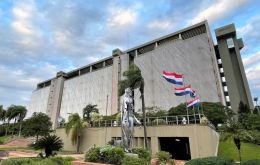
Paraguay’s central bank chief Carlos Carvallo says the country is dealing with a “nice problem”: inflation is converging to the official goal “from below,” an unusual pattern in the region that has prompted policymakers to start trimming interest rates to prevent price growth from staying too low.
-
Tuesday, October 14th 2025 - 09:20 UTC
Paraguay's economy has positive figures to show

According to a Central Bank report released on Monday in Asunción, Paraguay's monthly economic activity indicator (IMAEP) went up by 4.5% in August year-on-year, accumulating a growth of 5.6% through the end of August 2025, driven particularly by the Secondary Sector's 7.1% adjustment amid a strong performance in electricity (both generation and distribution), as well as construction, both private and public.
-
Monday, June 30th 2025 - 10:18 UTC
IMF okays Paraguay's performance but raises concerns here and there

The International Monetary Fund (IMF) approved Paraguay's fifth review of the Policy Coordination Instrument (PCI) and third review of the Resilience and Sustainability Service (RSS), granting access to about US$285 million, with US$195 million requested by authorities.
-
Monday, May 12th 2025 - 10:21 UTC
Given Paraguay's trade deficit with China, opportunities such as UAE sought

Paraguay trade experts warned this weekend, citing official data from the Central Bank of Paraguay (BCP) that 37.6% of the country's imports in the first quarter of 2025 stemmed from China, where very little is placed: 0.3% of sales abroad, as a result of Asunción's stance towards Taiwan, which prevents any direct trade with Beijing.
-
Monday, May 5th 2025 - 10:46 UTC
Paraguay's BCP announces overoptimistic GDP projection
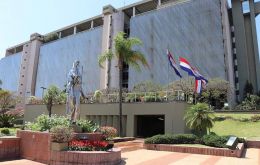
Despite many experts believing otherwise, Paraguay's Central Bank (BCP) has raised its GDP growth projection for 2025 from 3.8% to 4% amid geopolitical tensions and potential trade wars. BCP President Carlos Carvallo defended the adjustment, citing strong economic performance and advanced data showing better-than-expected dynamics in several sectors, except agriculture, which was impacted by drought-affected soybean production.
-
Tuesday, January 14th 2025 - 10:06 UTC
Paraguayan exports drop but some items post improvements
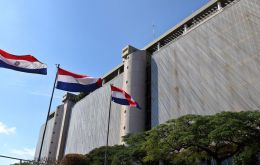
Paraguay's Central Bank (BCP) released a report Monday showing that exports fell 7.7% in 2024. However, some items scored significant improvements, as sales abroad totaled US$15.84 billion, while imports amounted to nearly US$16.38 billion. This represents a 3.6% increase for a trade deficit of US$538.8 million, against a surplus recorded the year before after a 2.3% overall contraction.