MercoPress. South Atlantic News Agency
Tag: European Union
-
Thursday, June 18th 2020 - 21:10 UTC
US and EU clash over taxes on digital firms; accord or no accord France will apply a 3% levy by end of the year

France said a U.S. decision to quit global talks on how to tax big digital firms such as Google, Amazon, and Facebook was a “provocation” and the European Union said it could impose taxes even if no deal was reached by year-end.
-
Thursday, June 18th 2020 - 11:15 UTC
EU conditions post-Brexit UK talks and looks ahead to three months of intense discussions
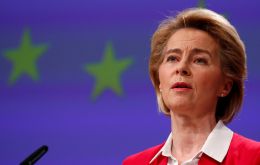
The European Union's chief executive, Ursula von der Leyen, said on Wednesday that the bloc will do its best to seal an agreement on new ties with Britain by the end of the year but will not compromise its core values, notably on fair competition.
-
Monday, June 15th 2020 - 08:09 UTC
European countries easing border controls from Monday
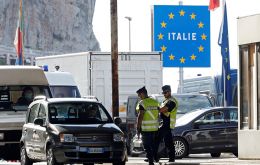
European countries ease some border controls this Monday June 15 after coronavirus lockdowns, but Spain's continued closure, a patchwork of restrictions elsewhere and new ways of working mean pre-pandemic levels of travel are a long way off.
-
Thursday, June 11th 2020 - 12:52 UTC
EU accuses Russia and China of “unprecedented” Coronavirus “infodemic”

China and Russia were blamed for spewing out false and misleading online information about Covid-19 in a European Union report that seeks to stem the “unprecedented” spread of fake news amid the pandemic.
-
Saturday, June 6th 2020 - 13:47 UTC
Europe could be free-travel zone again by July

European Union Home Affairs Commissioner Ylva Johansson announced that EU free-travel zone could be up and running again before the end of June.
-
Friday, June 5th 2020 - 09:48 UTC
EU ratifies that Juan Guaidó is the legitimate congressional president in Venezuela
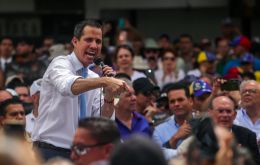
Venezuelan Supreme Court decision to ratify an ally of President Nicolas Maduro as president of the National Assembly is illegitimate, the European Union said on Thursday, warning of a deepening crisis in the South American nation.
-
Wednesday, June 3rd 2020 - 08:57 UTC
EU starts overhaul of drug manufacturing emphasizing in production and access to medicines

The European Commission on Tuesday started a process that could lead to reforms of drug manufacturing to limit shortages of vaccines and antibiotics and make medicines more easily available.
-
Friday, May 29th 2020 - 08:43 UTC
EU admits a post Brexit fisheries agreement with Britain can be achieved

The EU is willing to shift its stance on fisheries in negotiations with Britain next week, in what would be the first major concession from the bloc in talks on their new relationship after Brexit.
-
Thursday, May 28th 2020 - 08:25 UTC
EU unveils 750bn Euro recovery package, but Italy and Spain must convince their northern partners
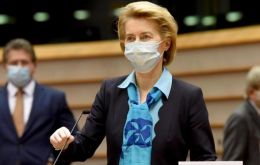
The European Union unveiled a proposed 750-billion-euro (US$ 825bn) recovery plan Wednesday to get the continent back on its feet after the devastation wreaked by the coronavirus pandemic, as Latin America outpaced Europe and the US in the number of daily infections.
-
Thursday, May 28th 2020 - 07:20 UTC
Boris Johnson will resume Brexit talks next month in Brussels
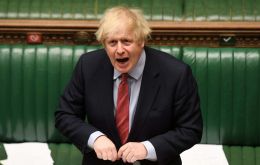
British Prime Minister Boris Johnson will resume Brexit talks in Brussels next month, the Times newspaper reported on Thursday. Britain's negotiator with the European Union, David Frost, said Johnson will meet the presidents of the European Commission and Council to formally assess the state of the talks, according to the newspaper.