MercoPress. South Atlantic News Agency
Tag: Jerome Powell
-
Thursday, March 18th 2021 - 08:51 UTC
Fed sees no interest rate hikes likely through 2023; US GDP expected to increase 6,5% in 2021
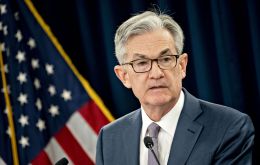
The Federal Reserve on Wednesday sharply ramped up its expectations for economic growth but indicated that there are no interest rate hikes likely through 2023 despite an improving outlook and a turn this year to higher inflation.
-
Monday, October 19th 2020 - 09:49 UTC
IMF and top central bankers agree global economic recovery needs more public spending
The International Monetary Fund said more public spending will be needed to complete the economic recovery from coronavirus, joining central bankers and finance leaders who are urging governments to set aside fears about mounting debt for now.
-
Monday, May 18th 2020 - 08:15 UTC
Fed chief forecasts US economy could easily contract 20 to 30% this quarter
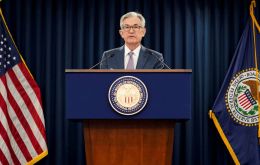
The business shutdowns caused by the coronavirus pandemic could “easily” cause the US economy to collapse by 20 to 30% this quarter, Federal Reserve Chair Jerome Powell said on Sunday. Data show more than 30 million jobs were destroyed in the world's top economy, as businesses were shuttered nationwide amid the efforts to stop the spread of COVID-19.
-
Thursday, April 30th 2020 - 07:48 UTC
US economy down 4.8% in first quarter and an “unprecedented” drop forecasted for the second quarter

The U.S. central bank that has already slashed interest rates to zero reiterated on Wednesday they will stay there until the economy is clearly back on track. It has also rolled out around US$ 2 trillion in lending commitments, and Fed chief Jerome Powell said it was ready to do more as needed.
-
Friday, April 10th 2020 - 14:50 UTC
US Fed and Bank of England ramp up emergency responses to the escalating recession in unchartered waters
The U.S. Federal Reserve and the Bank of England ramped up their emergency responses to the world's escalating coronavirus recession on Thursday as they pushed deeper into territory once considered fraught with risk for central bankers.
-
Monday, March 16th 2020 - 11:19 UTC
G7 global rescue: Fed cuts rates to almost zero and launches US$ 700bn stimulus program
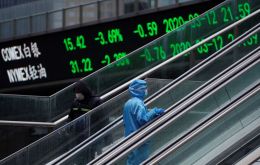
The US has cut interest rates to almost zero and launched a US$ 700bn stimulus program in a bid to protect the economy from the effect of coronavirus. It is part of a coordinated action announced on Sunday in the UK, Japan, the Eurozone, Canada, and Switzerland.
-
Thursday, November 14th 2019 - 09:50 UTC
Fed chief Powell urged Congress to take action on rising US debt and deficit
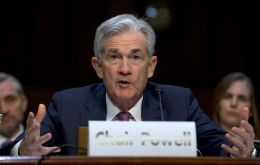
Federal Reserve chief Jerome Powell urged Congress on Wednesday to take action on the rising US debt and deficit to ensure the continued growth of the American economy. Called before the Joint Economic Committee to discuss the economic outlook, the central bank chief stressed that it was not his role to give policy advice, before he gave diplomatically-worded policy advice.
-
Thursday, October 31st 2019 - 09:01 UTC
Fed lowers benchmark by a quarter point: third cut in four months
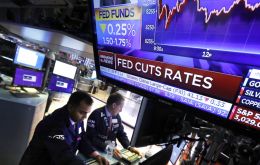
The US central bank has cut interest rates again, hoping to shield the economy from the impact of trade wars and a global slowdown. The Federal Reserve lowered the target for its benchmark rate by a quarter-point, to a range of 1.5% to 1.75%. The move was the third cut in four months.
-
Sunday, October 20th 2019 - 10:50 UTC
Lagarde tells Trump and world leaders to act like grownups in trade conflicts
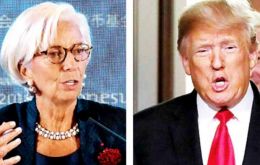
Former IMF chief Christine Lagarde said President Donald Trump's trade offensive against China could slash global economic growth and she critiqued his Twitter habits in an interview with US television program 60 Minutes.
-
Saturday, October 12th 2019 - 09:10 UTC
Fed announces supply of reserves plan to avoid “cash crunches”
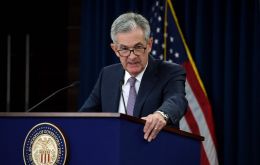
The Federal Reserve has announced a new program to boost liquidity in the US financial plumbing and allow the central bank to better manage interest rates, but without changing monetary policy.