MercoPress. South Atlantic News Agency
Tag: labor reform
-
Saturday, May 9th 2026 - 05:49 UTC
Argentine court reinstates full force of Milei's labor reform

An Argentine court on Friday lifted the precautionary injunction that had suspended 82 of the 218 articles of the labor reform pushed by President Javier Milei, restoring the full force of one of the most contested laws in the libertarian program.
-
Friday, February 20th 2026 - 04:02 UTC
Argentina’s lower house backs Milei labour reform bill without article 44

Argentina’s Chamber of Deputies approved President Javier Milei’s “labour modernisation” bill on Thursday, but with a last-minute change that removed article 44, one of the proposal’s most disputed provisions. Because the text was amended, it must return to the Senate for a final vote, a timetable the government wants completed ahead of the March 1 opening of the ordinary congressional session.
-
Thursday, February 19th 2026 - 11:59 UTC
CGT general strike disrupts transport in Argentina as lower house debates Milei labor reform

Argentina began a 24-hour general strike on Thursday called by the country’s main labor federation, the CGT, to protest President Javier Milei’s labor reform bill, as the Chamber of Deputies was set to start debating the legislation from 2:00 p.m. local time. The stoppage immediately hit urban and long-distance mobility and forced airlines and operators to reschedule services.
-
Monday, February 16th 2026 - 17:11 UTC
Argentina’s CGT calls 24-hour general strike on the day lower house debates Milei’s labor reform

Argentina’s main labor umbrella, the General Confederation of Labor (CGT), confirmed on Monday it will stage a 24-hour nationwide strike on the day the Chamber of Deputies debates President Javier Milei’s labor reform, hardening its stance as the bill enters the final stage of the legislative process after clearing the Senate.
-
Thursday, February 12th 2026 - 12:50 UTC
Argentina’s Senate approves Milei’s labour reform amid protests and clashes

Argentina’s Senate gave initial approval to President Javier Milei’s labor reform bill after a marathon session that ran for more than 14 hours and unfolded amid street protests outside Congress. The draft cleared the upper chamber by 42 votes to 30 and will now move to the Lower House (Chamber of Deputies) for final consideration.
-
Wednesday, February 11th 2026 - 05:16 UTC
Argentina Senate set to vote labor reform after last-minute deal on key changes
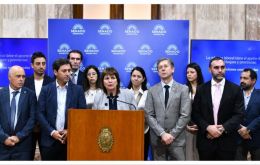
Argentina’s ruling coalition and centrist opposition blocs in the Senate reached a deal to vote on a labor reform bill on Wednesday, starting at 11 a.m., during an extraordinary session, according to the final draft circulated in the upper house and local reporting. The revisions steered by Senate ruling bloc leader Patricia Bullrich are key to advancing the labor reform and include dropping the corporate income tax cut—preserving revenues for provinces and the federal government—concessions to unions and business chambers on mandatory contributions, maintaining the allocation to union-run health funds, and moderating the original severance fund proposal.
-
Tuesday, April 30th 2024 - 19:22 UTC
Argentina: Milei's chainsaw policies underway after Lower House's nod

The shaping up of Argentine President Javier Milei's “chainsaw” economic politics kicked off this week with the broad approval by Congress' Lower House of the so-called “Omnibus Law” bill, also known for its formal name as the Bases Law: “It is a fundamental step to get Argentina out of the swamp,” Milei stressed on social media. The Basic Law bill has ten titles totaling 25 chapters.
-
Saturday, May 27th 2023 - 10:39 UTC
Argentina lost about 80 MSMEs per week under Alberto Fernández

Argentina lost an average of 80 companies each week in the last three years, according to a private study released in Buenos Aires Friday, which means that when President Alberto Fernández leaves office on Dec. 9, 2023, he will leave behind a country with over 12,000 fewer companies.
-
Thursday, October 10th 2019 - 09:49 UTC
Mexico urged to implement labor reform to help speed ratification of the new North American free trade deal
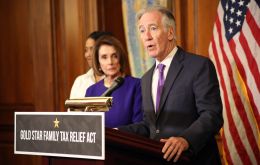
The leader of a U.S. congressional delegation to Mexico said that Mexico must take more concrete steps to implement its labor reform, after a trip aimed at speeding up ratification of the new North American free trade deal.

