MercoPress. South Atlantic News Agency
Tag: Middle East
-
Saturday, August 8th 2026 - 07:26 UTC
Falklands: rise in the CPI, caused by the conflict in the Middle East

The Consumer Price Index (CPI), according to official Falkland Islands figures, recorded a quarterly increase of 3.4% as a result of the impact of higher fuel prices.
-
Friday, May 8th 2026 - 01:20 UTC
Falklands brace for Middle East fallout with fuel, shipping and supply contingencies
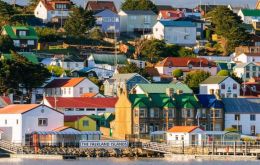
The conflict in the Strait of Hormuz and its consequences for the global supply of oil and other derivative products have not bypassed the Falkland Islands, which, as one local lawmaker put it, sit “at the tail end of global distribution.”
-
Friday, March 27th 2026 - 23:04 UTC
Uruguay raises fuel prices 7% over Middle East war and shifts to monthly price-setting
Uruguay's government announced on Friday a 7% fuel price increase effective April 1, as a direct consequence of rising oil prices driven by the U.S.-Israeli war against Iran and the effective closure of the Strait of Hormuz, through which approximately 20% of the world's crude oil supply transits.
-
Monday, March 16th 2026 - 01:10 UTC
Oil tops US$100 a barrel as Middle East war and Hormuz disruption rattle markets
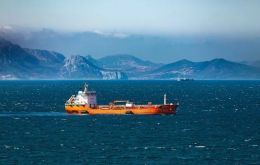
Oil prices moved back above US$100 a barrel on Monday as the conflict involving the United States, Israel and Iran intensified and shipping disruption in the Strait of Hormuz hit one of the world’s most critical energy chokepoints. Brent crude rose to US$105.15 a barrel and U.S. West Texas Intermediate climbed to US$100.32 in early Asian trading, according to market data.
-
Thursday, March 12th 2026 - 10:42 UTC
Iran broadens regional attacks as Israel launches new strikes on regime targets
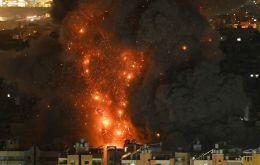
The war involving Iran, Israel and the United States entered a broader regional phase on Thursday, with fresh Iranian attacks on energy infrastructure, shipping routes and military positions across Gulf states, while Israel responded with a new wave of strikes on Iranian territory. The escalation again tightened pressure on the Strait of Hormuz and pushed oil prices back above $100 a barrel.
-
Tuesday, March 10th 2026 - 00:29 UTC
Lula warns Brazil must be ready to defend itself amid rising global tensions
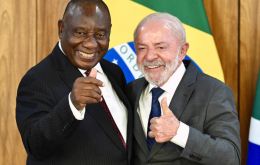
Brazilian President Luiz Inácio Lula da Silva warned Monday that the country must be prepared to defend itself against potential external threats, as global geopolitical tensions intensify, during a joint appearance with South African President Cyril Ramaphosa in Brasília.
-
Monday, March 9th 2026 - 17:04 UTC
UK warns of higher inflation and backs oil reserve release amid Middle East war
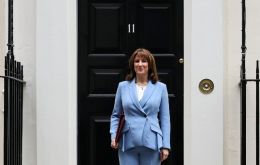
British finance minister Rachel Reeves said on Monday that the United Kingdom was ready to support a coordinated release of international oil reserves if the Middle East crisis keeps pushing up energy prices, though no formal G7 decision has yet been taken. Reeves made the statement after joining a virtual meeting of G7 finance ministers, as oil prices remained elevated because of disruption to shipping through the Strait of Hormuz. Reuters reported that the option under discussion is a joint emergency stock release under the International Energy Agency framework.
-
Monday, March 9th 2026 - 10:59 UTC
Oil rises above US$100 a barrel as Middle East war and Hormuz disruption hit supply
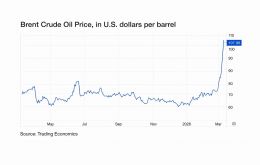
Oil prices climbed above US$100 a barrel on Sunday in futures trading, reaching their highest levels since 2022 as the war in the Middle East, the effective closure of the Strait of Hormuz and fresh production cuts among Gulf producers tightened supply expectations. Reuters reported Brent rose as high as US$111.04 a barrel while West Texas Intermediate (WTI) touched US$111.24 in early trading. AP later put Brent at US$107.97 and WTI at US$106.22, both more than 16% above the previous close.
-
Saturday, February 14th 2026 - 03:17 UTC
US redeploys USS Gerald R. Ford from Caribbean to Middle East amid Iran pressure
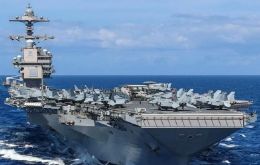
The United States is shifting the USS Gerald R. Ford, its largest aircraft carrier, from the Caribbean Sea to the Middle East in a move that would place two US carrier strike groups in the region as President Donald Trump presses Iran to reach a deal over its nuclear programme.
-
Thursday, June 12th 2025 - 10:27 UTC
US removes non-essential staff from diplomatic missions in Middle East
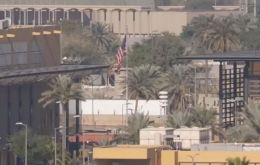
Washington has authorized the partial evacuation of non-essential diplomats and military personnel from its Middle East facilities, including the embassy in Baghdad and bases in Bahrain, Kuwait, Qatar, Iraq, and the UAE, due to heightened security risks stemming from a potential Israeli attack on Iran's nuclear facilities, it was reported Wednesday.