MercoPress. South Atlantic News Agency
Tag: Strait of Hormuz
-
Tuesday, August 18th 2026 - 22:06 UTC
Trump posts a map designating the Strait of Hormuz as “new US territory”
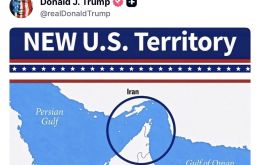
US President Donald Trump on Tuesday posted an image on his Truth Social platform showing a map of the Strait of Hormuz circled and captioned “NEW U.S. Territory,” above a band in the colours of the American flag. The post carried no accompanying text.
-
Monday, June 15th 2026 - 08:21 UTC
US and Iran announce a deal to end their war and reopen the Strait of Hormuz
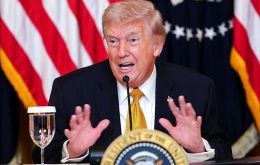
The United States and Iran reached a preliminary peace deal on Sunday to end nearly four months of war in the Middle East and reopen the Strait of Hormuz, Pakistan, the mediating country, announced. The agreement, confirmed by both US President Donald Trump and Tehran, will be officially signed on Friday, June 19, in Switzerland.
-
Thursday, June 11th 2026 - 08:12 UTC
US and Iran trade fire for a second night as Tehran says it has closed Hormuz
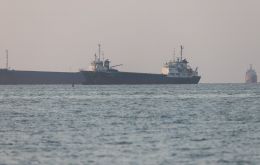
The United States and Iran traded fire for a second consecutive night, in what amounts to a more dangerous phase of the war in the Persian Gulf and raises the prospect of a return to open hostilities. As US forces again struck Iranian targets, the Revolutionary Guard said it had hit bases with a US presence in the region, and Iran's General Staff announced the “absolute” closure of the Strait of Hormuz. President Donald Trump threatened new strikes on Thursday if Tehran does not accept his conditions for peace.
-
Monday, May 25th 2026 - 22:11 UTC
United States strikes southern Iran targets “in self-defense” amid Doha peace talks
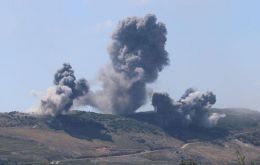
The US Armed Forces struck military targets in southern Iran on Monday “in self-defense,” according to a statement by US Central Command, in an episode that coincides with the arrival of Iranian negotiators in Qatar for peace talks mediated by the Qatari government. The operation also overlaps with the order issued by Israeli Prime Minister Benjamin Netanyahu to the Israeli army to “step on the accelerator” in its offensive against the Shiite militia Hezbollah in Lebanon, despite parallel negotiations between Tel Aviv and Beirut.
-
Monday, May 25th 2026 - 00:51 UTC
Trump administration anticipates imminent agreement with Iran to reopen Strait of Hormuz
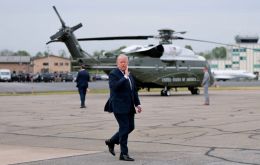
The administration of US President Donald Trump took it for granted on Sunday that within the coming days it will be able to announce an agreement with Iran to reopen the Strait of Hormuz, a maritime route through which approximately 20% of the world's oil flows and which has remained practically closed since the start of the US and Israeli offensive against the Islamic Republic on 28 February. Three months after the attack that killed Supreme Leader Ali Khamenei —replaced by his son Mojtaba— Washington and Tehran are negotiating a two-phase scheme that would ease pressure on the global economy without immediately resolving the underlying nuclear questions.
-
Monday, May 11th 2026 - 04:42 UTC
Trump calls Iran's response to his peace proposal “totally unacceptable”
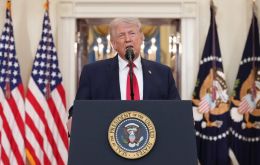
US President Donald Trump described Iran's response to Washington's latest proposal to end the war that has pitted the two countries against each other since 28 February as “totally unacceptable” on Sunday. “I have just read the response from Iran's so-called 'Representatives.' I don't like it — TOTALLY UNACCEPTABLE!” the president wrote on his Truth Social platform.
-
Wednesday, May 6th 2026 - 01:45 UTC
Just one day after its launch, Trump halts Hormuz reopening operation and turns to negotiations with Iran
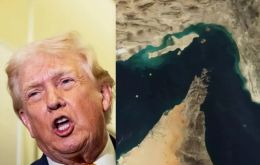
US President Donald Trump on Tuesday night announced the suspension of “Project Freedom,” the military operation launched barely 24 hours earlier to escort stranded vessels through the Strait of Hormuz, citing significant progress toward a peace agreement with Iran. The announcement, posted on his Truth Social platform, contradicted the messaging sustained throughout the day by Secretary of State Marco Rubio, Secretary of Defense Pete Hegseth, and Joint Chiefs chairman General Dan Caine, all of whom had framed the operation as a non-negotiable humanitarian rescue mission for stranded sailors.
-
Tuesday, May 5th 2026 - 02:40 UTC
US destroys six Iranian boats while opening Strait of Hormuz to trade amid threatened ceasefire
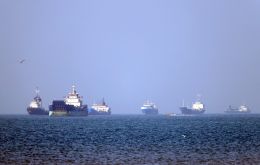
US military forces on Monday destroyed six Iranian Revolutionary Guard fast boats and neutralised cruise missiles and drones launched against warships and commercial vessels during the first day of “Project Freedom,” the operation announced by President Donald Trump to reopen the strategic Strait of Hormuz to maritime traffic. The two US destroyers that led the transit — the USS Truxtun and USS Mason — passed through the strait without being struck, despite what US Central Command described as a “sustained barrage” of Iranian threats.
-
Friday, April 24th 2026 - 19:40 UTC
Hormuz closure keeps Brent above $105 with outlook uncertain

Brent crude closed on Friday at $105.33 a barrel, accumulating a gain of nearly ten dollars from the start of the week, in a market dominated by uncertainty over the US-Iran conflict and the prolonged closure of the Strait of Hormuz. The European benchmark crude touched $107.40 on Thursday — its weekly peak — before moderating its advance.
-
Thursday, April 23rd 2026 - 11:51 UTC
Iran attacks ships in Hormuz as Trump extends ceasefire without conditions and faces domestic backlash
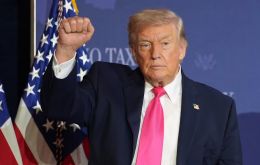
US President Donald Trump extended the ceasefire with Iran on Tuesday without setting a deadline, hours before his own two-week truce was set to expire without a deal. The decision came as Iran attacked two container ships in the Strait of Hormuz on Wednesday, with the White House declining to characterise the strikes as a ceasefire violation on the grounds that neither vessel was American or Israeli.