MercoPress. South Atlantic News Agency
United States
-
Friday, May 22nd 2026 - 03:20 UTC
Caracas authorizes overflight of two US aircraft for embassy evacuation drill
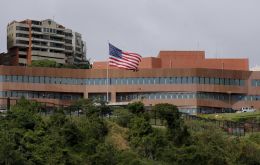
The Venezuelan government on Thursday authorized the holding, on Saturday 23 May, of an evacuation drill requested by the US Embassy in Caracas, which will include the controlled overflight of two aircraft over the Venezuelan capital and landing operations at the premises of the diplomatic compound. The activity, announced in an official statement by the Ministry of People's Power for Foreign Affairs, was framed by the administration of acting President Delcy Rodríguez as part of “the regular protocols of diplomatic security and protection.”
-
Thursday, May 21st 2026 - 11:53 UTC
United States revokes visa of former Argentine official over role in illegal Patagonian toothfish case

The US Department of State on Wednesday revoked the visa of former Argentine official Pablo Ferrara Raisberg, former Foreign Ministry representative on the Federal Fisheries Council, over his alleged involvement in an illegal Patagonian toothfish episode that prompted his resignation in 2024. The measure is part of a new policy by the government of Donald Trump under which Washington has restricted the issuance of visas to 24 individuals linked to illegal, unreported, and unregulated fishing in exclusive zones, and also includes Mexican national José Ali Amado.
-
Wednesday, May 20th 2026 - 23:59 UTC
Milei authorizes US Southern Command to patrol Argentine southern sea in strategic shift
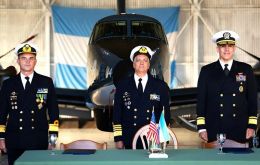
Javier Milei's government on Wednesday announced the signing of a letter of intent with the United States for joint patrolling of the South Atlantic over the next five years, in a military cooperation agreement that ratifies Buenos Aires's strategic alignment with the Donald Trump administration and that has triggered alarms over Argentine sovereignty in its maritime spaces. The agreement, signed by the US Southern Command and Argentine Navy authorities, involves the supply of US technology to modernize the South American country's naval equipment and, at the same time, authorizes the participation of US forces in patrolling the Argentine southern sea.
-
Wednesday, May 20th 2026 - 18:29 UTC
United States indicts Raúl Castro over 1996 shootdown of Brothers to the Rescue aircraft
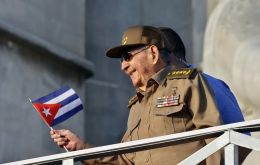
The US Department of Justice on Wednesday filed formal charges against former Cuban president Raúl Castro and five other Cuban military officers on counts of murder, conspiracy to murder US citizens, and destruction of aircraft, in connection with the shootdown on 24 February 1996 of two civilian planes operated by the anti-Castro organization Brothers to the Rescue. The indictment, approved on 23 April by a grand jury of the Southern District of Florida, was unveiled at the Freedom Tower in Miami on the same day the Cuban diaspora commemorates Independence Day, a date the Havana regime does not celebrate. It is the first time in nearly 70 years that a senior leader of the Cuban regime has faced criminal charges in the United States over events that resulted in the deaths of US citizens.
-
Wednesday, May 20th 2026 - 01:27 UTC
The European Union unblocks tariff deal with United States after ten months of negotiation
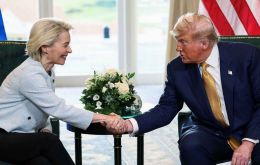
Negotiators from the European Parliament, the Council of the European Union, and the European Commission reached a provisional agreement in the early hours of Wednesday on the final text of the tariff pact with the United States, in a decision that closes ten months of negotiations marked by pressures, threats, and successive blockages in the European Parliament. The Cypriot presidency of the Council, exercised during the first half of 2026, confirmed the breakthrough through the X social media platform and emphasized that the aim of the agreement is to “enhance a stable and predictable trade relationship” between the two blocs.
-
Tuesday, May 19th 2026 - 02:09 UTC
After CIA director's trip to Havana, Cuba warns of “bloodbath” in case of attack
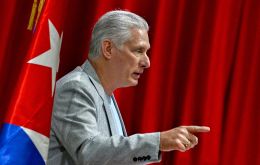
Cuban President Miguel Díaz-Canel warned on Monday that a possible US military attack on the island “will provoke a bloodbath of incalculable consequences,” in the most explicit hardening of Havana's discourse toward Washington since the start of the oil blockade imposed in January. The message, released through the X social media platform, coincided with the public confirmation that the Cuban government has acquired more than 300 drones from China and Iran, a purchase that island authorities framed as part of the exercise of their “legitimate defense.” The rhetorical shift comes just four days after the visit to Havana by the director of the US Central Intelligence Agency, John Ratcliffe.
-
Tuesday, May 19th 2026 - 02:06 UTC
Musk loses USD 150 billion lawsuit against OpenAI and Sam Altman

A federal jury in Oakland, California, on Monday unanimously rejected the lawsuit that magnate Elon Musk had filed against OpenAI chief executive Sam Altman and the company's president, Greg Brockman, in which he sought USD 150 billion in damages and the reversal of the artificial intelligence firm's transformation into a for-profit entity. The verdict, reached by all nine jurors, found that the lawsuit is barred by the statute of limitations and amounts to a sharp setback for the founder of Tesla, who has already announced his intention to appeal to the Ninth Circuit Court of Appeals.
-
Tuesday, May 19th 2026 - 01:37 UTC
Alex Saab appears in Miami charged with money laundering tied to bribery in Chavismo's food programs

Colombian-Venezuelan businessman Alex Saab, regarded for years as the main financial frontman of former president Nicolás Maduro, appeared on Monday before a federal court in Miami, where he was formally charged with one count of money laundering linked to a bribery scheme used to enrich himself through contracts of Venezuela's state food import program. The hearing took place two days after acting President Delcy Rodríguez handed him over to the United States in what the Venezuelan government described as a deportation but which, in legal terms, amounts to an extradition.
-
Sunday, May 17th 2026 - 23:13 UTC
Mid-air collision between two US jets at airshow ends without fatalities in Idaho
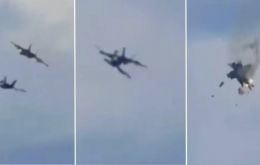
Two US Navy EA-18G Growler jets collided in mid-air on Sunday during an aerial demonstration at Mountain Home Air Force Base in the state of Idaho, with no fatalities reported. The four crew members aboard the aircraft ejected in time and were evaluated by medical personnel at the scene, said Naval Air Forces Pacific Fleet spokesperson Amelia Umayam. No injuries were reported among base personnel or among spectators of the Gunfighter Skies airshow, during which the incident occurred.
-
Sunday, May 17th 2026 - 05:07 UTC
Venezuela hands over to the United States former minister and Maduro frontman Alex Saab

The Venezuelan government on Saturday deported to the United States the Colombian businessman Alex Saab, considered for years the main financial operator of former president Nicolás Maduro and minister of Industry and National Production until January 2026. The businessman landed at sunset at Opa-locka airport in Miami-Dade County, escorted by agents of the Drug Enforcement Administration (DEA), bringing to a close a judicial file that had turned Saab into one of the most visible symbols of the economic apparatus of Chavismo and into one of the most wanted figures by US justice over the past decade.