MercoPress. South Atlantic News Agency



Norway purchases five Type 26 frigates, the UK largest warship export (US$ 13.5bn)
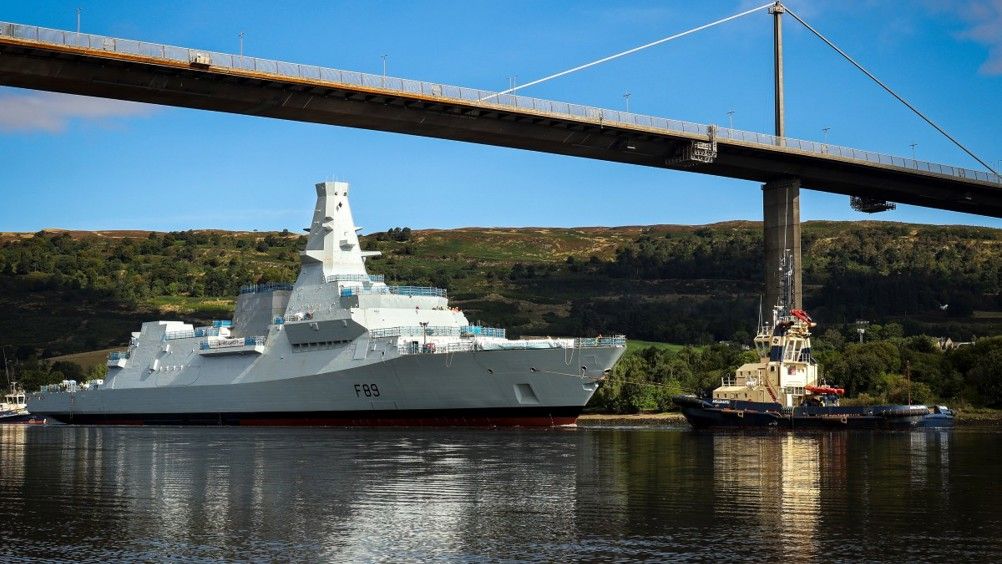 With more than 30 ships in the class (8 for the RN, 6 for Australia, up to 15 for Canada and 5 for Norway), Type 26 has become the most successful British frigate design since the Leander class.
 Norway has formally announced it will purchase at least 5 Type 26 frigates to be built in the UK, an operation costing some 13,5 bn dollars. The announcement confirms what has been obvious for some time, but it is only the first step in this momentous program. The Norwegian and British governments will soon finalize a binding agreement which will set the framework for a strategic partnership. Once this agreement is signed, the two parties will enter into detailed contract negotiations with BAE Systems for the delivery schedule. The RN and UK government have worked hard to support this with an extensive program of visits by ministers, multiple visits to Norway by RN ships and deepening defense cooperation in the last few years.
The Royal Norwegian Navy / Sjøforsvaret (RNoN) needs to replace its four remaining Fridtjof Nansen-class frigates and says the primary focus of the new ships will be anti-submarine warfare. Norway is one of the few nations sensible enough to establish a sovereign wealth fund using revenues from its hydrocarbon exports. This is allowing for a substantial increase in defense spending as a response to the aggression of its neighbours. Type 26 was the obvious choice as the Norwegian requirement was for a high-end ASW frigate, the effectiveness and suitability of the chosen platform being of greater importance than cost. This put it ahead of the only other realistic alternative, the French Frégate de Défense et d’Intervention (FDI) which is cheaper and a more general-purpose platform.
Operating Type 26 with the UK and Canada will allow the 3 nations to take advantage of shared support, training, and interoperability opportunities. Anti-submarine warfare in the North Atlantic and High North is inherently a team sport will be considerably enhanced by the sharing of data, sensors, ship components and expertise.
From an economic perspective, this is a huge success for the UK and will be by far the biggest British warship export project since the Second World War. BAE Systems is not the only winner, but an industrial supply chain that includes around 400 companies and extends across the country. Valued at approximately £10Bn, this is the largest warship export by value ever achieved by the UK. This price tag suggests that the deal will include, not just initial construction, but some British-supplied through-life support for the ships. It is believed a new covered docking facility will be built in Harstad in northern Norway to maintain the ships in partnership with BAES.
With more than 30 ships in the class (8 for the RN, 6 for Australia, up to 15 for Canada and at least 5 for Norway), Type 26 has become the most successful British frigate design since the Leander class. With another nation joining the program, it will also drive further economies of scale for the 4 nations and could also attract further export interest.
All of the Norwegian ships will be built on the Clyde and, unlike the Canadian and Australian variants, which only have around 70% commonality, they will not be modified significantly from the Type 26 parent design.
The Norwegian MoD says the frigates will be equipped with anti-submarine capable helicopters. Norway has cancelled its contract to buy NH-90s due to their poor performance and late deliveries. A decision on a replacement will be made soon, the helicopter being a key component of the ASW frigate.
The difficult decision about how this will impact the RN’s delivery schedule has yet to be made, but deliveries for RNoN and the RN will have to be interleaved. The Norwegians specified that they must take delivery of their first ship by 2029, so at least one ship currently being built for the RN will have to be allocated to them (most likely ship 3, HMS Belfast or ship 4, HMS Birmingham). Ironically, the plan to build 13 Type 26 frigates for the RN on the Clyde, which was reduced to 8 in 2015, has now returned to the original number.(Navy Lookout).


Top Comments
Disclaimer & comment rules-

-

Read all commentsThey are also selling a lot of type 31 frigates, Indonesia are buying 2, Poland 3, Denmark and Sweden are close to ordering 3 and 4 respectively with Chile and New Zealand also rumoured to be interested.
Sep 08th, 2025 - 10:10 am 0All in all a good time for the British defence/ship building industry.
Thank Putin.
Sep 08th, 2025 - 05:57 pm 0Commenting for this story is now closed.
If you have a Facebook account, become a fan and comment on our Facebook Page!