MercoPress. South Atlantic News Agency

Ho Chi Minh to be honored at Montevideo's port
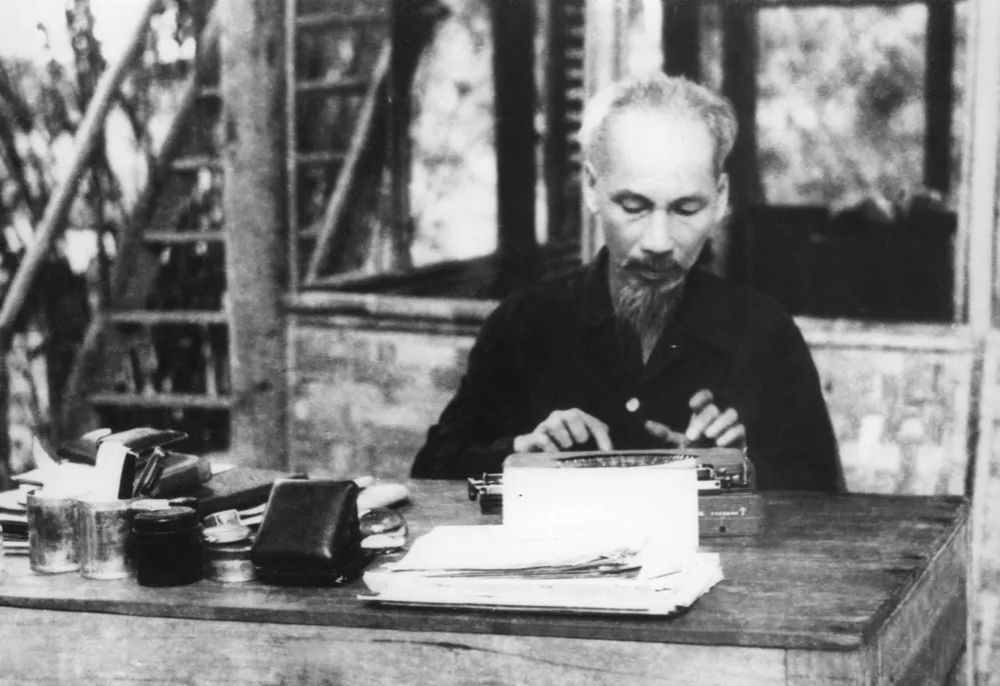 Ho Chi Minh's controversial history is the root of controversy in Montevideo
 Uruguay's National Port Administration (ANP) has authorized the installation of a commemorative plaque honoring the late Vietnamese leader Ho Chi Minh in the main hall of Montevideo's fluviomaritime passenger terminal.
This decision ignited controversy between the ANP and the City Hall. Montevideo's Departmental Board previously rejected a proposal to place a bust of Ho Chi Minh donated by the government of Vietnam.
The debate stems from the leader's dual legacy: he is revered in Vietnam as a national independence hero and liberator, but his rule is criticized internationally for establishing an authoritarian, single-party regime and for human rights abuses, including the systematic elimination of political rivals and religious persecution.
The ANP justified its decision by stating the plaque aims to “highlight” the historical importance of Ho Chi Minh's stopover at the Port of Montevideo in 1912 during his “transcendental journey in search of national liberation.” The Authority also believes the plaque will “strengthen” bilateral relations between Uruguay and Vietnam and “preserve the shared historical legacy.”
The Departmental Board's failure to approve the bust has already had diplomatic consequences. The proposed installation required a two-thirds special majority (21 votes), which the Broad Front (Frente Amplio - FA) could not secure due to the opposition parties' firm rejection.
Following the stalemate, the official visit of Vietnamese Vice President Vo Thi Anh Xuan to Uruguay was postponed due to “unforeseen circumstances” (force majeure). The delay is widely interpreted in diplomatic circles as a direct consequence of the rejection of the bust proposal.
Celebrated as a liberator who ended French colonialism and Japanese occupation, Ho Chi Minh led the August Revolution, declaring Vietnam's independence in 1945. He implemented policies like land reform and campaigns to reduce illiteracy.
However, he has been criticized for systematically eliminating non-communist political rivals, establishing a single-party authoritarian regime with total censorship, widespread human rights abuses, and religious persecution of Catholic and Buddhist groups.
When he was known by his birth name, Nguyễn Sinh Cung, and later by the alias Văn Ba, the Vietnamese leader left the country on June 5, 1911, as a kitchen helper on a French steamer. From 1911 to around 1917, he became a seaman on various merchant ships, which allowed him to travel the world, visiting ports in Africa, Asia, Europe (France, Britain), and the Americas. These stops were crucial to Ho Chi Minh's political education and the development of his anti-colonial strategy.
Montevideo's port was a key stop on the South Atlantic trade routes for ships traveling from Europe or heading around the tip of South America. The ANP resolution highlights that his stop in Montevideo in 1912 was part of this “transcendental journey in search of national liberation.”
The plaque would position the Port of Montevideo as a historic point of reference for global revolutionary and independence movements, it was also argued.


Top Comments
Disclaimer & comment rulesCommenting for this story is now closed.
If you have a Facebook account, become a fan and comment on our Facebook Page!