MercoPress. South Atlantic News Agency

Argentine judge annuls Anti-Blockades Protocol
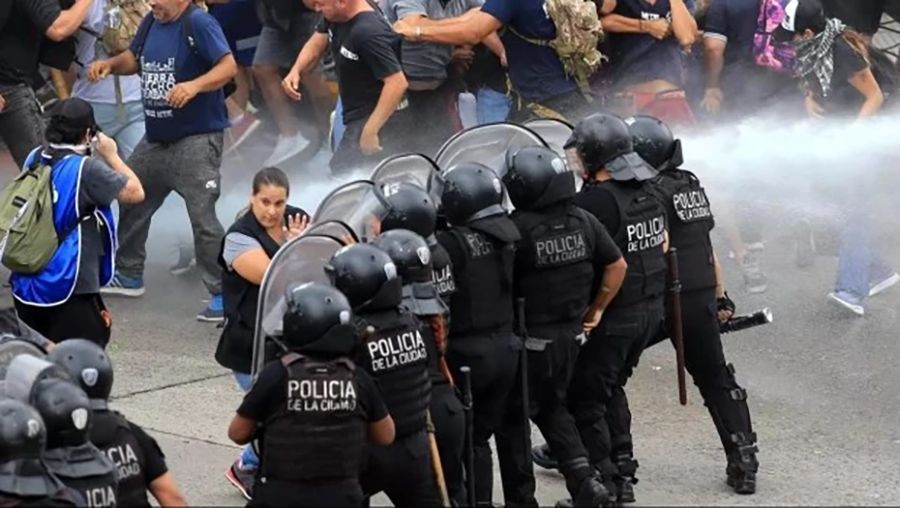 While appeals are exhausted, federal security forces face significant uncertainty regarding how to handle street demonstrations
 A federal judge in Buenos Aires declared the Argentine government’s controversial “anti-picket” protocol null and void on Monday, sparking a major legal and political confrontation between the judiciary and the Security Ministry.
Judge Martín Cormick of Federal Administrative Court No. 11 acquiesced to a collective injunction filed by the Center for Legal and Social Studies (CELS) and supported by a broad coalition of unions and human rights organizations, including Amnesty International. The ruling invalidates Resolution 943/23, a cornerstone policy of President Javier Milei's administration designed to prevent protesters from blocking streets.
Judge Cormick argued that the Security Ministry exceeded its authority by attempting to regulate fundamental rights through a mere ministerial resolution rather than through Congress. The magistrate stated that the protocol “surreptitiously but effectively assumes legislative powers,” modifying the Criminal Code and organic police laws.
The ruling emphasized that the rights to protest and assemble (Article 14 of the Constitution) can only be regulated by laws enacted by the National Congress. Hence, Cormick found that the protocol lacked the essential elements of a valid administrative act, rendering it “manifestly illegitimate.”
He also opened the door for civil litigation, stating that individuals harmed by police actions during the protocol's enforcement —including those injured during recent demonstrations— must file individual criminal complaints.
Human rights organizations and labor unions celebrated the decision as a “collective victory.”
“The Ministry of Security legislated through a resolution to restrict the right to protest to the maximum, bypassing Congress and the Judiciary,” the CELS noted.
ATE State Employees Union Secretary-General Rodolfo Aguiar celebrated the restoration of constitutional guarantees. Had the courts acted sooner, “more than 1,400 injuries in demonstrations could have been avoided,” he stressed.
The Milei administration immediately signaled its intent to fight the ruling. “WITHOUT PROTOCOL THERE IS NO ORDER, THERE IS CHAOS,” Security Minister Alejandra Monteoliva posted on X. “We will not take a step back,” she added. “This Protocol has technical, legal, and operational foundations. We will defend it at all costs because it is the tool that restored order and tranquility to Argentines.”
“A judge has issued a ruling that attempts to undermine the Anti-Picket Protocol. This move is in line with the old policy that does not want peace or order in Argentina,” she further argued.
The ruling is now open for appeals. In the meantime, federal security forces face significant legal uncertainty regarding how to handle street demonstrations.


Top Comments
Disclaimer & comment rulesCommenting for this story is now closed.
If you have a Facebook account, become a fan and comment on our Facebook Page!