MercoPress. South Atlantic News Agency
Tag: Patricia Bullrich
-
Friday, November 27th 2026 - 17:21 UTC
Milei wins Senate approval to suspend primaries, with debates mandatory only in a run-off

Argentina's Senate on Thursday approved, by 43 votes to 29, the political reform promoted by Javier Milei's government that suspends the open, simultaneous and mandatory primary elections (PASO) ahead of the 2027 presidential election. The bill, which also limits mandatory presidential debates to a run-off, now goes to the Chamber of Deputies.
Add your comment! -
Monday, November 16th 2026 - 01:07 UTC
Milei and Bullrich: a rift becoming routine ahead of the 2027 election

The tension between Argentine President Javier Milei and the ruling party’s Senate leader, Patricia Bullrich, has become part of daily life in La Libertad Avanza less than a year before the 2027 presidential election, and over the weekend it reached the international press. The British newspaper Financial Times devoted an analysis to the dispute on Saturday, citing a poll that ranks Bullrich as the most popular figure in the ruling camp.
-
Wednesday, August 5th 2026 - 23:10 UTC
Argentine government pulls chapter on land sales to foreigners from Senate debate
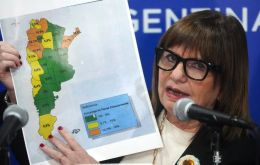
Argentina's governing bloc withdrew on Wednesday the rural land chapter of the Inviolability of Private Property bill from the Senate agenda, lacking the votes to pass it and hours before the session scheduled for Thursday.
-
Sunday, June 14th 2026 - 20:32 UTC
Adorni's admission deepens divisions in Milei's cabinet as the opposition seeks a censure vote

The admission by Argentine Cabinet Chief Manuel Adorni that he kept undeclared savings deepened divisions within Javier Milei's government and accelerated an opposition attempt to remove him through a censure motion. Despite the controversy, Adorni remains at the head of the cabinet.
-
Thursday, April 23rd 2026 - 03:30 UTC
Bullrich arrives in Uruguay criticising cannabis legalisation and calling for tougher security policy
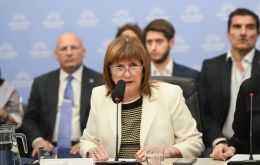
Argentine Senator Patricia Bullrich, former National Security Minister under President Javier Milei, will visit Montevideo this week to take part in the conference “Uruguay, future and youth: current challenges,” organised by the Manantiales Foundation at the World Trade Center. During her visit, Bullrich questioned the effectiveness of Uruguay's cannabis legalisation policy and said the country must reduce its homicide rate, which she described as high relative to the country's socioeconomic profile.
-
Thursday, March 5th 2026 - 21:36 UTC
Bullrich meets freed gendarme Nahuel Gallo at Senate, questions AFA role in his release

Senator Patricia Bullrich met at her Senate office with Argentine gendarme Nahuel Gallo, who was freed after 448 days in detention in Venezuela, in talks that lasted nearly two hours and focused on his captivity and the process that led to his return. Speaking afterwards, Bullrich said Gallo had “barely told 10% of what he lived through” and indicated the two would meet again.
-
Saturday, February 28th 2026 - 01:09 UTC
Argentina lowers age of criminal responsibility from 16 to 14, Senate approves new juvenile regime
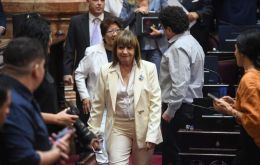
Argentina’s Senate passed a law on Friday lowering the minimum age of criminal responsibility from 16 to 14, a flagship “tough on crime” initiative backed by President Javier Milei. The bill cleared the upper house with 44 votes in favor, 27 against and one abstention, after it had already been approved by the Chamber of Deputies the previous week.
-
Wednesday, February 11th 2026 - 05:16 UTC
Argentina Senate set to vote labor reform after last-minute deal on key changes
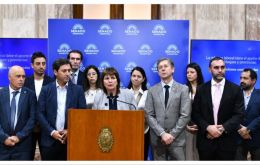
Argentina’s ruling coalition and centrist opposition blocs in the Senate reached a deal to vote on a labor reform bill on Wednesday, starting at 11 a.m., during an extraordinary session, according to the final draft circulated in the upper house and local reporting. The revisions steered by Senate ruling bloc leader Patricia Bullrich are key to advancing the labor reform and include dropping the corporate income tax cut—preserving revenues for provinces and the federal government—concessions to unions and business chambers on mandatory contributions, maintaining the allocation to union-run health funds, and moderating the original severance fund proposal.
-
Thursday, January 8th 2026 - 10:30 UTC
Argentina and UK confirm cooperation in combating international crime and border threats
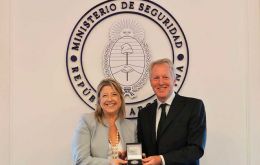
Argentina and UK have coincided in strengthening cooperation in combating international crime, border threats caused by massive immigration and other related illegal activities. This was the result of a recent meeting between Argentine National Security minister Alejandra Monteoliva and British ambassador in Buenos Aires David Cairns.
-
Tuesday, December 30th 2025 - 10:18 UTC
Argentine judge annuls Anti-Blockades Protocol
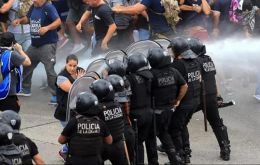
A federal judge in Buenos Aires declared the Argentine government’s controversial “anti-picket” protocol null and void on Monday, sparking a major legal and political confrontation between the judiciary and the Security Ministry.