MercoPress. South Atlantic News Agency



Chile's Supreme Court rules against dictatorship criminals
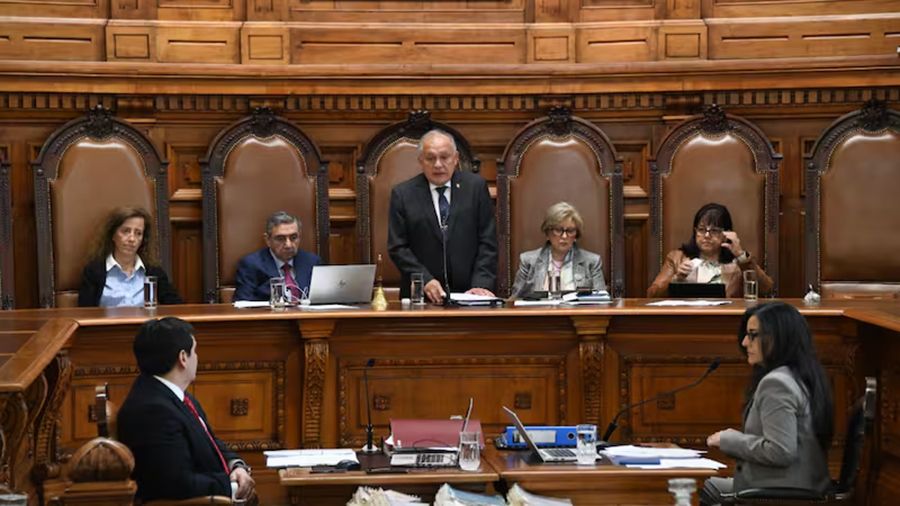 Chile's Supreme Court set a precedent that international human rights obligations supersede domestic statutes of limitation or sentencing loopholes
 Chile's Supreme Court has struck down a legal mechanism known as “partial prescription” for crimes against humanity committed during the Augusto Pinochet dictatorship (1973–1990). The decision was made in compliance with a mandate from the Inter-American Court of Human Rights (IACHR).
Sentence reductions to crimes like kidnapping, forced disappearance, and qualified homicide violated the rights of victims and their families, the IACHR noted.
The Supreme Court's ruling results in the undoing of previous sentence reductions for human rights violators, since a statute of limitations is incompatible with international standards for crimes against humanity, directly impacting 14 criminal cases. Consequently, four convicts previously released were ordered back to prison, while 24 others will have their current sentences lengthened.
The Court argued that while these cases were technically “settled,” they constituted an “apparent” final judgment that was legally invalid because it facilitated impunity for grave human rights violations. Therefore, the so-called res judicata criterion does not apply.
The magistrates also reaffirmed that advanced age does not exempt convicts from serving prison sentences for these crimes. In the case of General Manuel Contreras, who was involved in these cases, the court declared his criminal responsibility extinguished due to his death. Human rights attorneys have hailed the move as a definitive end to “illusory sentences.”


Top Comments
Disclaimer & comment rulesCommenting for this story is now closed.
If you have a Facebook account, become a fan and comment on our Facebook Page!